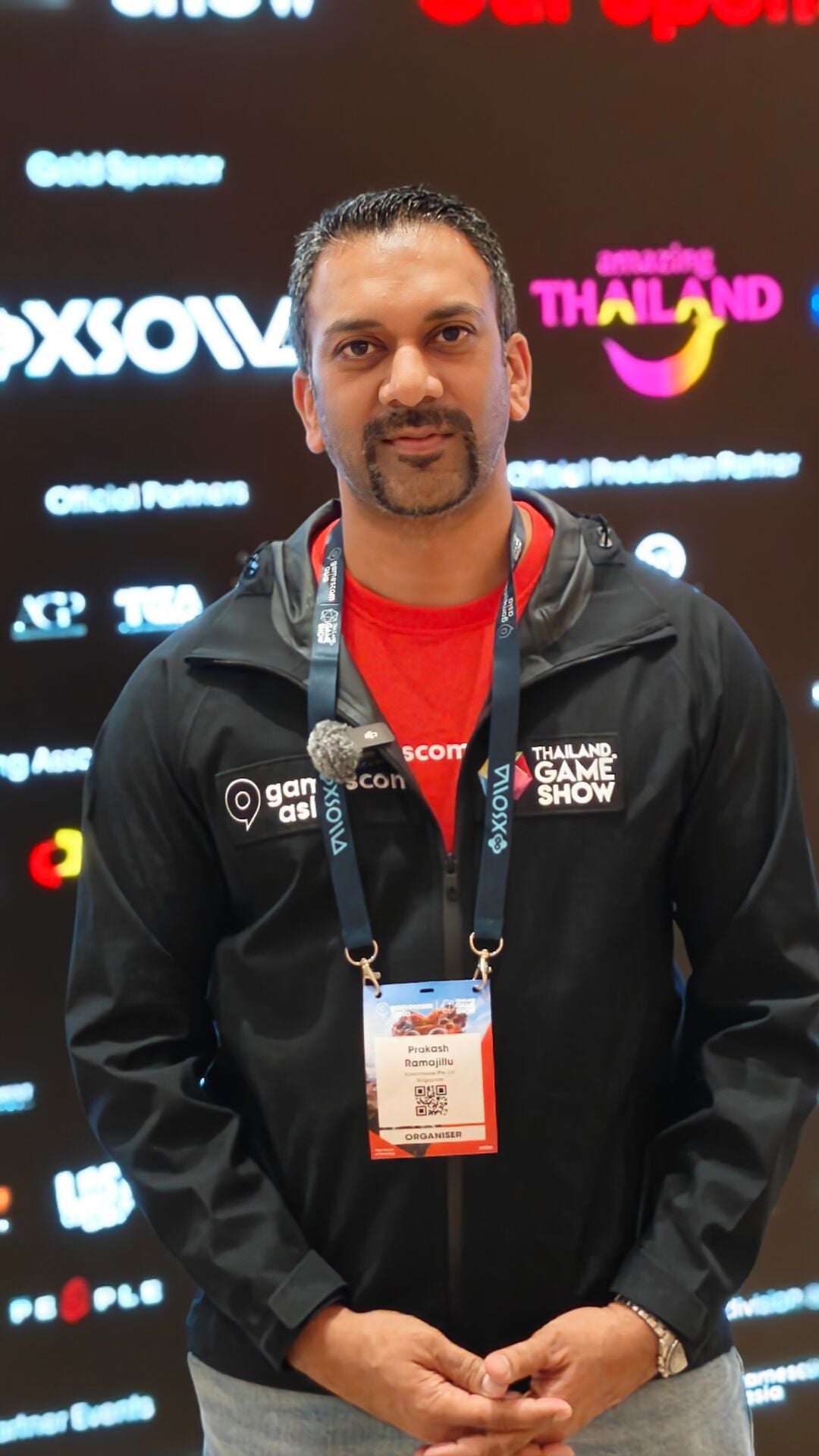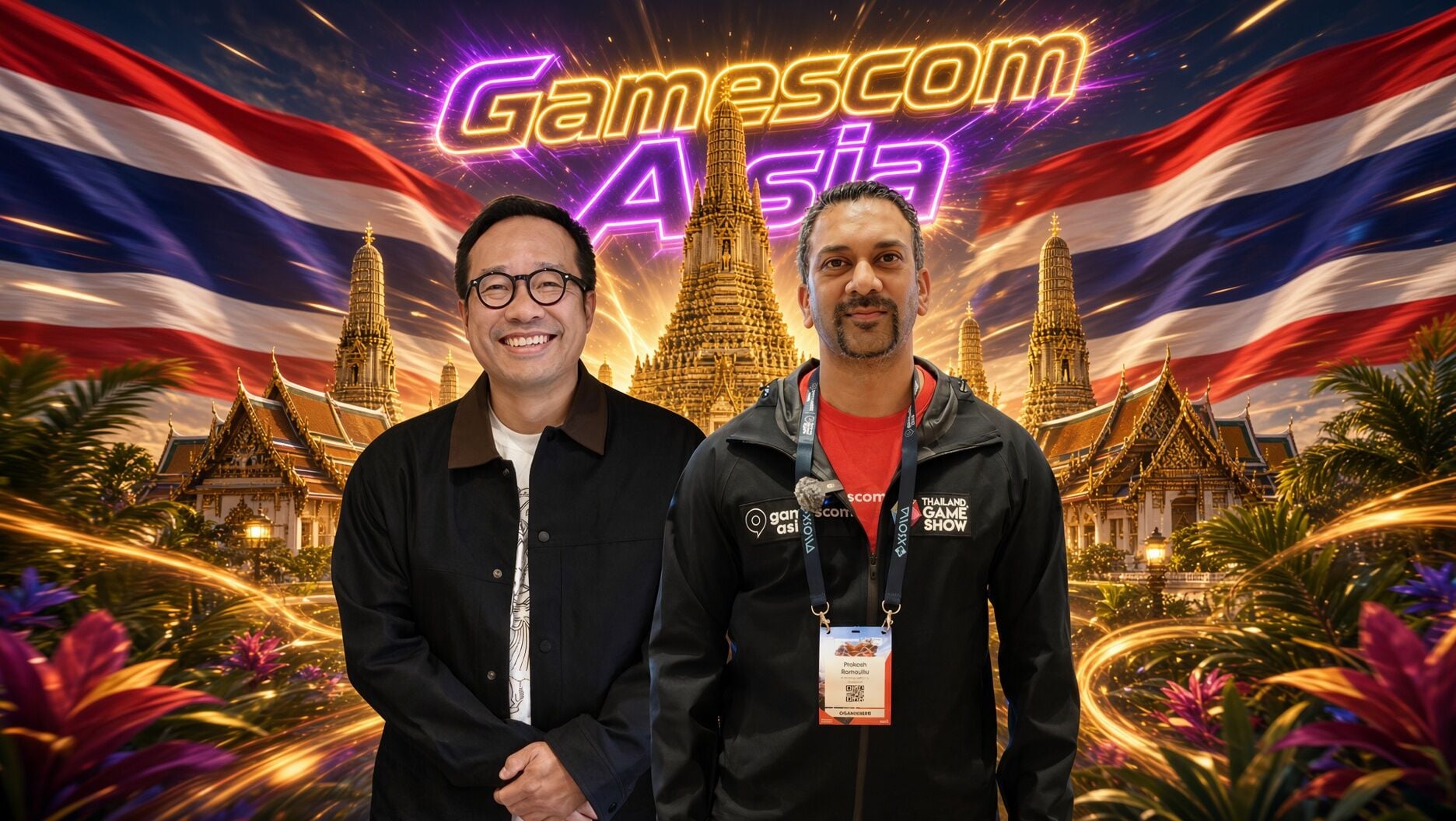
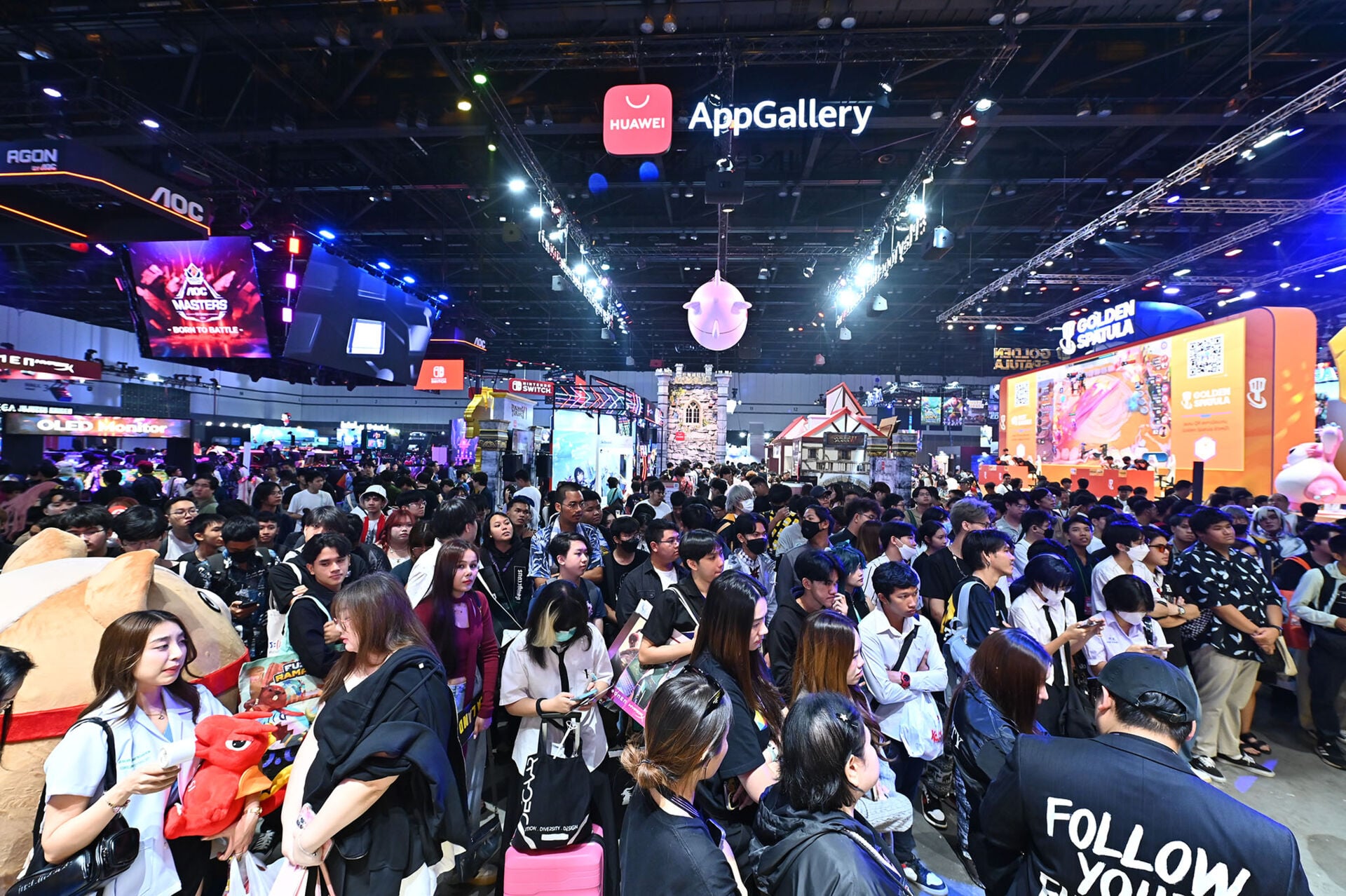
With 219,546 visitors from 113 countries, gamescom asia x Thailand Game Show put on a record-breaking edition in 2026. Born of the coming together of the two shows, the Bangkok event confirms its growing clout and international pull. With 6,923 industry professionals in attendance, 582 games on display and close to 34 million views generated online, the Thai gathering has moved up a level. South-East Asia is no longer just an emerging market to keep an eye on: it is becoming strategic territory for the global games industry. But what comes next for gamescom asia? How do you turn Bangkok into an unmissable date for publishers, developers and players across the region? At the show, we sat down with Prakash Ramajillu, General Manager Asia-Pacific at Koelnmesse, to talk about the merger with Thailand Game Show, the rise of Asian studios and the event's international ambitions.
Interview conducted by Maxime Chao in Bangkok.

Maxime Chao: gamescom asia is now in its sixth edition and this is my first time in Bangkok. I have to say I'm fairly impressed by the scale of the event, but also by its quality and organisation. Did you expect to reach this level of development?
Prakash Ramajillu: It's hugely satisfying to see how far we've come. When we launched gamescom asia in Singapore, the context was very unusual, as we were right in the middle of the Covid period. We started with an approach geared essentially towards the industry, with a B2B strand aimed at professionals. Over the editions, we've been able to grow the event and give it a far bigger presence with the general public. Today we're putting on an event that speaks to both professionals and players. We're building a very high-quality show for the whole region. It isn't just about bringing visitors in, it's also about gathering the industry together, creating opportunities and giving more visibility to video games in South-East Asia.
We shouldn't forget that the industry isn't limited to the big traditional markets. Really interesting projects are emerging right across South-East Asia. Part of our role is to help these companies take the next step and allow them to make a name for themselves beyond their own borders.
Maxime Chao: The tie-up with Thailand Game Show looks like it has paid off. After a first edition held in Bangkok in this new configuration, can we now talk about one single show?
Prakash Ramajillu: Yes, that's exactly what we want. We're no longer in a situation where two separate shows simply happen to take place in the same venue. We're working towards creating a single event that brings together the strengths of gamescom asia and Thailand Game Show. Each brings its own experience, its network and its knowledge of the market. Thailand Game Show has a real history with Thai players and enjoys a very strong community. On our side, we bring gamescom's international experience and our network of professionals around the world. That combination lets us offer something more complete. We want to keep what makes Thailand Game Show so strong with the local audience, while developing the international dimension of gamescom asia. It's a very interesting mix for players, publishers and studios.
Maxime Chao: You get the sense that South-East Asia is taking on a bigger and bigger role in the global games industry. Is that one of the reasons that pushed you to develop gamescom asia in this region?
Prakash Ramajillu: Absolutely. An enormous amount is happening in South-East Asia. We're seeing new studios, new talent and increasingly ambitious projects appear. There's genuine creativity in this region, but these developers don't always have access to the same opportunities for visibility as studios based in video gaming's established markets. We want to give them a platform to show off their work, meet international publishers, talk to investors and reach new audiences. That's one of gamescom asia's important missions too. We shouldn't forget that the industry isn't limited to the big traditional markets. Really interesting projects are emerging right across South-East Asia. Part of our role is to help these companies take the next step and allow them to make a name for themselves beyond their own borders.
Maxime Chao: gamescom in Cologne enjoys considerable media exposure, not least with Opening Night Live hosted by Geoff Keighley. Are you thinking about developing something similar in Asia, with a big showcase dedicated to announcements and games?
Prakash Ramajillu: We're obviously aware of just how much impact a big online showcase can have. They reach millions of people and give games enormous visibility. But we don't want to simply copy what already exists in Cologne, or do our own version of Opening Night Live. South-East Asia has its own particularities, its own communities and its own expectations. So we need to think about an approach that makes sense for this region. We have to understand what players want, what publishers are looking to showcase and how we can create an event with its own identity. Our online presence does need to grow too, but we want to do it in a way that fits the local market. It's not about replicating an existing model, it's about building something that means something to the industry and the players of Asia.
Thailand clearly has what it takes to become a major player in the games industry in this region. But that takes time, and it takes everyone working together.
Maxime Chao: Thailand seems to have big ambitions in gaming. Can the country become a genuine development hub in South-East Asia, capable of attracting studios and international investment?
Prakash Ramajillu: I think the potential is real. Thailand has several things going for it: a very active player community, creative talent and a growing interest in games development. We're also seeing an indie scene taking shape and initiatives designed to support the industry. Support from institutions and from the government can play an important role as well. For an ecosystem to develop sustainably, you have to create the right conditions for studios, allow them to find funding, recruit talent and work with international partners. Thailand clearly has what it takes to become a major player in the games industry in this region. But that takes time, and it takes everyone working together. That's also why we're delighted to be contributing to that momentum with gamescom asia and the Thailand Game Show.
Maxime Chao: Looking ahead five years, what would you like gamescom asia to look like? Is your ambition to make it the biggest games show in all of South-East Asia?
Prakash Ramajillu: We do have big ambitions, of course, but we don't want to measure our success purely by the size of the show or the number of visitors. What matters above all is putting on a relevant event, one that delivers real value to the industry and to players. We want to keep growing the business side, give more visibility to studios from the region and attract international players. We also want visitors to feel they're getting a quality experience, with games to discover, publishers to meet and a real atmosphere built around their passion. In five years, I'd like gamescom asia to have become an unmissable date for the entire games industry in South-East Asia. But we have to move forward step by step, listen to what the professionals and the public want and keep improving the event with every edition. Growth matters, but it has to serve what we're trying to build.
Interview conducted in Bangkok on 30 October 2026 by Maxime Chao.