
The games industry is going through a particularly complicated period, and at this point it's getting hard to call it just a rough patch. Nearly 60,000 jobs have vanished in five years, hundreds of studios have shut their doors and AAA budgets have hit stratospheric levels that are increasingly difficult to make back. At the same time, console prices are going up, the bulk of players are devoting ever more of their time to the same live-service games — Fortnite, Roblox, League of Legends — while the cost of making big-budget titles keeps soaring. On paper, the games market is still generating considerable revenue. But behind those figures, something has gone badly out of joint.
To try to understand what's really going on, and above all what needs to change, Edge magazine brought together several major industry figures, among them Epic Games boss Tim Sweeney, Raph Koster, Shawn Layden and Harvey Smith. Their verdict is fairly worrying: the problem doesn't come down to one bad decision or a handful of games that flopped. It's the entire economic model of video games that seems to have reached the end of a certain logic.
Nearly 60,000 jobs cut in five years
To grasp the scale of the problem, you have to start with the numbers. Since 2022, Amir Satvat has been tracking industry job losses with his ASGC Games Industry Layoffs Tracker, cross-referencing publicly announced data with information passed on directly by employees and the organisations involved. By his current estimates, more than 14,500 people could still lose their jobs in 2026, which would bring the five-year total to over 58,000 roles cut. The figure is obviously dizzying, but Satvat adds an important caveat: the industry is still hiring, too. Somewhere between 18,000 and 25,000 people find a new job in games each year. The sector hasn't stopped growing altogether, then, but its growth has become extremely weak. Where the industry gained roughly 150,000 jobs in the five years preceding this crisis, it is now adding only a few thousand posts.
The problem, then, is less a sudden collapse of video games than a radical change of pace. And crucially, this crisis isn't spread evenly around the world. North America, the UK and much of Western Europe account for the bulk of the job losses, with a particularly grim situation in California. Satvat reckons that at certain points, more than half of all layoffs announced worldwide were concentrated in that one US state. Other markets, by contrast, seem to be holding up far better, notably parts of Eastern Europe, some countries where the industry is only just taking shape, and above all Japan. A difference that, according to Satvat, deserves a close look.

Why is Japan holding up better?
For Amir Satvat, Japan is almost a case apart. It's obviously not some paradise where layoffs don't exist, but job cuts there generally remain far more limited and tend to affect contract or outside staff rather than the core teams. Satvat cites Nintendo in particular, but also Konami and Capcom, whose staff retention rates reportedly top 97%. The situation is partly down to the different way Japanese studios are organised, often built around smaller, more stable teams, but also to less exposure to some of the trends that have exploded in the West in recent years.
Japanese studios have reportedly been less inclined to give in to the rush for live-service games and colossal productions requiring several hundred people. But Satvat also points to a far more prosaic difference: executive pay. The bosses of big Japanese companies can earn several million dollars, but that remains a long way from the packages running into tens of millions at certain large Western firms. The model obviously can't be transplanted wholesale onto the global industry, but it does raise an interesting question: how far can the cost of a production keep rising when potential revenues no longer keep up?
Making a game costs more and more
This is probably where the heart of the problem lies. According to Tim Sweeney, the cost of making games has literally exploded since the early 2000s. He takes the example of Gears of War, whose first instalment, released in 2006, reportedly cost around $12 million to produce. With six million copies sold on Xbox, the game generated roughly $100 million in revenue. A few years later, the picture had changed completely. Gears of War 3, released in 2011, is said to have cost nearly $100 million, while revenue projections were only slightly higher. The audience hadn't grown enough to keep up with that explosion in costs.
Raph Koster, now heading up Playable Worlds, says he has been sounding the alarm about this trajectory since 2005. His research spanning several decades of development points to a particularly worrying curve. Adjusted for inflation, the average cost of a AAA console or PC game is said to have gone from roughly $1 million in the mid-1990s to $10 million in 2005, then to around $100 million in 2015. By the early 2020s, some projects were already hitting $250 million in development costs, while Tim Sweeney now reckons certain budgets sit somewhere between $250 and $400 million. And this inflation isn't just about salaries or headcount. Games have also become far more complex to build.
Raph Koster picks a deliberately mundane example: a simple crate that, once upon a time, could be rendered with a fairly rudimentary texture now requires several 4K textures, shaders, interactions with the environment, animations and far more extensive testing. Tools have improved enormously, and yet instead of automatically driving costs down, they have mostly allowed studios to make ever more complex games. Productivity gains are immediately ploughed back into more content, more detail and more features. It's a cycle that is proving particularly hard to break.
games cost more, but players aren't paying more
On top of this budget explosion comes another problem: game prices haven't risen at the same rate. Raph Koster points out that the retail price of a game today is still fairly close to what it was back in the 16-bit era, even though the cost of living has shot up since. Digital distribution has also profoundly changed consumer behaviour. Players can now add a game to their wishlist, wait a few weeks or a few months, then buy it when it goes on sale. Steam sales and assorted promotional events have gradually bedded in a culture of "I'll wait for the price drop".
The problem then becomes obvious: if a game costs three or four times more to produce, but a large chunk of its audience waits for a discount to buy it, you have to shift an enormous number of copies just to break even. For a long time, the industry could offset this inflation thanks to another phenomenon, namely the steady growth in the number of players. But that growth has eventually slowed.
The global audience no longer spreads out the way it used to
Tim Sweeney reckons that between 1980 and the early 2020s, the number of people playing video games grew almost exponentially, reaching several billion players across PC, console and mobile. But that expansion has now hit something of a ceiling. The problem isn't that people have stopped playing, it's that a large share of the audience is already locked up by a handful of extremely powerful games. Fortnite, Roblox, Minecraft, League of Legends, Clash of Clans, PUBG Mobile and CrossFire have all managed to turn their game into a full-blown ecosystem. Players don't just put in a few dozen hours before moving on to the next title, they come back every day, with their mates, their routines, their purchases and sometimes thousands of hours on the clock.
And that's where the traditional AAA model runs into trouble. A player with only a few free hours a week isn't necessarily going to buy ten big games a year. They might well spend almost all of their available time on a single title. "Players who don't spend most of their time on one or two games are a very small slice of the pie," sums up Amir Satvat. The potential market is therefore far more limited than you might think.

Should games be smaller?
Faced with all this, several industry veterans are making a fairly simple case: stop trying to go ever bigger. Shawn Layden, former head of PlayStation Worldwide Studios, remembers a time when developers had to work around the technical limits of consoles, not least the extremely tight capacity of CD-ROMs. Those constraints forced teams to make choices and to focus on what actually mattered. As he sees it, the industry would benefit from a return to more compact productions, with smaller environments and adventures you can finish in twenty hours or so. Why model a gigantic world that takes 45 minutes to cross from one end to the other if that distance adds nothing to the experience or the story?
That line of thinking chimes with Bruce Straley, former director of The Last of Us and several Uncharted games, who says he now works with a core team of about 11 people on Coven of the Chicken Foot. In his view, today's AAA games sometimes rehash the same experiences and the same mechanics with an ever higher level of polish, without necessarily bringing much that's new. The idea, then, isn't to go back to threadbare or technically limited games, but to find a more sensible scale. Amir Satvat is already seeing this happen, with teams that would once have numbered 50 or 60 people now trying to operate with around 20, while studios of 400 employees sometimes attempt to come back down to roughly 100. The permanent "AAAA" model is quite simply becoming too risky.
And where does AI fit into all this?
AI inevitably crops up in every conversation about cutting costs, but the experts Edge spoke to are far from agreed on whether it can actually fix the problem. Amir Satvat notes that some companies have already trimmed their headcount on the assumption that tools like Claude would make up for the lost labour. In certain cases, the results reportedly fell short of expectations, with some companies even forced to hire again after cutting too many roles. Raph Koster is more cautious still. He points out that he had seen the same thing happen with the arrival of Unreal Engine 3 and Unity. Better tools ultimately didn't bring down the median cost of making a game, because studios put the gains straight back into producing more content and raising their ambitions.
In other words, if AI makes it twice as quick to build certain parts of a game tomorrow, there's no guarantee games will cost half as much. It's just as likely that studios will use the time saved to produce twice as much content. And Koster goes further: in his view, AI isn't the great technological upheaval that will reset the industry. It's more like the next stage in a technological arms race that pushes machines and software ever closer to their limits.

Managing budgets better
Another avenue, then, is to accept that a game doesn't need to make several hundred million dollars to count as a success. Shawn Layden in particular makes the case for the return of a middle ground between the indie scene and the vast AAA production — that fabled double-A territory, which could let relatively small teams take more creative risks. Clair Obscur Expedition 33 inevitably comes up here: a production ambitious enough to deliver a genuinely modern role-playing experience, but built on a far more sensible scale than the market's biggest releases. If a game brings in 50 million dollars, why should that automatically be written off as a failure?
With a sufficiently disciplined budget, 50 million can in fact be an excellent result, and enough to bankroll a studio's next project. The trouble is that companies have gradually built business models in which every new game has to be bigger than the last. And that logic pushes everyone mechanically towards the same licences, the same genres and the same formulas, because a 200 or 300 million dollar project leaves far less room for experimentation.
And where does China fit in?
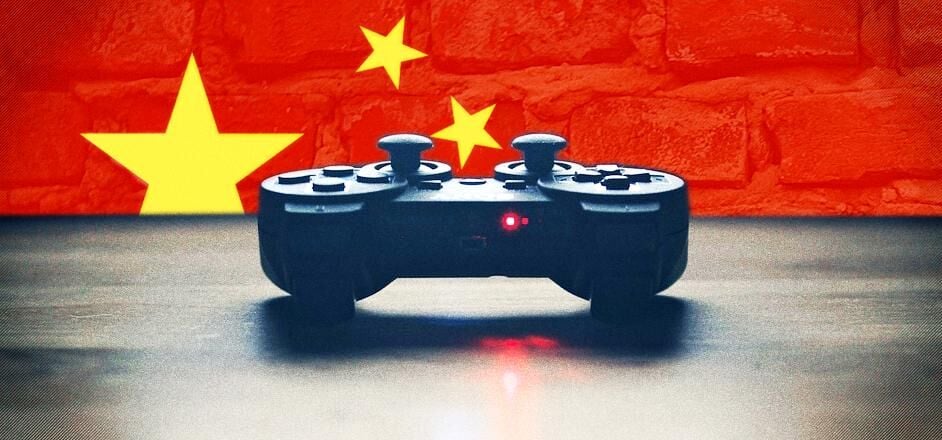
China occupies a rather singular position in this equation today. While Western studios cut staff and scale back their ambitions, the country continues to invest heavily in games built to travel internationally. Productions such as Black Myth: Wukong, Phantom Blade Zero and Wuchang: Fallen Feathers show above all that a new generation of Chinese studios is now aiming squarely at the global AAA space, with substantial budgets but also a different reading of the market. What makes it all the more interesting is that China has an enormous domestic market, an extremely well-developed mobile industry and groups with the means to fund projects over several years.
That obviously doesn't mean Chinese studios are immune to economic trouble or layoffs, but their rise is reshuffling the deck at the very moment when the Western model looks to be hitting its ceiling. Where the American and European giants are wondering how to keep making ever bigger games for an audience that isn't really growing any more, some Chinese studios seem to have worked out that you can build a new generation of AAA productions by targeting a global market from the outset.
Gaming is also a victim of its own success
For several of those interviewed, the problem ultimately goes well beyond the games industry. Tanya X Short, co-founder of Kitfox Games, believes the flood of venture capital helped change the way the industry saw itself. Investors have sometimes treated video games as just another branch of tech, with the same obsession with permanent growth. Yet as Tanya X Short points out, entertainment isn't a predictable industry: a game can cost a fortune and flop, while a far more modest project can become an unexpected hit.
Harvey Smith, formerly of Arkane, likewise finds it hard to see the current situation as a problem specific to video games. As he sees it, it's bound up with a much broader economic system in which public companies must constantly meet investor expectations and keep growing. That's precisely what can lead to absurd outcomes: a studio can spend years building a team, developing expertise and making several successful games, then be shut down after one failure — as happened to Arkane Austin after Redfall.
A crisis that will force the industry to change
For all these particularly bleak assessments, the people Edge spoke to don't only talk in terms of catastrophe. Several see this period as a sort of forced reset, one that could allow the industry to get back to a more sensible way of working. Raph Koster reckons the history of video games is cyclical, and that a new platform shift always ends up reshuffling the deck. The browser, Facebook, the Wii and then mobile each in turn allowed newcomers to sidestep the established rules and build different kinds of experiences. The next upheaval could come from a technology that's still hard to pin down. Koster points to augmented reality glasses, among others, while stressing that a genuine break has to offer something new and stop the incumbents from simply rolling out their usual recipes.
Amir Satvat, for his part, sees another possible consequence in rising hardware prices. If consoles and components become too expensive, developers may be forced to scale back their technical ambitions and focus more on design, mechanics and experience than on graphical horsepower. That would be a fairly ironic return to first principles, given that for years the industry used each more powerful hardware generation to make games that were bigger, prettier and more complex. Perhaps the lesson now is learning to do more with less.

So can the industry really be fixed?
The answer these various figures offer is ultimately less straightforward than it looks. It would probably mean acting on several fronts at once. Tim Sweeney, for his part, believes the "ecosystem games" model could become an important part of the future, with experiences capable of connecting different games, communities and economies. Epic is already working in that direction with Unreal Engine and Fortnite, notably around a shared social layer and a form of cross-experience interoperability.
But that vision doesn't necessarily solve the underlying problem: not every player wants to live inside a permanent ecosystem, and not every developer wants to build social platforms. And that may be the most interesting conclusion to draw from all this soul-searching: there probably isn't a single solution capable of saving the video game industry.
The sector grew for several decades on the assumption that the audience would keep expanding, that machines would keep getting more powerful and that ever-larger budgets would eventually deliver ever-larger revenues. Today, every one of those certainties is starting to show its limits. And behind the 58,000 jobs lost, the studios shuttered and the projects cancelled lies a far simpler question: is the industry willing to do less in order to regain the chance to do better? For Harvey Smith, the answer remains tinged with optimism all the same. Structures can change, business models can evolve and some companies will probably disappear, but as long as creators still want to tell stories, invent worlds and build new experiences, video games will carry on. So perhaps the question isn't whether video games will survive. It's what shape they'll take once this crisis has passed.