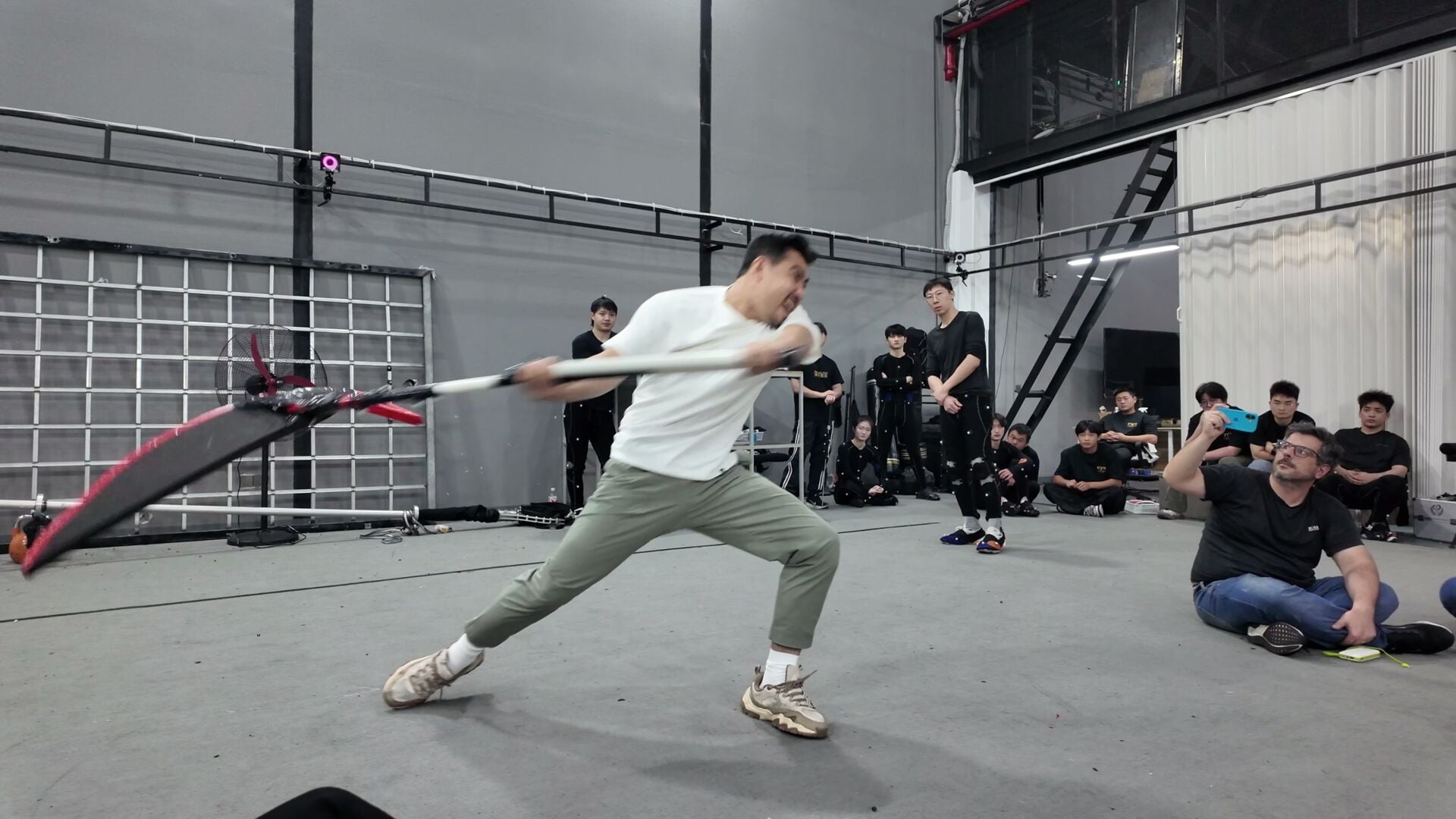
After our six-hour hands-on preview of Phantom Blade Zero, followed by our long interview with Soulframe Liang, the game's creator and founder of S-Game, this time we're taking you behind the scenes of how it's made. Destination: Shanghai, and the motion capture studios where the stunts and choreography that give the game its distinctive identity were recorded. Because while the names Donnie Yen and Kenji Tanigaki come up again and again whenever the project is mentioned, there's another man whose work deserves a closer look: Liu Yang, known to everyone here as Master Yang. He's the one who shaped the combat in Phantom Blade Zero, devising the moves and combos that give its fights that spectacular quality, drawn straight from Chinese martial arts cinema. We spent an entire day listening to him talk about his work and watching him put a fight sequence together, before pulling on a mocap suit ourselves to attempt a few somersaults of our own.

Flying Goat, where the fights come to life
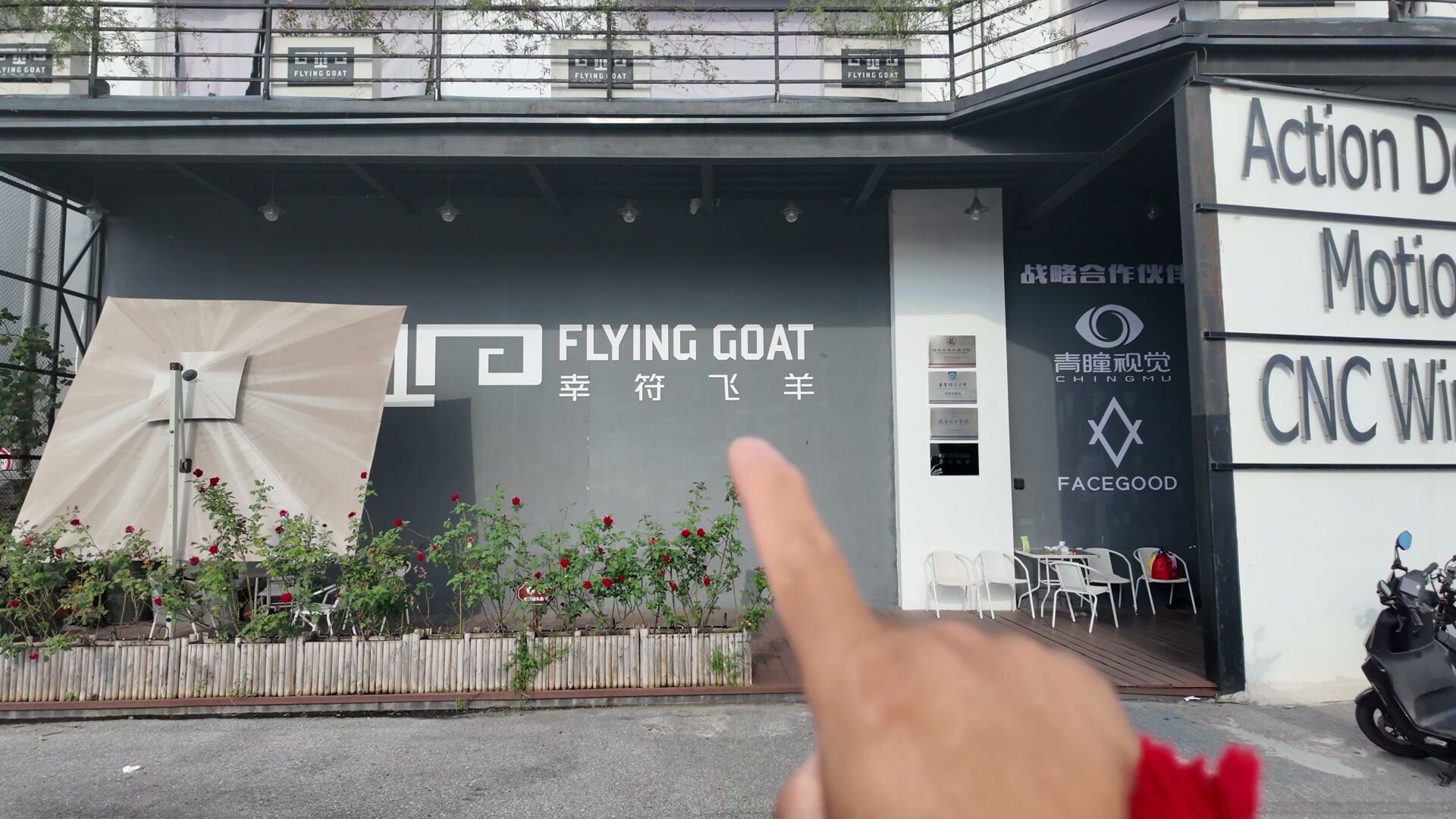
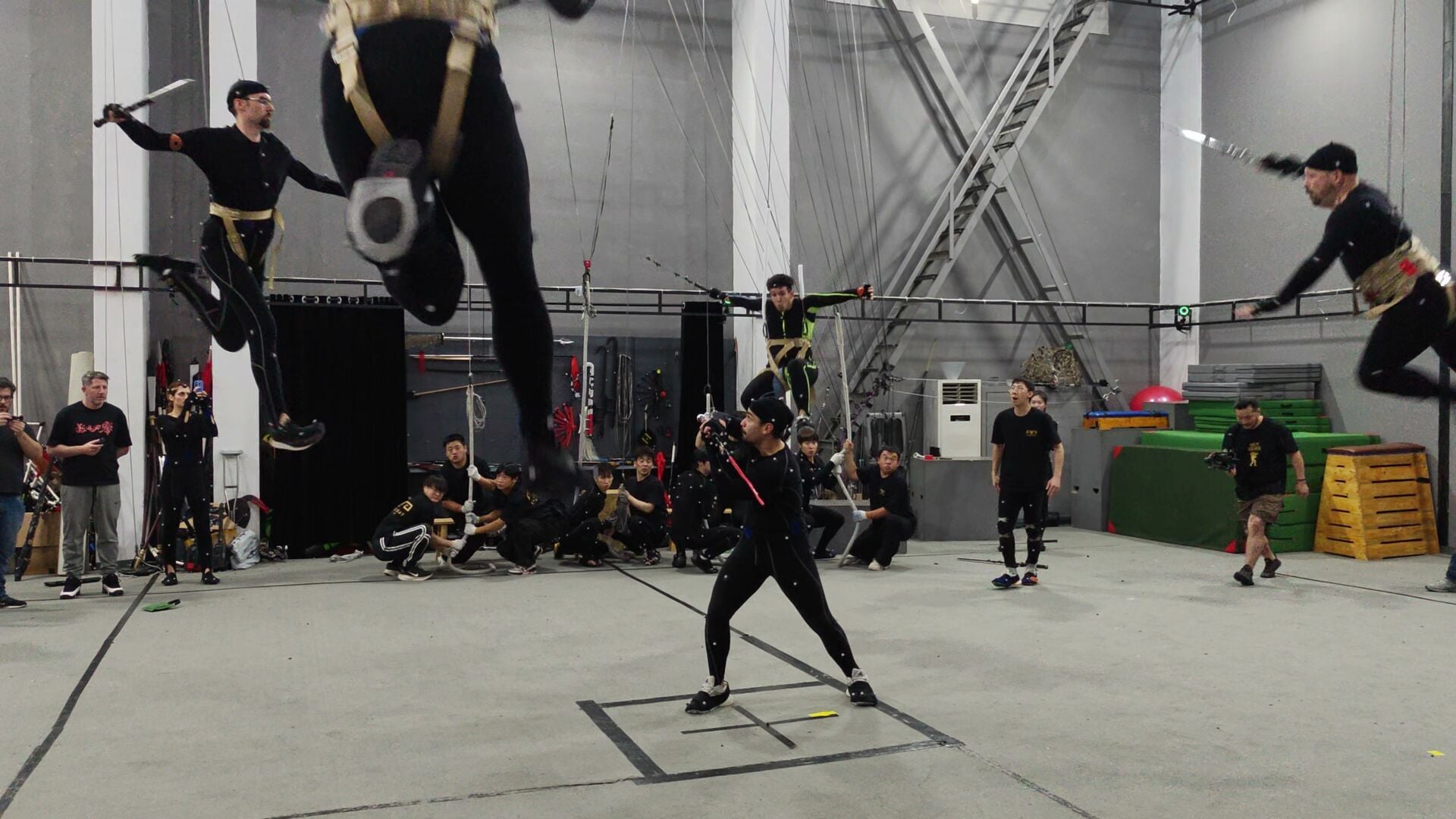
Pulling up outside Flying Goat, the building looks nothing like a traditional video game studio at first glance. Tucked away in an industrial estate, it nonetheless houses part of the work that allows Phantom Blade Zero to deliver such impressive combat. In fact, Flying Goat isn't just a motion capture studio used by S-Game for Phantom Blade Zero: the site also hosts training sessions linked to the Jackie Chan Movie and Media College, a school dedicated to film and performing arts careers, where students can train in stunt work. It's a particularly fitting setting for the work being done on the game, which leans heavily on martial arts and acrobatic choreography inspired by Chinese cinema. During our visit, the teams were already deep in preparation for a test session. The stunt performers were getting ready to work on the moves that will be captured for the game, complete with a whole wire rig designed to send them flying through the air.
You have to understand that Phantom Blade Zero draws heavily on wuxia, the Chinese genre in which fighters sometimes seem to defy the laws of gravity. Characters can pull off dizzying leaps, change direction mid-movement and string attacks together with a lightness that feels almost unreal. To achieve that, the teams have to be able to physically perform some of these acrobatics before adapting them to the constraints of a video game. While we were there, we also sat in on an introduction to kung fu / wushu, by way of a primer in Chinese philosophy. The idea was also to get a better grasp of the stunt performers' work and how moves are prepared before being brought into the game. It was an experience that brought home just how much ground there is between a move performed by a genuine martial artist and its translation to the screen.
Master Yang, the man behind Phantom Blade Zero's combat
What's genuinely striking about Phantom Blade Zero is the sense of discovering a new way of designing action. The fights are remarkably fluid, with transitions that flow naturally between attacks, dodges and counters. Some sequences are lifted directly from kung fu films, except the player isn't simply watching the scene unfold: they're the one managing the movements and finding the right timing to counter their opponents. For Master Yang, that coherence comes above all from understanding movement. Essentially, when he devises an animation, he isn't simply chasing a spectacular result. Every move has to have a reason to exist and provoke a believable reaction within the context of the fight. It's that work that gives the fights their fluidity, even when characters are pulling off feats that look impossible to replicate in real life.
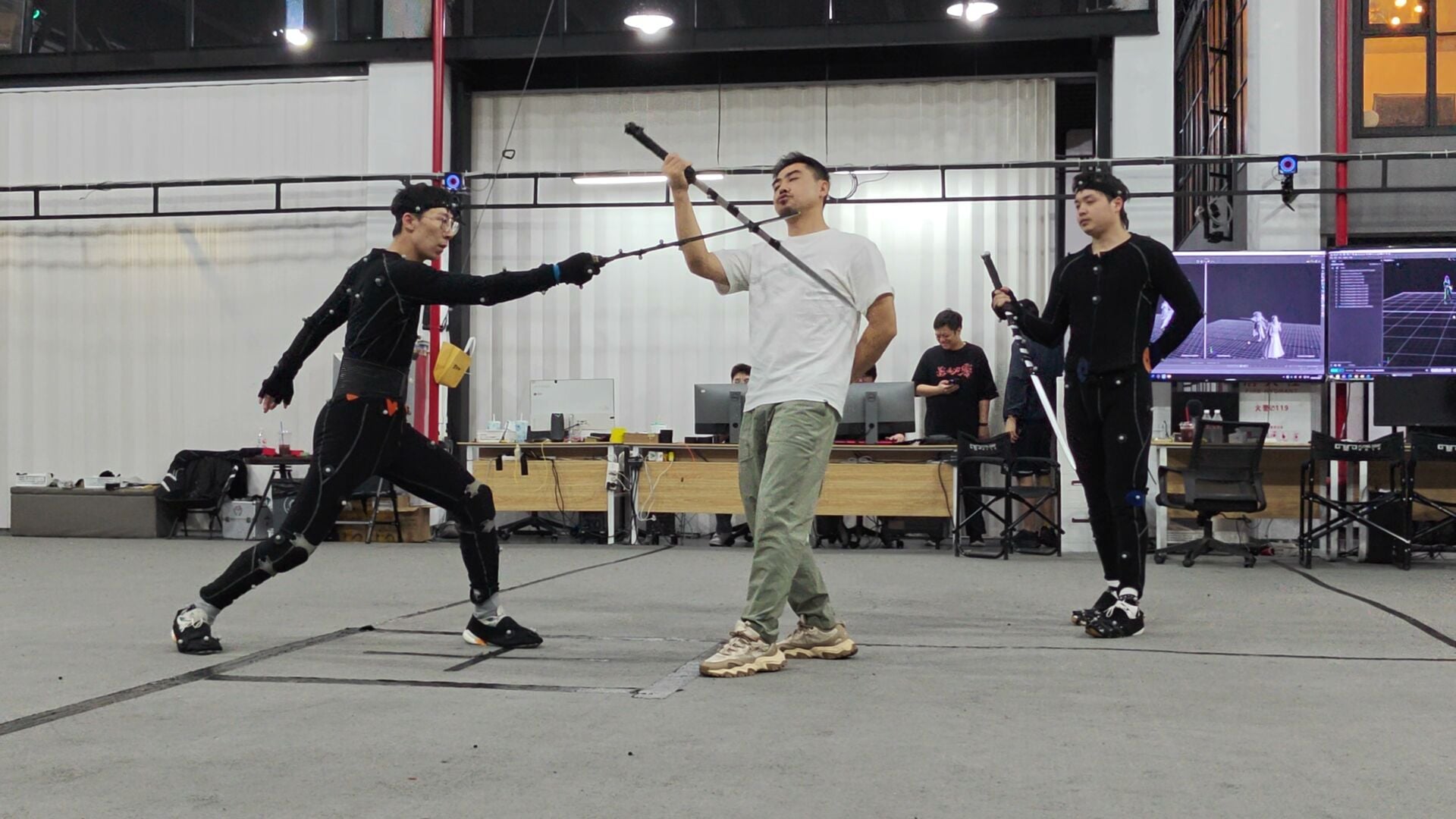
The same approach shows in how he handles weapons. Some of them are particularly hefty and look like they weigh a tonne. Yet if their real-world weight were faithfully reproduced, the fighters would struggle enormously to wield them. So a balance has to be struck between physical realism and the spectacle expected of an action game. As Master Yang explains, a weapon has to convey a genuine sense of weight without becoming impossible to use. Getting there means adapting the movements, devising specific techniques and thinking about how the character can attack or defend against an opponent. A heavy weapon isn't handled like a light blade, and that difference has to come across in the animations.
And that's where his work really comes into its own. The fights in Phantom Blade Zero aren't just out to replicate kung fu techniques; they also have to capture the energy of the great Hong Kong cinema choreographies. But all of it has to stay playable, and every sequence has to answer to the rules of the gameplay too. It isn't enough for a move to look good: it has to fit into a fight, with the player feeling in control of what's happening on screen.
One thing is certain: after this visit to Flying Goat and this chat with Liu Yang, you come away with a much clearer sense of why combat sits so squarely at the heart of Phantom Blade Zero's identity. Because behind the animations that impress in the gameplay trailers lies genuine choreography work and real research into martial arts, all of it slotting perfectly into the game. It's expertise drawn from cinema, but S-Game is looking to give it a different life, this time in a video game, so that the player gets that feeling of being the next Donnie Yen or Jet Li.