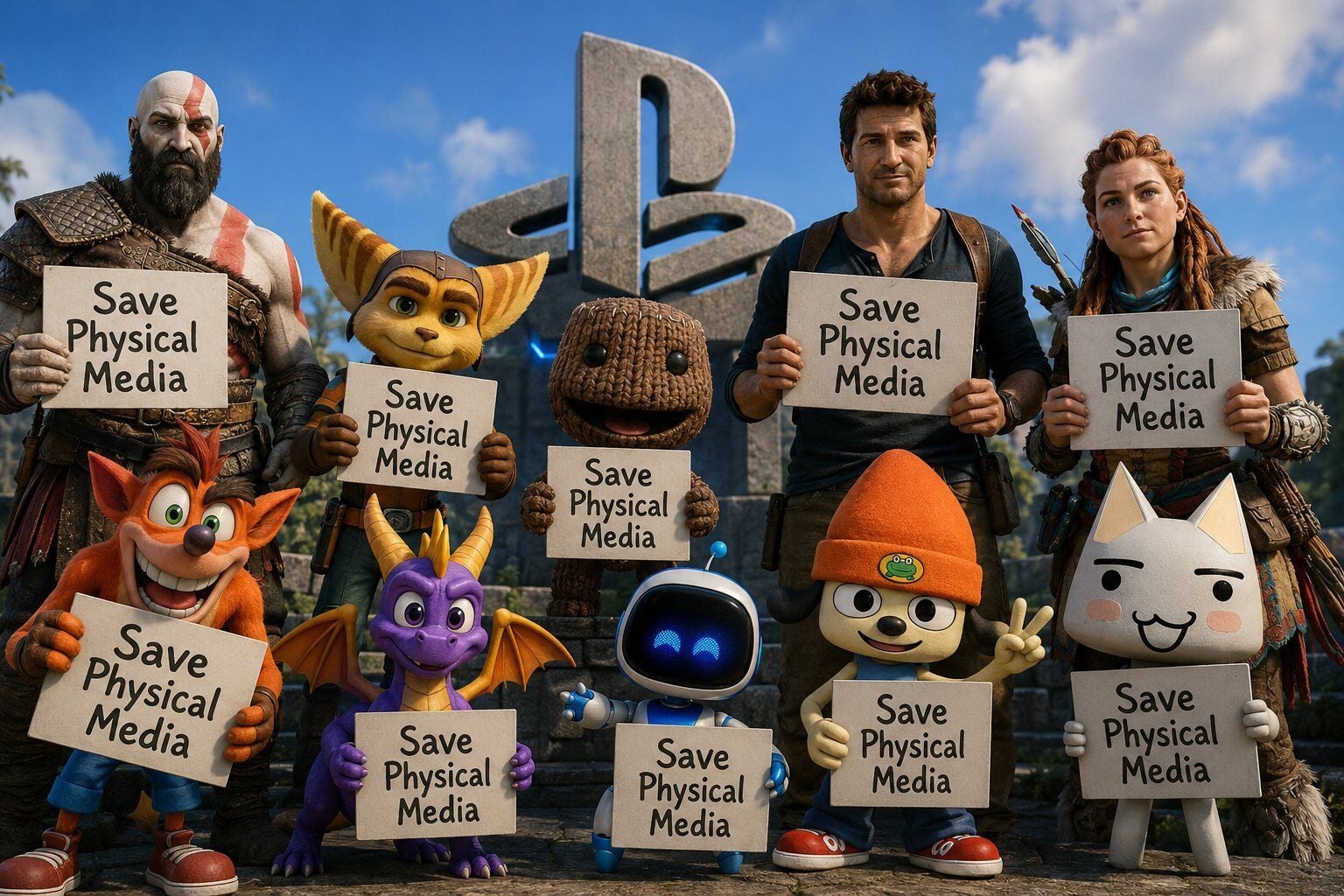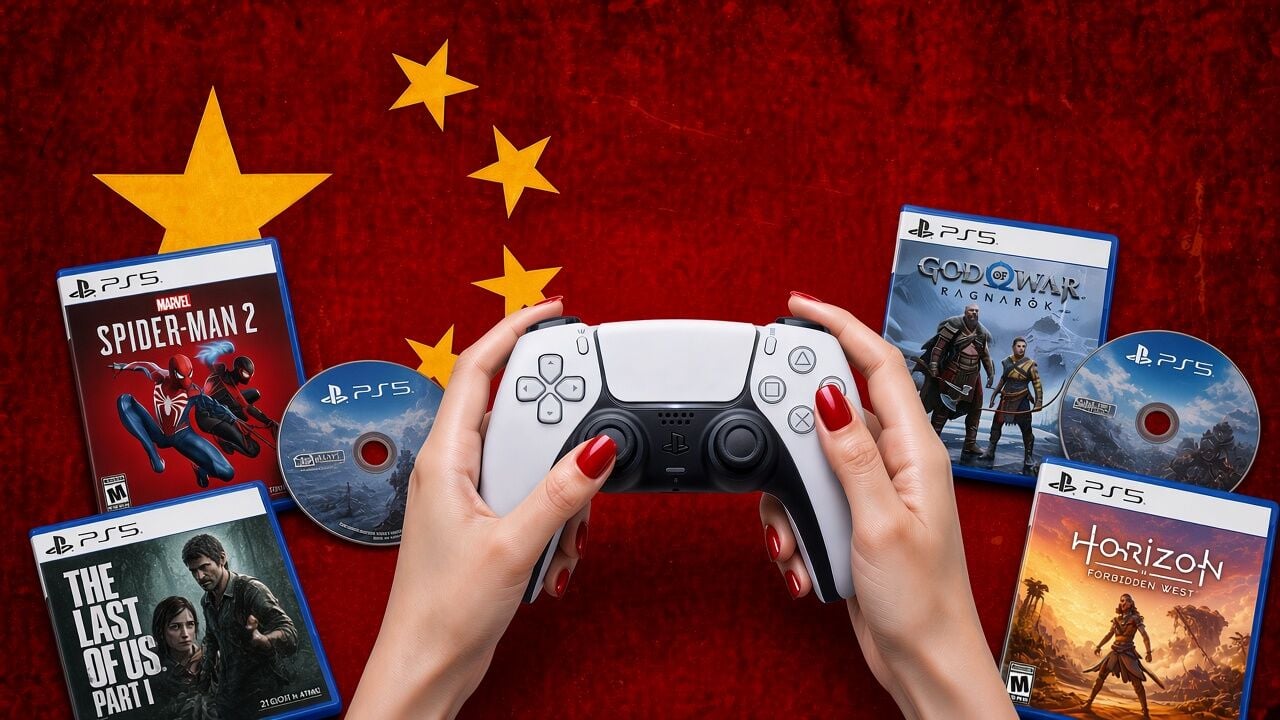

What if, just as the West seems to have accepted the idea that our digital games don't really belong to us any more, it was China that put ownership back at the heart of the debate? Since the start of this summer, and 1 July 2026 in particular, a fierce argument has been raging about digital ownership rights. With the physical format being phased out by Sony PlayStation, and with Steam and other major publishers reminding us in their terms of service that digital games are first and foremost rented licences, a protest movement quickly took shape. Between the hashtags #NoDiscNoBuy and #StopKillingGames, voices are being raised against companies that seem to want only one thing: to strip us of our physical goods so that we accept all-digital.
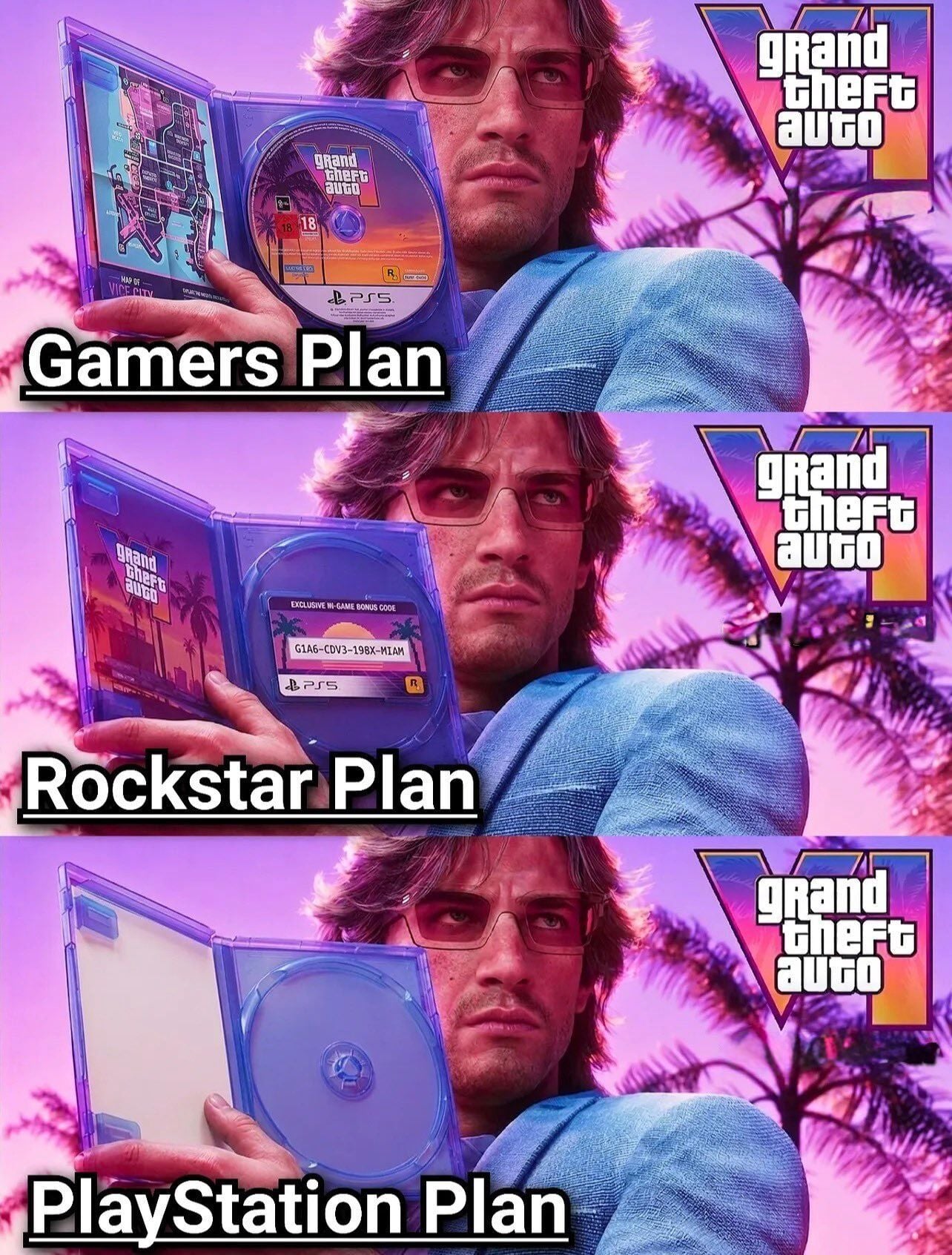
The case of GTA 6 drove the point home: even at Rockstar Games, even the most anticipated game on the planet is sold as a licence and not as an item the player comes to own. And while the gaming world seems to be gradually throwing in the towel in the face of this seemingly inevitable shift, several Chinese court rulings prove that the fight is far from lost for players. Over there, in the Middle Kingdom (Zhong Guo), games, digital libraries and even virtual items can already be considered assets with estate value. Several cases have even set a precedent. So could Xi Jinping's nation be the one to bail us out?
Seen the state of your physical lately?
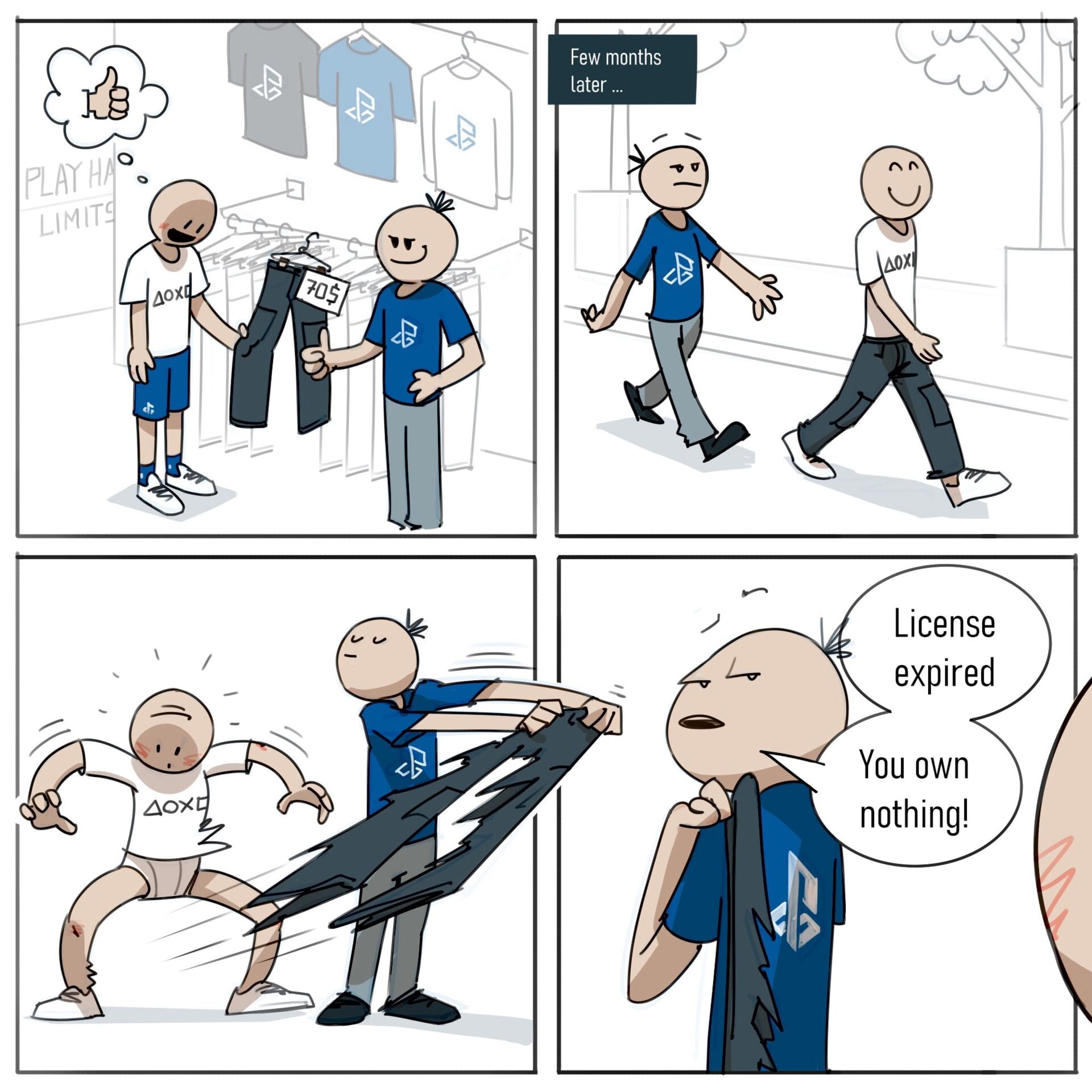
For as long as anyone can remember, buying a game meant walking away with a box containing a cartridge or a disc that you could keep, lend, resell or even pass on to whoever you liked. Today, though, things have changed — and changed a lot — and buying a game digitally, well… it isn't really a purchase any more. On the PlayStation Store, for instance, Sony states that the user is buying a personal licence rather than the product itself, and that licence isn't transferable either. The GTA 6 case is fairly telling of this new reality, since the terms attached to the game likewise state that the purchase grants access to a digital licence subject to Rockstar Games' terms of use. Services, certain features or even content may be modified or discontinued under those terms. Rockstar also specifies that its accounts and virtual items are licensed and grant the player no ownership rights.
Legally and contractually, however, the situation is quite different, and it's written in black and white in the terms and conditions. Except nobody reads them…
It's precisely this shift that eventually provoked an increasingly furious reaction from players, who felt short-changed, if not outright betrayed. And who could blame them? PlayStation is certainly the biggest flashpoint in this protest movement, not least because Sony didn't always champion this move to all-digital. Back in 2013, remember, during the PS4 reveal, Microsoft had announced a number of restrictions on Xbox One games, with particularly onerous rules around lending, reselling and using physical games. Sony read the mood of players perfectly and chose to turn it into a marketing weapon. In a video that became famous, the Japanese firm explained in the simplest terms how to share a PS4 game with a friend: just hand them the disc.
Thirteen years on, the situation is obviously very different. Downloading has become the norm, consoles increasingly ship without disc drives, and a sizeable chunk of players have already stopped buying discs. Sony's decision therefore doesn't land in a market that is still mostly physical; it simply follows a trend that is already well established. What is to be deplored today is Sony's attitude, with communication that is questionable and, above all, being widely questioned.
You think you're buying something, but you're buying nothing at all
When you buy a game on a digital platform, it often feels exactly like a purchase made in a shop. You pay, the game appears in your library and you can download it whenever you like. Legally and contractually, however, the situation is quite different, and it's written in black and white in the terms and conditions. Except nobody reads them, which will come as news to precisely no one. On Steam, for instance, the account is personal and the terms of use set out significant restrictions on selling or transferring it.
Which becomes a real problem when it comes to inheritance. Picture someone who owns several hundred digital games, purchases made over more than 20 years, plus DLC, virtual items or content tied to various accounts. What happens when that person dies after spending several thousand euros on all those virtual transactions? Can their children, or those close to them, get anything back? Can their partner carry on using the library? Do the digital items they've accumulated form part of their estate?
With a physical game, the question doesn't arise: the discs form part of the deceased's estate and can be passed on to whoever wants them. With a digital library, it all depends on the conditions imposed by the platform, but also on how the law of the country in question treats these goods. And the difference is fundamental!
China, saviour of our digital heritage?
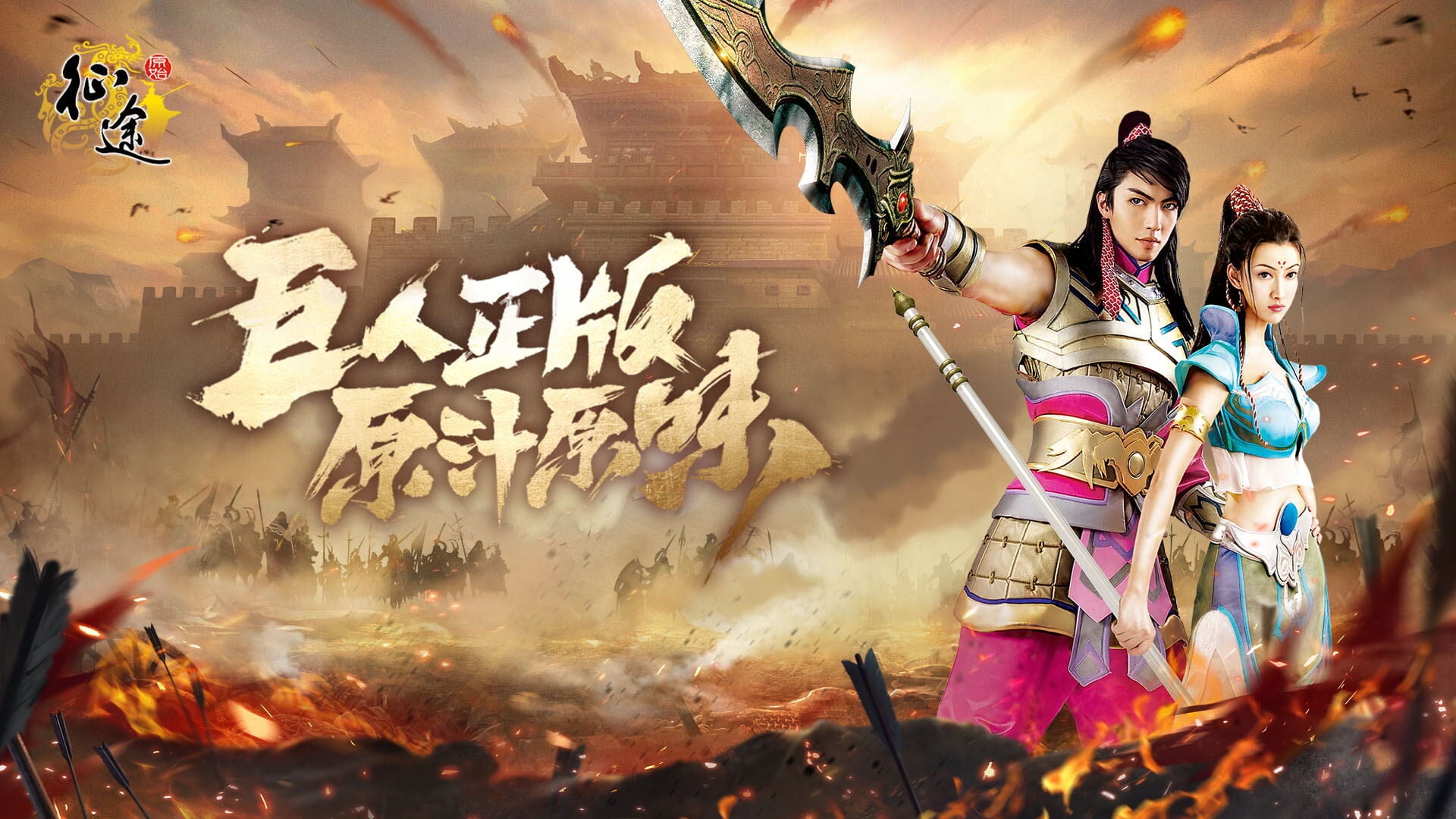
In the West, platforms generally take a restrictive line, but on the other side of the globe, chiefly in China, several court rulings show that another path is already taking shape. Courts there have recognised that certain digital goods have estate value, and have allowed families to recover accounts, games and even virtual items belonging to deceased relatives. One of the most astonishing cases dates back to 2009 and involves Zhengtu, a Chinese MMORPG that was hugely popular at the time. A player owned an in-game item called the "Golden Sabre", valued at roughly 50,000 yuan, a little over €6,000. After his death, his wife (the real one — you'll see why that matters in a second) wanted to recover the item, except that the player also had a wife in the game, another character he'd entered into a virtual marriage with. She too laid claim to part of the item. The case went before the Chinese courts, which held that the virtual good could be treated as an asset with estate value. The Golden Sabre was ultimately split equally between the player's real-life widow and his virtual spouse.
Another Chinese case involved a mother seeking access to her deceased child's account. It held 87 games, plus characters and assorted virtual items built up over the years on the ChangYou platform. Here too, the mother won.
The issue has resurfaced in recent years with further cases, such as one in 2024 in which a Chinese court examined an estate comprising several types of digital assets, among them bitcoins, a gaming account valued at around 200,000 yuan and a social media account used for commercial purposes. The platforms involved leaned on their terms of use to contest the transfer of these accounts, but the Chinese courts held that some of these assets could form part of the deceased's estate and therefore pass to the heirs. Another Chinese case involved a mother seeking access to her deceased child's account. It held 87 games, plus characters and assorted virtual items built up over the years on the ChangYou platform. Here too, the mother won.
Meanwhile, Steam says precisely the opposite: it treats an account as personal, and its terms of use don't allow you to sell it or transfer it to someone else. The situation is odder still with virtual items. In Counter Strike 2, for instance, some skins can reach considerable sums. For the player who owns them, their financial value is entirely real. And yet their existence remains tied to the game's ecosystem and the platform's rules. That's the whole ambiguity of the current system: you can spend real money to obtain something with real economic value, without necessarily holding any genuine property right over it. A racket, there's no other word for it.
And the problem isn't confined to games. It also covers films bought digitally, e-books, music, subscriptions, virtual items and, increasingly, the accounts that gather up years of content and sometimes a genuine economic value. The gradual disappearance of physical media makes the question far more pressing. As long as there's a disc, a Blu-ray or a book you can keep on a shelf, ownership stays tangible. Once everything runs through a digital account, the line between "buying" and "accessing" becomes a great deal blurrier.
Is it really inevitable?
What has happened in China shows that it is possible to treat certain digital rights as part of an estate, even when the good in question has no physical existence. And that could become a major issue for the games industry in the years ahead. Because Sony is set to wind down production of physical games (2028), while Microsoft, Nintendo (game keys, don't worry about it), Valve, Ubisoft, Epic Games and the rest have likewise built ecosystems in which the digital account now sits front and centre. The shift to digital isn't really the question any more. It's already here. The real question now is what rights ought to come with a digital purchase. Should users be able to keep their game when the service shuts down? Can they pass it on to their children? Can they recover their purchases when a platform closes? What happens when the account holder suddenly pops their clogs? And how far can a company's terms of use restrict those rights? These are questions the bigwigs at our industry's largest companies need to answer. Without beating about the bush, preferably.