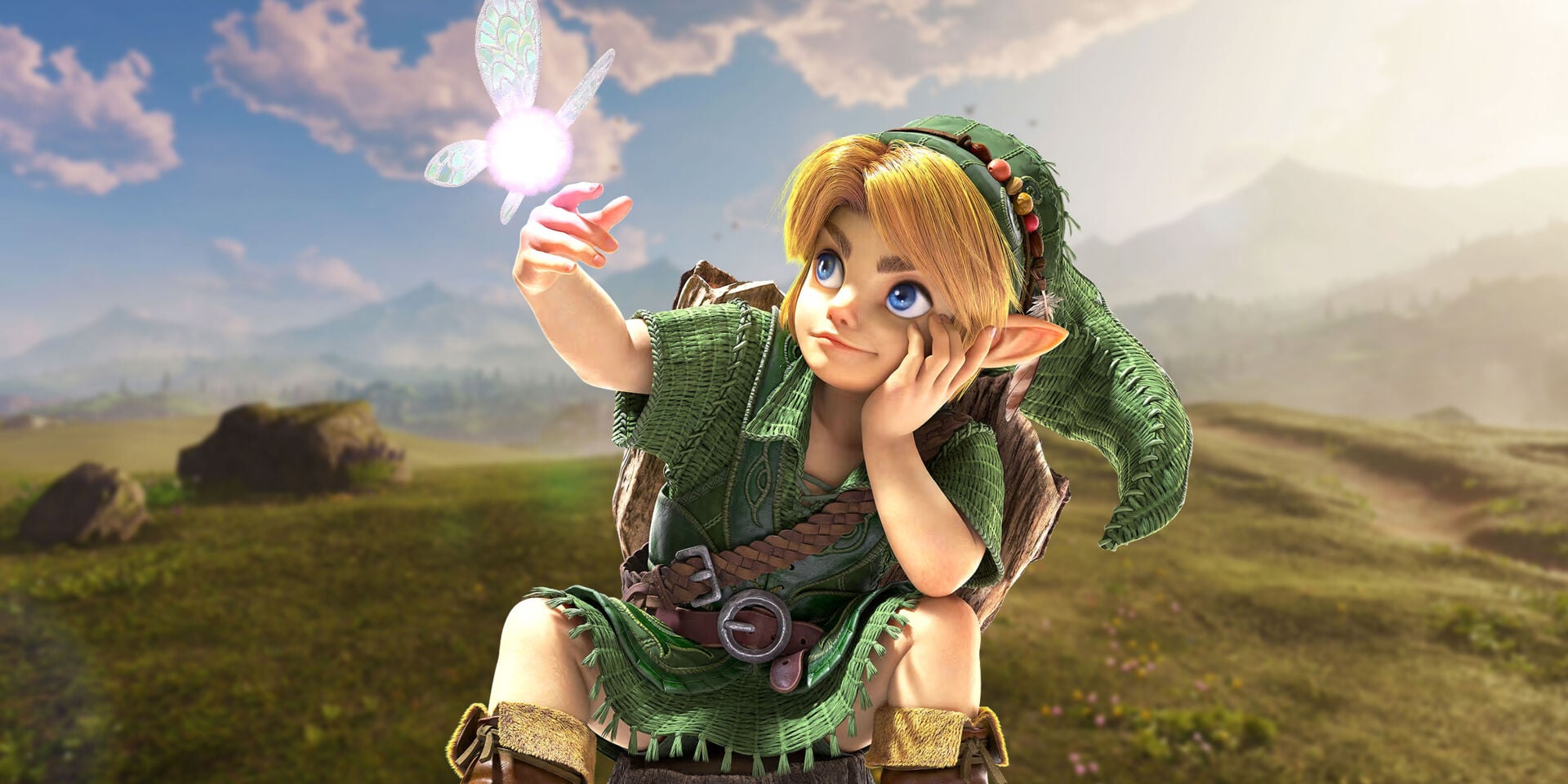

Hailed by Nintendo devotees as the greatest video game of all time, The Legend of Zelda : Ocarina of Time returns in a full-scale remake, having already been given a remastered outing on 3DS back in 2011. It's an enormous gamble for a masterpiece whose untouchable status now comes up against standards far higher than those the industry lived by in 1998. Does the magic of Kokiri Forest still work? Our review has the answer.
Nostalgeek
The Legend of Zelda Ocarina of Time is one of those titles that stirs deep nostalgia in a great many players, not least because it revolutionised a genre born with the first Zelda in 1986. So when the time comes to put its remake under the microscope, it's hard to keep a cool head and resist piling on the superlatives that were entirely deserved back in the Nintendo 64 days. We're not saying The Legend of Zelda : Ocarina of Time has become just another game on Switch 2. We're simply saying that, after the 20 hours it took us to save the kingdom of Hyrule, we have a better understanding of why it doesn't quite match the original (which still holds the record score of 99 out of 100 on Metacritic).
The first thing that springs to mind is the extreme streamlining this remake has undergone. Granted, 28 years ago Ocarina of Time wasn't an open world in the way Breath of the Wild and Tears of the Kingdom are, but the map was big enough to get lost in. This time, the developers have added the Thread of Time. With this feature, you always know which tasks you've completed and which are still outstanding (whether they belong to the main quest or to side missions), which spares you endless aimless back-and-forth. Paradoxically, being led by the hand like this dulls the sense of discovery and takes the edge off the thrill you used to feel when you finally reached the right spot. Progression may have gained in pace, but the adventure has lost some of its flavour.
The biggest disappointment is the Water Temple, which reduced us to tears on Nintendo 64. In the remake, managing the water level has become a trivial matter, since the dungeon map points out the switches you need to flip. As a result, the labyrinthine character of this hugely symbolic place is blown apart — and it was surely the very last thing that should have been changed in this Ocarina of Time overhaul.
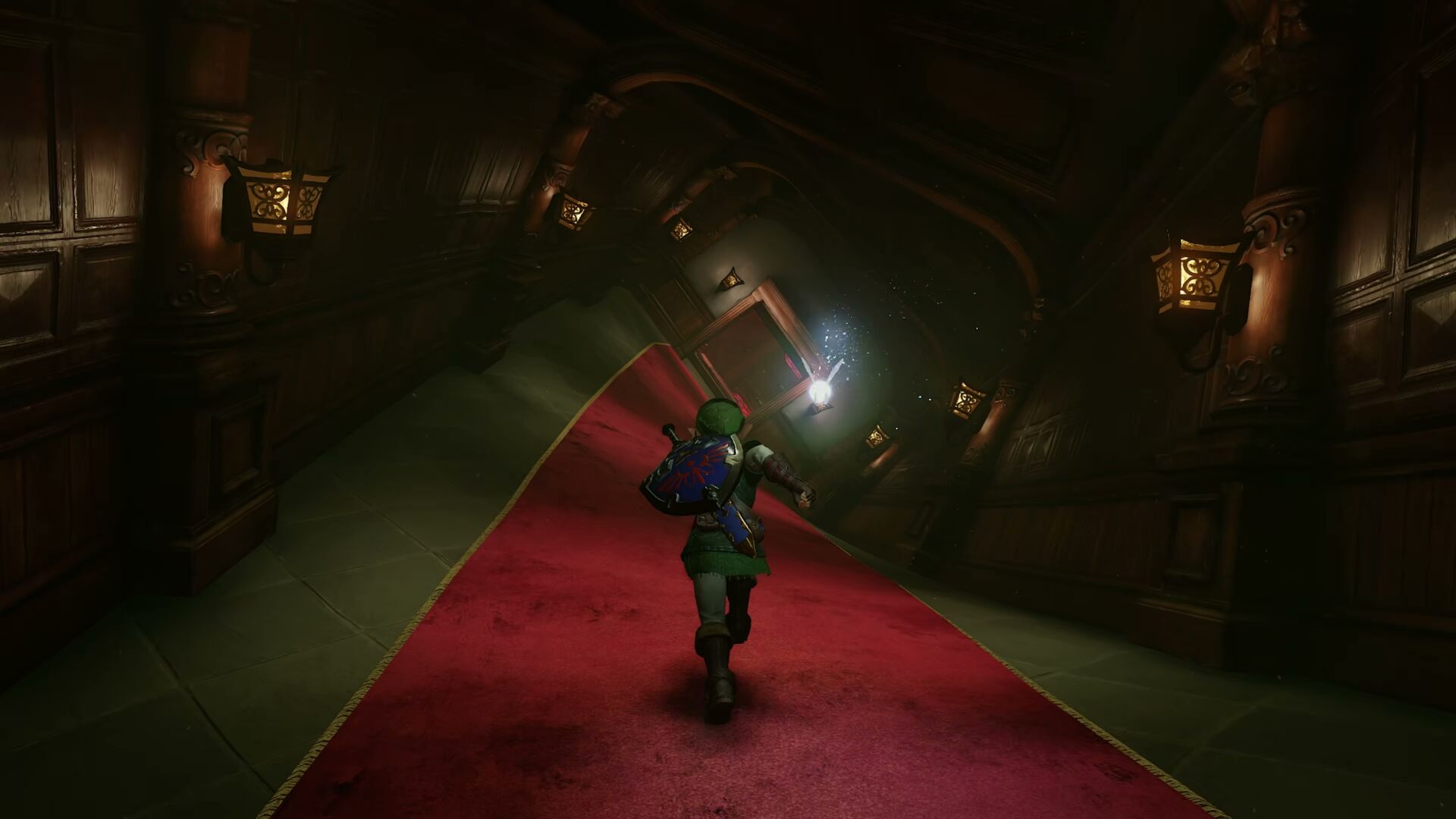
Still in the business of making our lives easier, the developers have also watered down (or outright removed) puzzles, to the point where exploring certain dungeons feels like a speedrun, so obvious are the solutions. The Fire Temple, for instance, is practically a straight line; you blitz through the rooms at a startling rate. The biggest disappointment is the Water Temple, which reduced us to tears on Nintendo 64. In the remake, managing the water level has become a trivial matter, since the dungeon map points out the switches you need to flip. As a result, the labyrinthine character of this hugely symbolic place is blown apart — and it was surely the very last thing that should have been changed in this Ocarina of Time overhaul.
In truth, you get the feeling that thinking and searching have been pushed into the background, as though newcomers mustn't be put off, as though they had to be kept sweet at all costs. Although the developers made the effort not to place the Gold Skulltulas in the same spots as in the original version, they've included the Resonance Stone (which can be switched off, it should be said). Thanks to this item, the less intrepid can track down the golden spiders far more easily. In the same vein, we noticed that items (rupees, hearts and so on) found along the way or dropped by defeated enemies no longer vanish after a few seconds. We also clocked the addition of the Merchant Deku Nut, which summons a travelling trader even when you're deep inside some gloomy dungeon. And naturally, if you decide not to buy anything, the nut doesn't count as used. Why not, eh.
More modern, but still stiff
Another thing that gave us pause: the lack of punch in combat. Let's be clear: nobody's asking Ocarina of Time to play like Phantom Blade Zero. Still, given today's standards — which Ocarina of Time helped shape, with Z-targeting no less — we'd have liked smoother movement and a slightly snappier rhythm. The stiffness you feel at times doesn't encourage risk-taking and locks the player into a monotonous tempo. And then there's one decision we struggle to make sense of: unless we've missed something, when you're surrounded by creatures you can't switch from one enemy to another by flicking the right stick. You have to unlock your current target before you can lock onto another. That said, this bit of archaism isn't really damaging, since the stressful moments in Ocarina of Time can be counted on the knuckles of one finger.
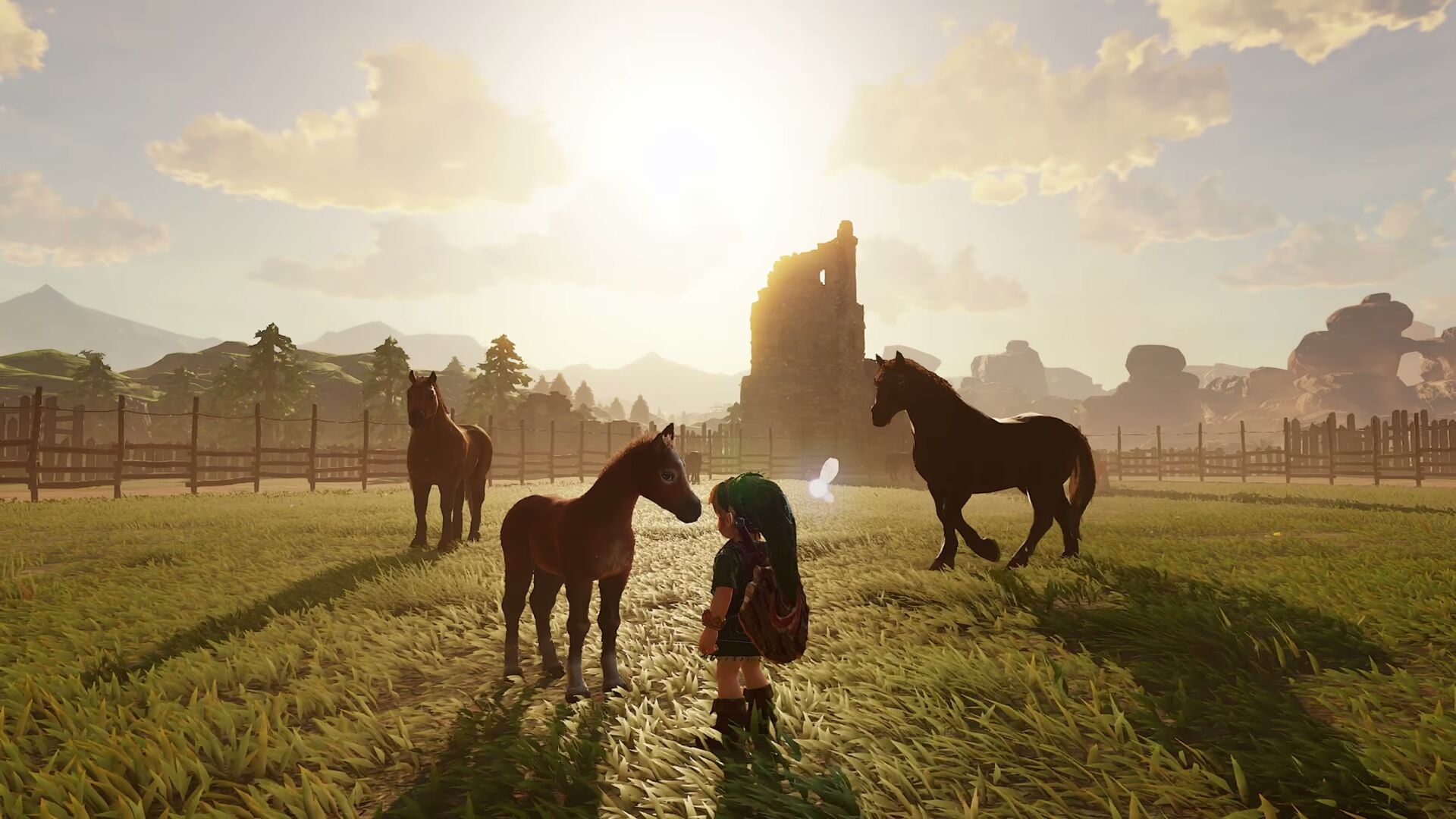
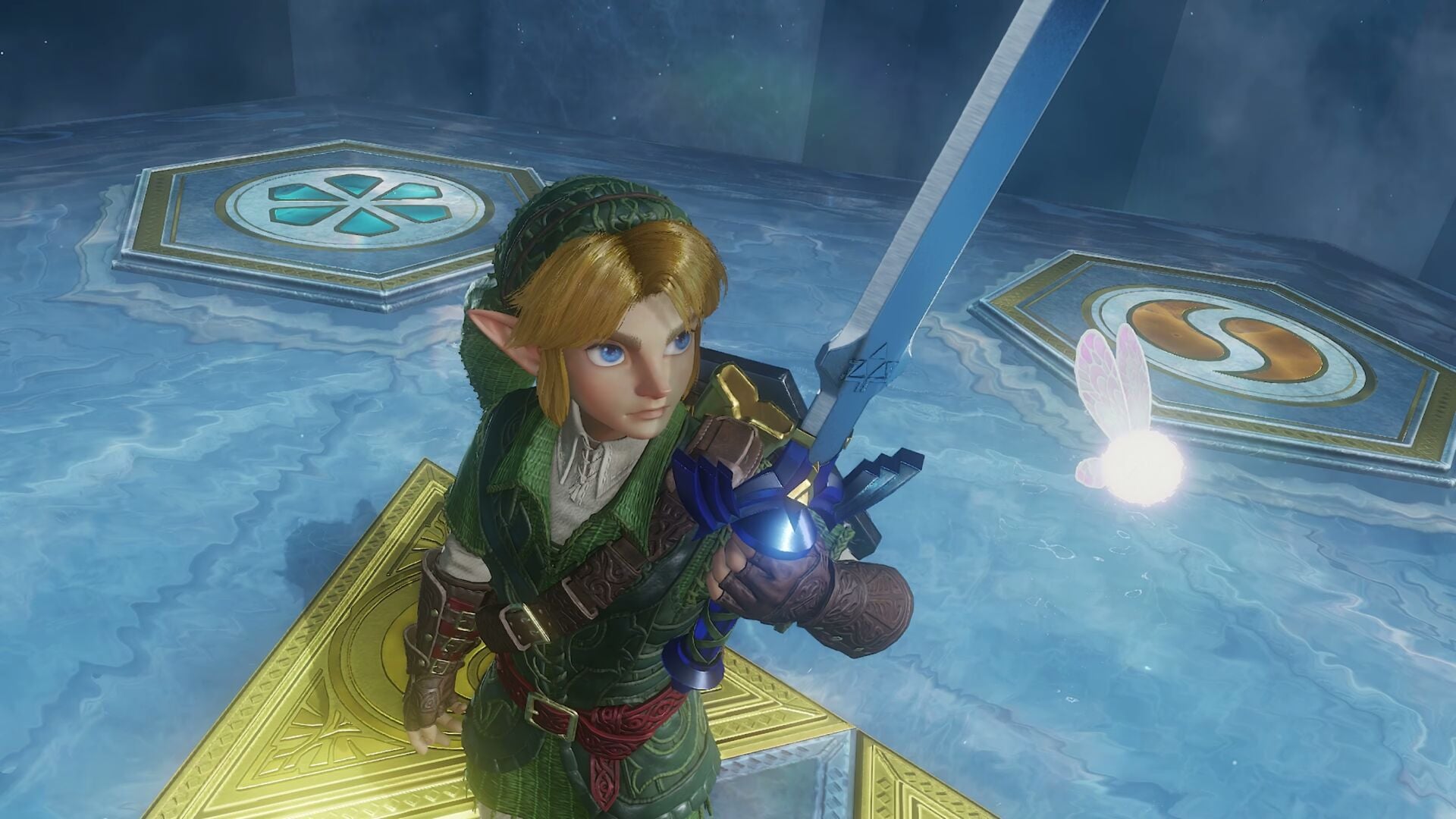
Contrary to what some might think, we haven't only taken the negatives away from Ocarina of Time. It would be unfair not to salute the developers' incredible work on the visual side. From the opening minutes you're swept up by the enchantment of Kokiri Forest, and that sense of wonder lasts the whole journey. Rediscovering every square metre, every character in the kingdom of Hyrule at this level of graphical quality is genuinely head-spinning. It makes you wish Nintendo would rejoin the raw-power race just for the pleasure of taking even bigger visual slaps to the face. Put simply: right now it's the best-looking game on Switch 2, which makes the 360° camera all the more welcome.
The magic still works
Beyond the richness of the textures, beyond the care lavished on the clothing (the fabric rendering in particular), it's the handling of the effects that impresses most. Whether it's the sparks flying off every sword strike, the smart fog reacting constantly to its surroundings, the reflections on the water, or the lighting that elevates the day-night cycle, the console juggles all of it without ever, ever dropping below 60fps. In short, it's masterful stuff — and it keeps building. In the final stretch of the adventure the staging is a knockout, backed by a top-tier soundtrack and voice work. Special mention goes to Frédéric Souterelle, who already lent his voice to Ganondorf in Tears of the Kingdom back in 2023 and returns in the Ocarina of Time remake to make the character even more malevolent.
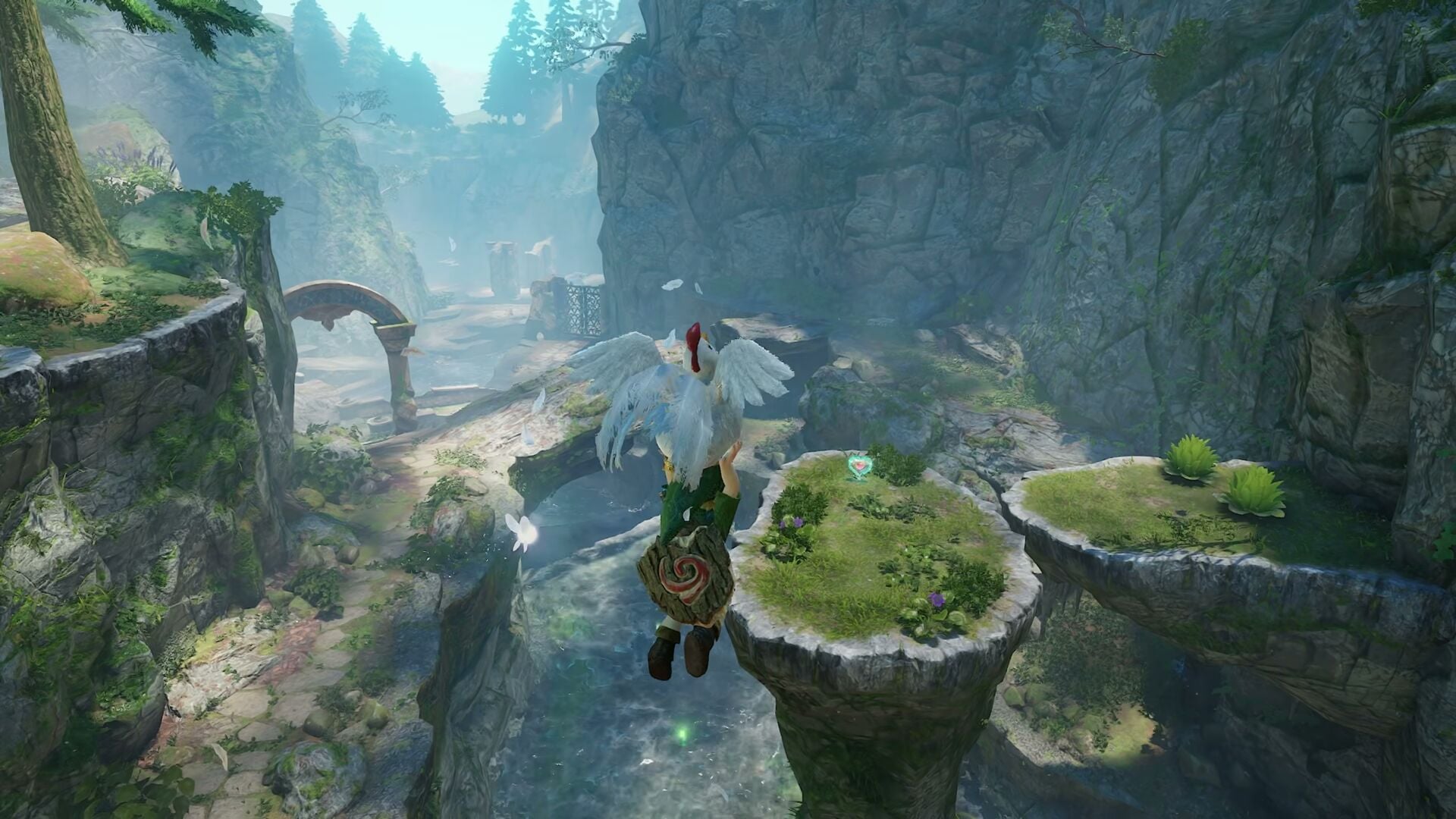
Nintendo made a lot of noise about the addition of a manual jump (it was automatic on Nintendo 64). Does it actually change anything? It feels far more natural to control, no question [...] But let's not get carried away: it doesn't revolutionise exploration in the slightest.
Nintendo's developers have also given some thought to usability. A simple press of L or R brings up a radial menu from which you can pick whichever item you like without having to dig through the main inventory (which, it's worth noting, is far clearer than it was in 1998). The same goes for the shortcuts mapped to the left Joy-Con's directional buttons. To bolster immersion, the interface offers three display levels. On normal, all the usual indicators stay on screen. On pro, only the health gauge and magic bar appear when Link takes damage. Finally, on master, everything is hidden, including during combat (even the targeting reticle).
Jump around
Nintendo made a lot of noise about the addition of a manual jump (it was automatic on Nintendo 64). Does it actually change anything? It feels far more natural to control, no question. Anyone who hammered Breath of the Wild and Tears of the Kingdom but hasn't yet had the chance to play Ocarina of Time might well have been thrown by the absence of a dedicated jump button and the constant need to wrangle the camera into the right angle. But let's not get carried away: it doesn't revolutionise exploration in the slightest. The developers themselves describe it as an adjustment. We're not talking about the kind of ambition From Software brought to Elden Ring, for instance. The Lands Between were designed around jumping from the outset. In the Ocarina of Time remake it's purely a comfort feature (and we'll happily take it), much like the sprint (though veterans can still chain rolls, old-school style).
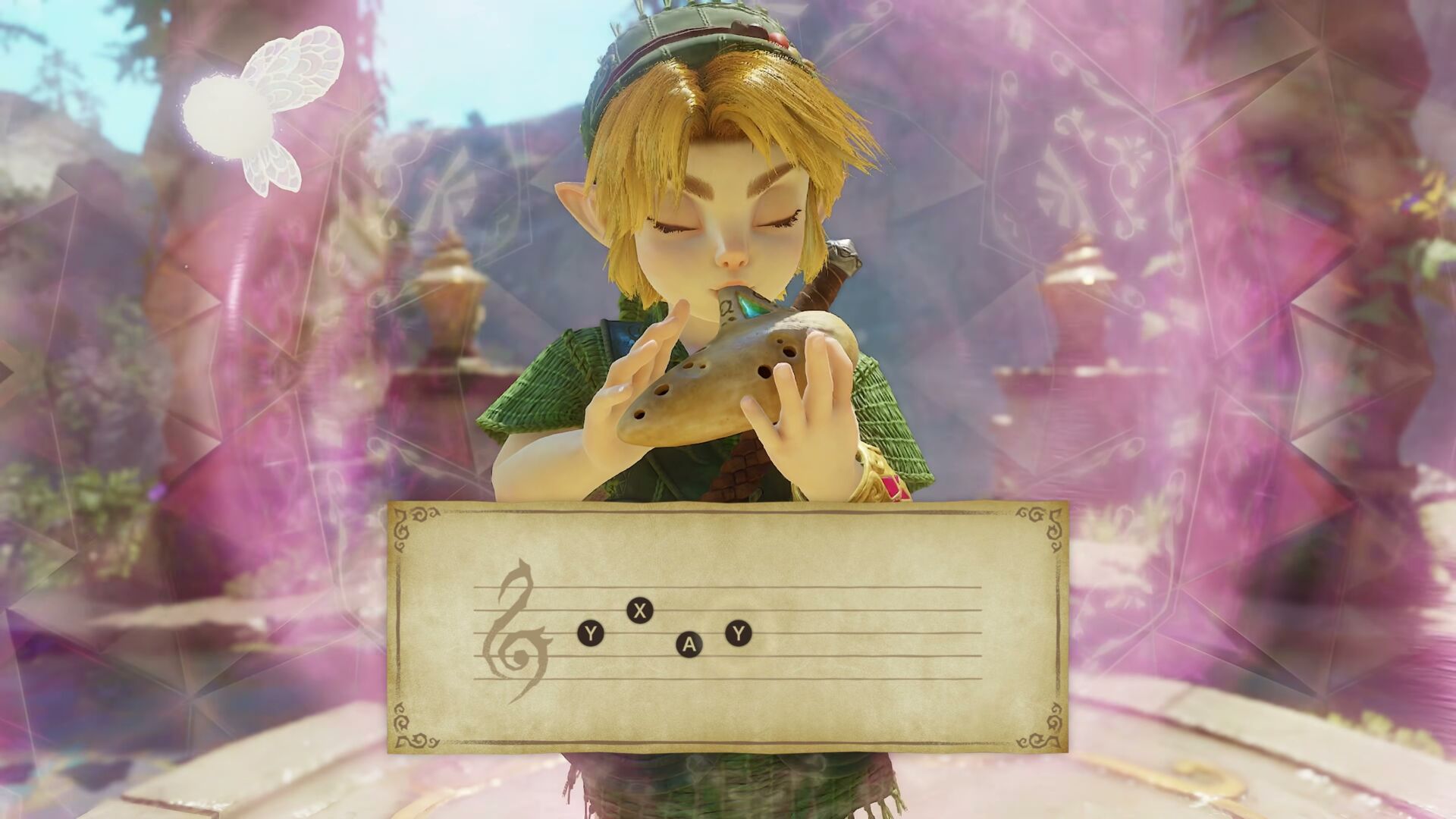
Naively, we assumed the developers would use this overhaul to serve up some brand-new content, especially after all the nudging from fans. Nothing doing. Instead we get the Monster Amphitheatre (a sort of Boss Rush mode already present in the 3DS remaster) and the option to hum the ocarina melodies using the Switch 2's microphone. Hardly thrilling. It would have been far more interesting to breathe some life into Hyrule Field which, let's be honest, remains rather empty. Granted, it's a joy to be reunited with Epona (whose handling is oddly cumbersome) and ride her across long distances, but a few extra NPCs and two or three activities (on top of Lon Lon Ranch) wouldn't have gone amiss — quite the opposite.
The good
- An impressive graphical overhaul
- The quality of the voice acting
- The joy of rediscovering a landmark of gaming
- Technically, it's seriously accomplished
- The reorchestrated tracks from the original score
- A far more comfortable version to play
- Ganondorf cuts an imposing figure
The bad
- Extreme streamlining that undermines the challenge and the sense of discovery
- Stiff, inflexible combat
- No real new content
- Hyrule Field remains depressingly empty