
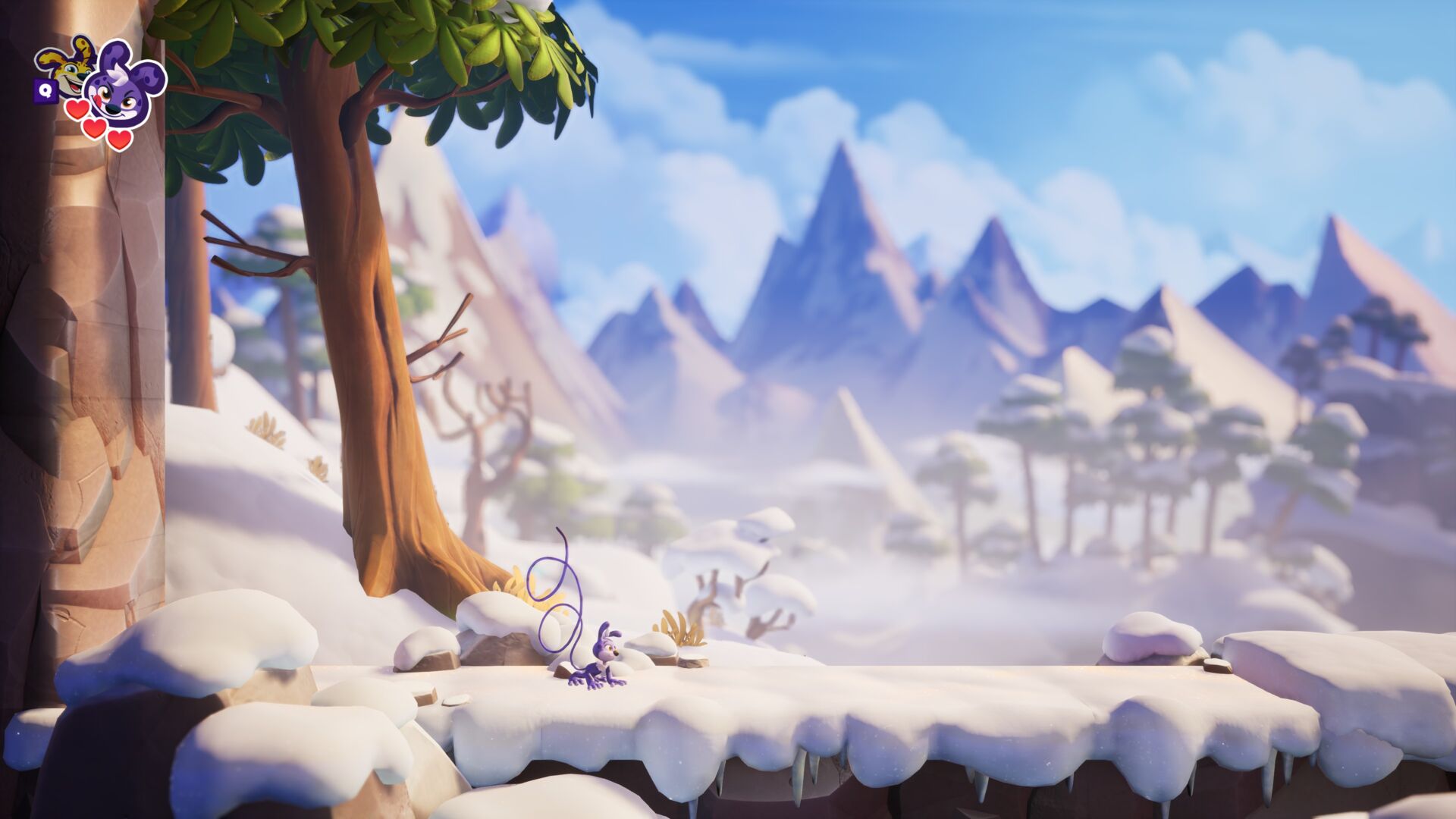
Five years on from its first "hoobadventure", and four years after the excellent free DLC The Hidden World, Franquin's Palombian creature makes a grand return to our screens. While it's once again a matter of bounding from platform to platform, the game still has a few well-judged surprises and new ideas up its sleeve. So don't be fooled by the opening minutes of the adventure, or even the screenshots, which might initially suggest — wrongly — a certain standing still.

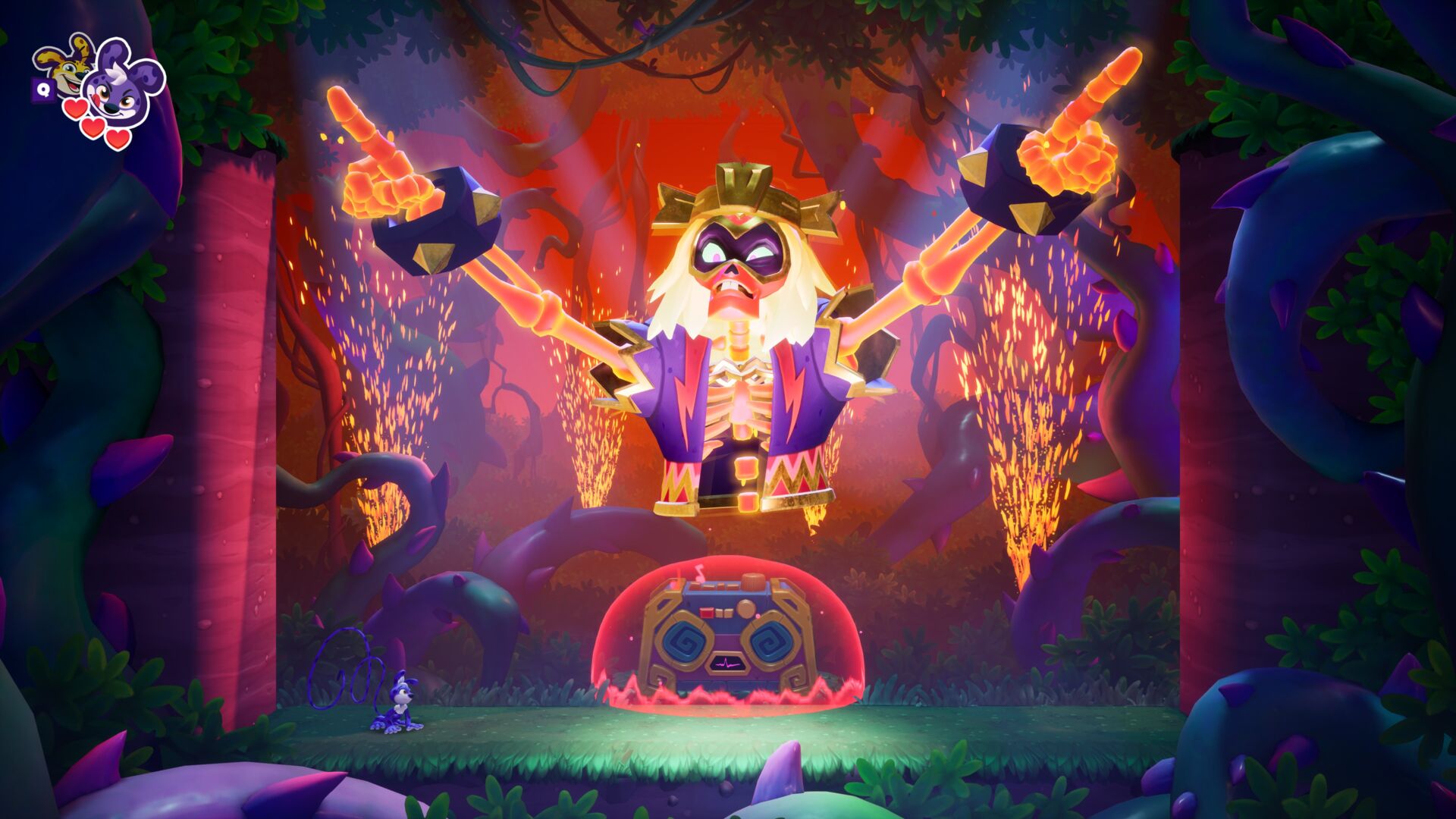
Let's be honest, the story is never a platformer's strong suit. And on that front, Marsupilami 2 does no better than its predecessor. The opening set-up is in fact exactly the same as in Hoobadventure, with ghostly mummies once again corrupting the animals of Palombia and disturbing the marsupilamis' nap. Granted, that's all you need to justify moving from level to level and a handful of boss fights. Even so, you do miss any real stakes or characters, and the fact that Franquin's world isn't truly drawn upon beyond its iconic creature and the general South American atmosphere. Speaking of which, while the game's subtitle inevitably calls Latin music to mind, the Salsa Palombia soundtrack actually takes in several genres. The four mummies the marsupilamis have to defeat are devotees of rock, jazz, electro and disco respectively. The various boss sequences therefore offer fairly distinct visual and audio dressing, along with more varied and more interesting gameplay than the simple chase sequences of the previous instalment. The settings, meanwhile, lean heavily towards urban environments, though a few forest and frozen-expanse levels remain.
Which is just as well, because those are the ones we prefer. And even if it's surely just a matter of taste, none of the environments in this new instalment excited us as much as The Hidden World in Hoobadventure. With that free DLC released in late 2022, Ocellus Studio set the bar very high indeed. So high that, when it comes to atmosphere and originality, the Lyon-based developers haven't managed to beat their own record here. But no need to panic, because where gameplay is concerned, they've noticeably improved on the original recipe.
MARSU MOVES
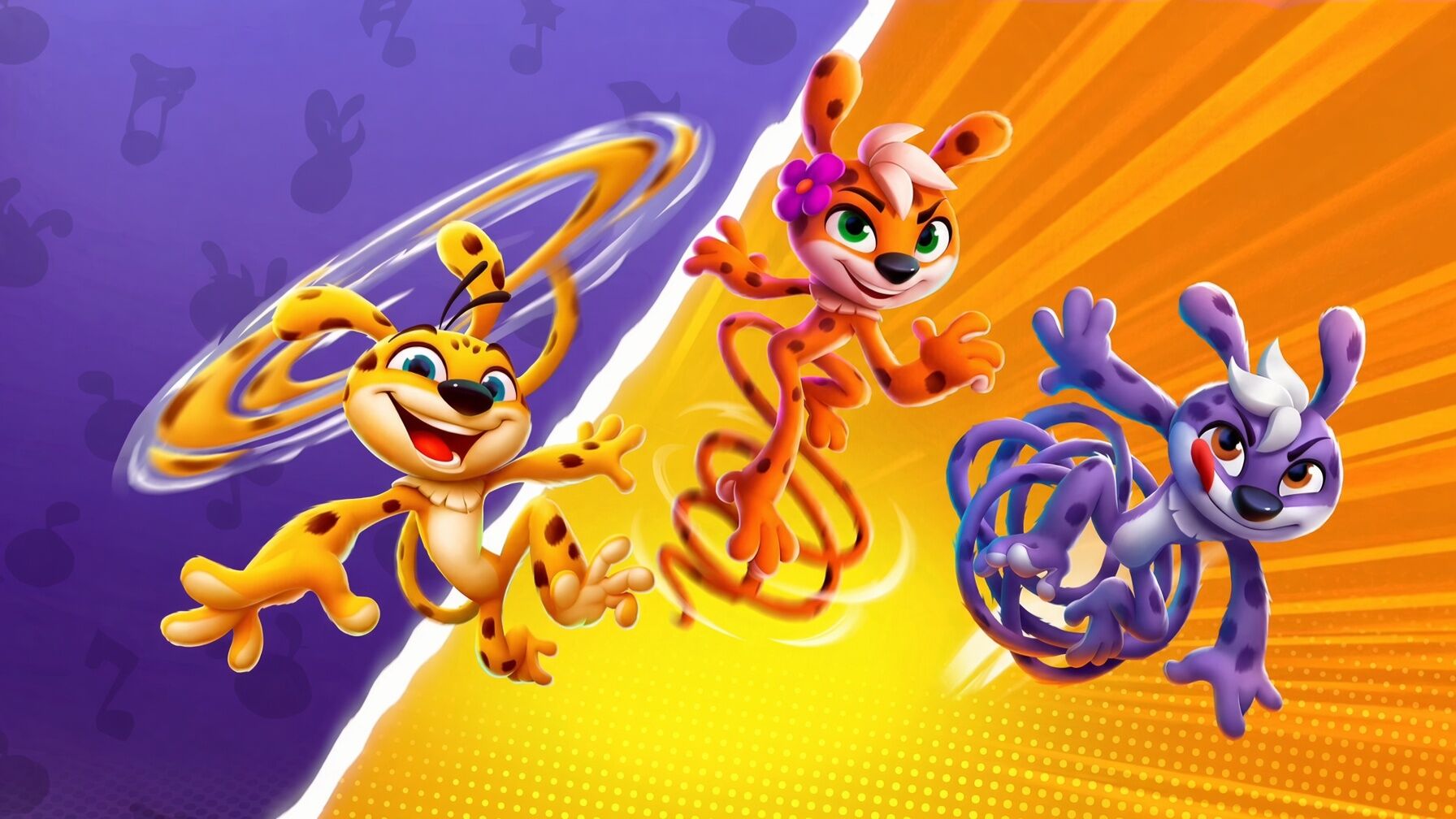
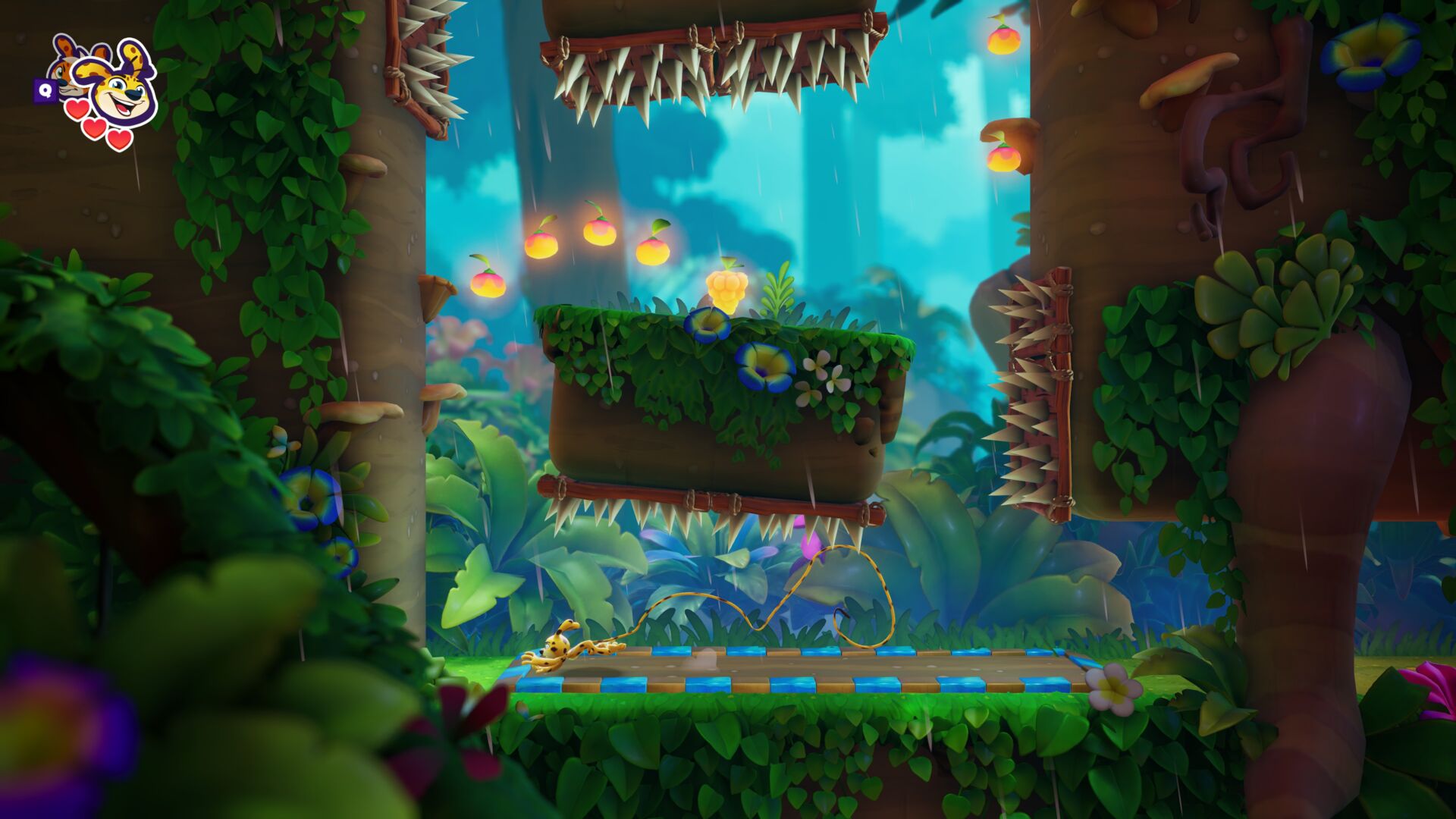
In keeping with the 2026 animated series and the 2021 game, Salsa Palombia once again puts you in control of three different marsupilamis: Twister, Punch and Hope, recognisable by their yellow, orange and bluish fur. This time, though, the differences aren't merely cosmetic! The trio now have genuinely different abilities. Hope is the only one able to roll into a bouncing ball, which also makes him immune to spikes and brambles. Punch has a double jump, while Twister can follow up his initial jump with an air dash. Each level features only two of the team's three characters, with the layout of the foreground scenery always designed around the specific talents of the pair on hand. Solo players can switch between marsupilamis at any moment, with a slight slowdown of time smoothing and easing the handover. While changing hero never seems compulsory to make it along the main path, certain hidden areas are only reachable with one ability or another.
The level design, always a pleasure to make your way through and riddled with secret passages, deserves plenty of praise. The different planes read perfectly, discreet but unmistakable clues help you find most of the optional routes, and there are even a few camera moves here and there (zooms or angle changes) to add a bit of flourish to the staging. Nor should we forget the quality of the visuals, which put on a show both technically and artistically. There's no major leap forward compared with the first game, but the results still hold up perfectly well in 2026. It's pretty, smooth, colourful and bright, and discovering each new environment is consistently enjoyable.
For ages 7 to 77
The running time, meanwhile, has grown since Hoobadventure, which could be wrapped up in under three hours at launch. This time you can count on at least double that if you take the time to hunt down the secret areas. There are more levels and, above all, some are only unlocked once you've collected enough fruit or musical notes in the preceding sections. Blasting through the game in a straight line isn't really an option, then, and you'll occasionally need to "farm" certain resources in order to progress. Thankfully this side of things stays very light, and replaying the levels is no hardship anyway.
What's more, once you've cleared each one normally, it can be replayed in Salsa mode. This alternative mode is a welcome replacement for the first game's time attack: instead of the stress of a ticking clock, the goal here is to find your "flow". In practice, that means stringing together fruit pickups with as little dead time as possible, in order to increase their value. Keeping your combo high (which depends both on your reflexes and on how well you know the levels) therefore nets you more fruit, which in turn unlocks the challenges with an entry requirement that much faster. And between the individual dojo levels, those grouped into challenge cups, and the versus mode, there's plenty here to stretch the playtime further still. Throw in three difficulty settings and you get a game that can please younger players and die-hards alike. Reaching 100 % will take a great deal of skill and perseverance. That said, Salsa Palombia remains a family adventure first and foremost, as the presence of a co-op mode makes clear. Which is just as well because, for all its conventionality, this very fine adventure deserves to be shared as widely as possible.
The good
- Three marsupilamis, now with distinct abilities
- Visuals as charming as ever
- Levels that are a pleasure to explore and keep things fresh
- Longer than the first instalment
- Salsa mode is more interesting than a simple time-trial mode
- Hitting 100% is anything but trivial
The bad
- The Marsupilami universe is still underused
- The story is throwaway and close to the first game's
- Nothing here reinvents the genre
- No section of the game betters 2022's The Hidden World