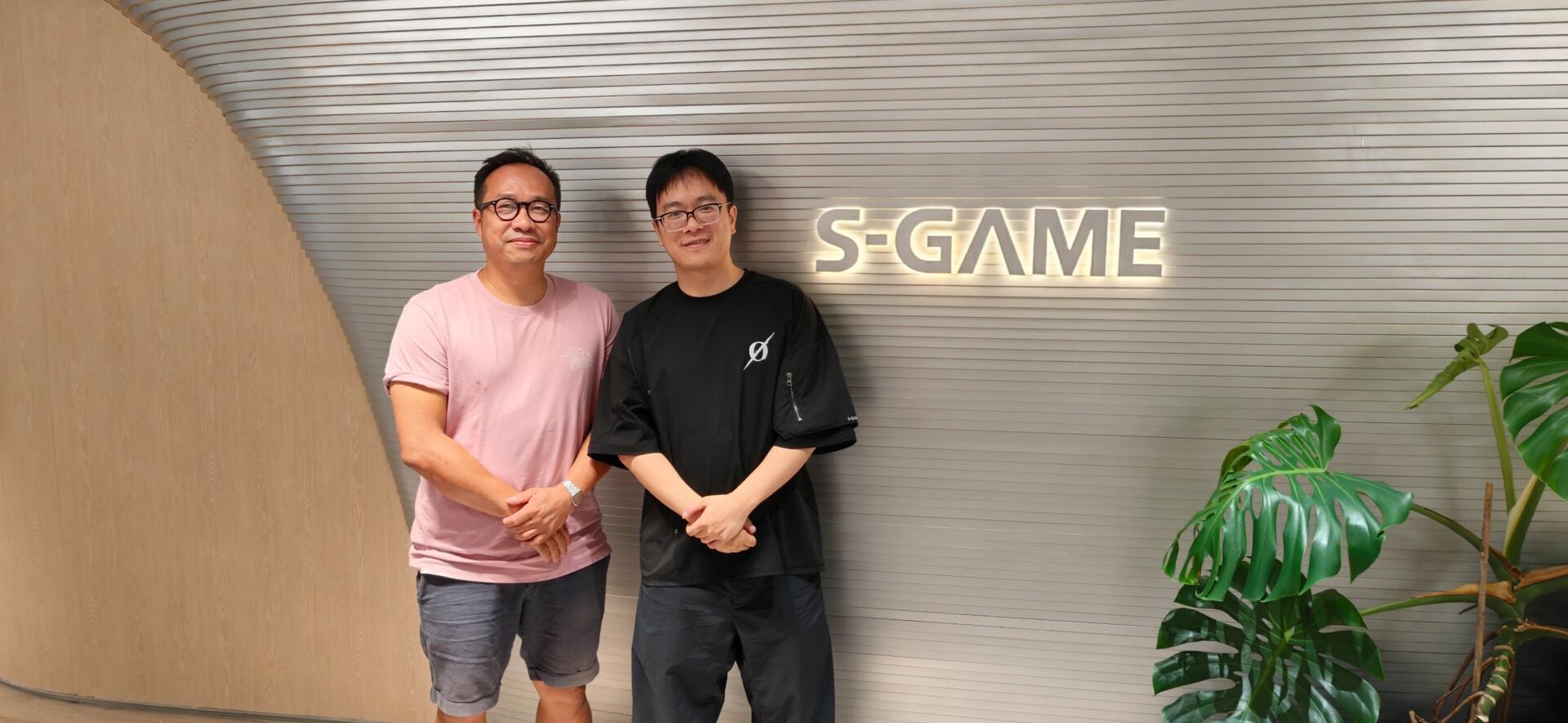
We took advantage of our trip to China, to S-Game's offices, to interview Soulframe Liang, the game director of Phantom Blade Zero. A chance to look back at how the "Kung-fu Punk" concept came about, the colossal work needed to make martial arts choreography interactive and, above all, playable, but also at the gameplay choices that set the game apart from a Souls-like or a straightforward hack & slash. Soulframe Liang also talked to us about the place of Chinese culture in this universe, the four difficulty levels, New Game Plus and how long the adventure lasts. An interview that gives a better sense of the studio's vision and its ambitions for this action game, due in a few weeks' time, just before GTA 6. Not scared in the slightest.
Maxime Chao: Phantom Blade Zero features a huge number of weapons. How did you give each one its own identity while keeping the gameplay balanced? Do you expect players to master just a handful of weapons, or would you rather they switch between them regularly?
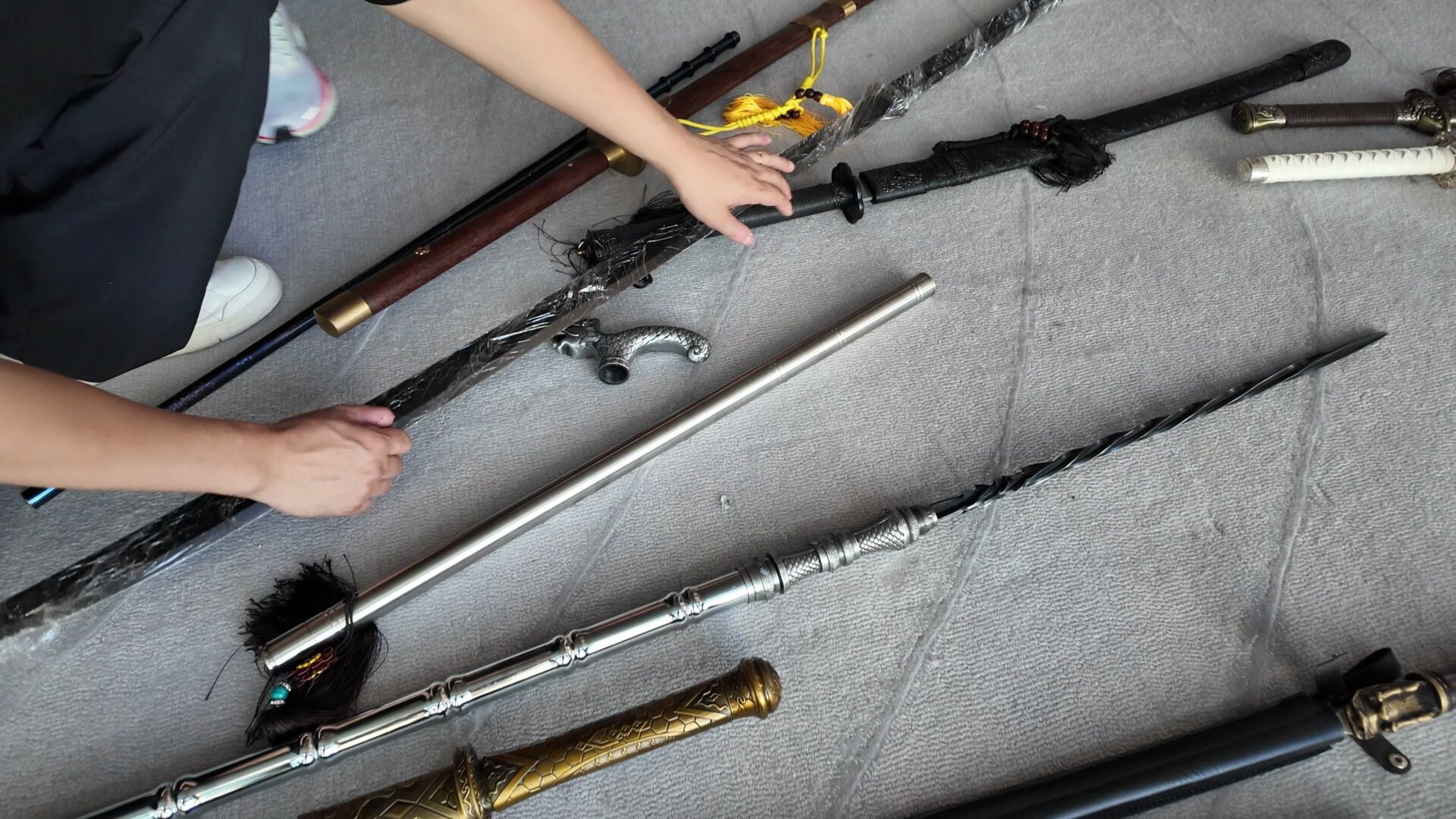
Soulframe Liang: We designed around thirty different weapons and we poured a huge amount of time and energy into each one. Of course, we'd love players to discover as many of them as possible, but the last thing we want is to force a particular way of playing on them. You can absolutely finish the game from start to finish with a single weapon. That's entirely possible. We've even included a weapon that amounts to a sort of extra challenge, if you spotted it: the wooden sword our hero has had since childhood. In theory, you can complete the whole adventure with that one simple sword.
Maxime Chao: You can really finish the game with nothing but that wooden weapon, that's actually possible?!
Soulframe Liang: Yes, absolutely! That possibility also ties into a certain philosophy of Chinese kung-fu. Once you've pushed your mastery to its ultimate level, you no longer necessarily need an exceptional weapon to defeat your opponents. A simple wooden sword can be enough. That said, we obviously hope you'll want to try out as many weapons as possible, because they offer very different combat styles. The differences aren't limited to the animations. The mechanics, the rhythm of the fights and the reach of the attacks can change radically from one weapon to another.
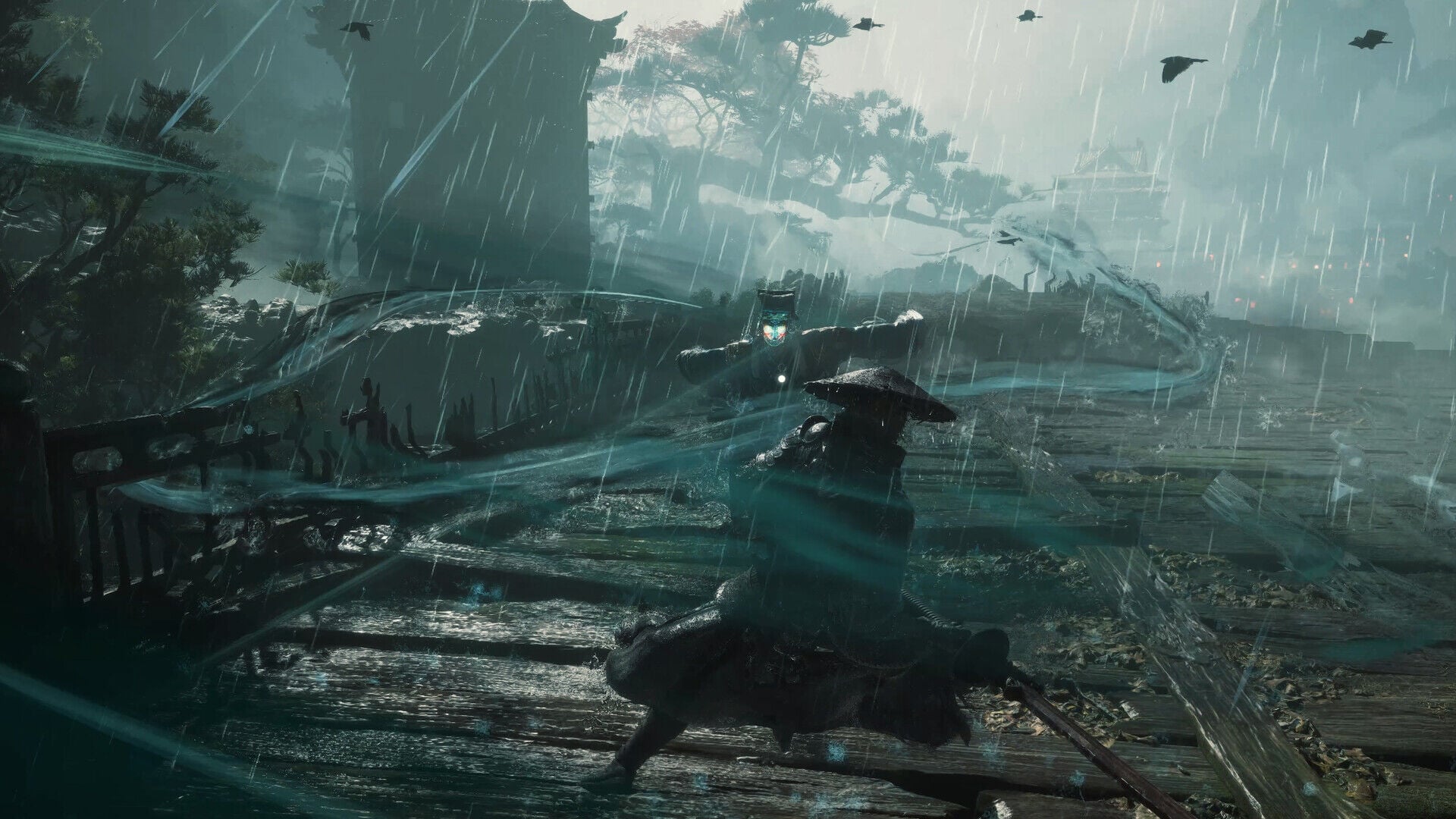
Soulframe Liang: Did you use the drunken blades you pick up in the second chapter?
Maxime Chao: Yes, of course — I managed to beat the boss on the bridge in the pouring rain.
Soulframe Liang: That's a good example of the weapon variety in the game. They handle in a very particular way, their reach is different and the character adopts a stance that makes him look drunk. The sword becomes almost uncontrollable in its movements, and the drunker you are, the more powerful you become. A bit like real life, really! (laughs)
We have plenty of weapons in that vein. Striking a balance between them all is obviously difficult, but we're fortunate not to be making a competitive multiplayer game. We don't have to ensure that every weapon is perfectly balanced against all the others. What interests us far more is offering different sensations and different kinds of thrill. If players feel what makes each weapon unique, then we'll have done a big part of our job already.
Maxime Chao: Balance in a game does matter, though…
Soulframe Liang: For me, the most important thing isn't balance in the traditional sense. I prefer to talk about locks and keys. We want to create different situations that call for appropriate responses, and certain weapons can prove particularly effective in specific circumstances. Take a simple example. Once you get an axe, you may run into enemies carrying shields. The axe lets you break through their guard, but it isn't the only solution. You can also go about it differently with other weapons or other mechanics. We've come up with a lot of situations like that. Each new obstacle can call for a different approach, without ever forcing the player to switch weapons. Above all, it has to be fun and keep the sensations fresh as the adventure goes on.
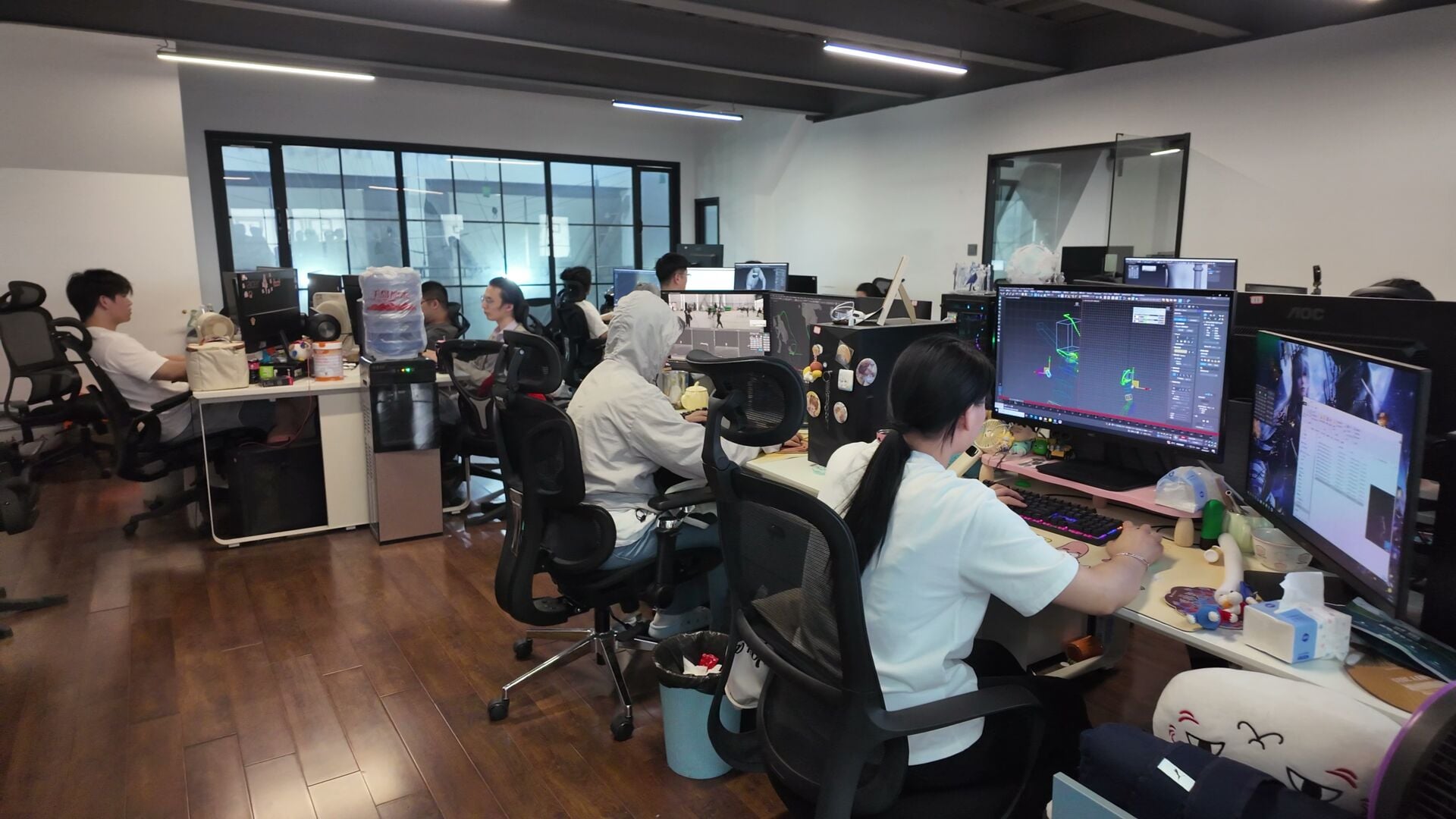
Fortunately, we have a very rich industrial fabric here in China. Plenty of studios specialising in outsourcing have spent the last twenty years or so working on animation, 3D modelling and concept art for Western and Japanese productions.
Maxime Chao: Phantom Blade Zero represents a considerable step up in scale for your studio, S-Game. You're going from mobile games to a big 3D console production built in Unreal Engine 5. What was the main challenge of that transition, and how has the project evolved over the course of development?
Soulframe Liang: That's a good question, and an important one, because we really did have an enormous amount to learn. Before this, we only made mobile games. Phantom Blade Zero is our first big AAA 3D game, our first production on this scale with Unreal Engine 5. All of it was new to us. The universe and the IP, on the other hand, have been around far longer. I started dreaming up this world when I was still a student. I wrote its stories and laid the first foundations more than twenty years ago. So the world of Phantom Blade Zero isn't new, but we had to take it to a completely different level. You also have to understand that in China there still aren't a huge number of developers with deep experience of this kind of production. So we had to build a great deal from scratch.
Fortunately, we have a very rich industrial fabric in China. Plenty of outsourcing studios have spent twenty-odd years working on animation, 3D modelling and concept art for Western or Japanese productions. Those teams have considerable expertise. What they sometimes lacked was the chance to work on games made by Chinese studios, with their own cultural references and their own vision. We were able to draw on all those skills, and we were lucky to have that environment around us.
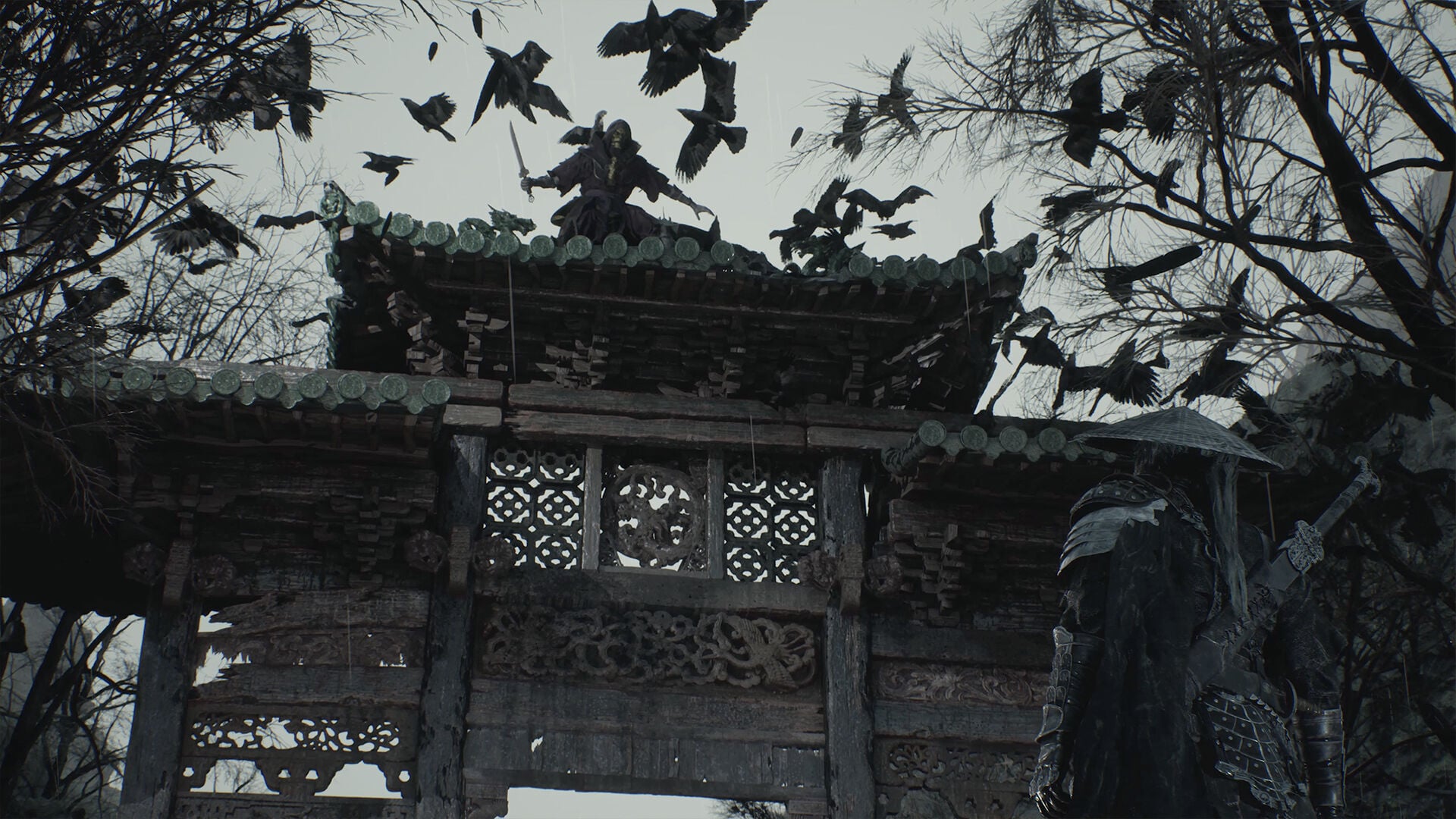
Maxime Chao: So in a sense you weren't starting from nothing — it's less daunting when you already have decades of experience behind you…
Soulframe Liang: If you ask me what the main difficulty was, my answer is that everything was difficult. We had to learn, invent new methods and find solutions we'd never had the chance to put into practice before. We also hired a lot of young developers straight out of school. Some had never worked on a production of this size. And yet we sometimes handed them very significant responsibilities. A young developer might find themselves in charge of designing a major boss, or working on the game's opening sequence. We did that on several occasions. It's part of our mindset.
Maxime Chao: You often talk about having worked like an indie studio. When you look at the scale of Phantom Blade Zero, is it really possible to work like an indie?
Soulframe Liang: People sometimes ask us whether Phantom Blade Zero is an indie game. Given its scale and budget, I wouldn't call it indie in the economic sense of the word. But if we're talking about the spirit in which we're making it, then yes, I think there's something deeply indie about it. We've held on to that urge to experiment, to create something new and to push past the usual limits. We're not afraid to take risks or to explore unknown territory. I think that mindset has been essential in getting the game made.
Maxime Chao: Phantom Blade Zero draws deeply on Chinese culture, yet you want to reach an international audience. How have you managed to preserve that cultural identity while keeping the game accessible to players all over the world?
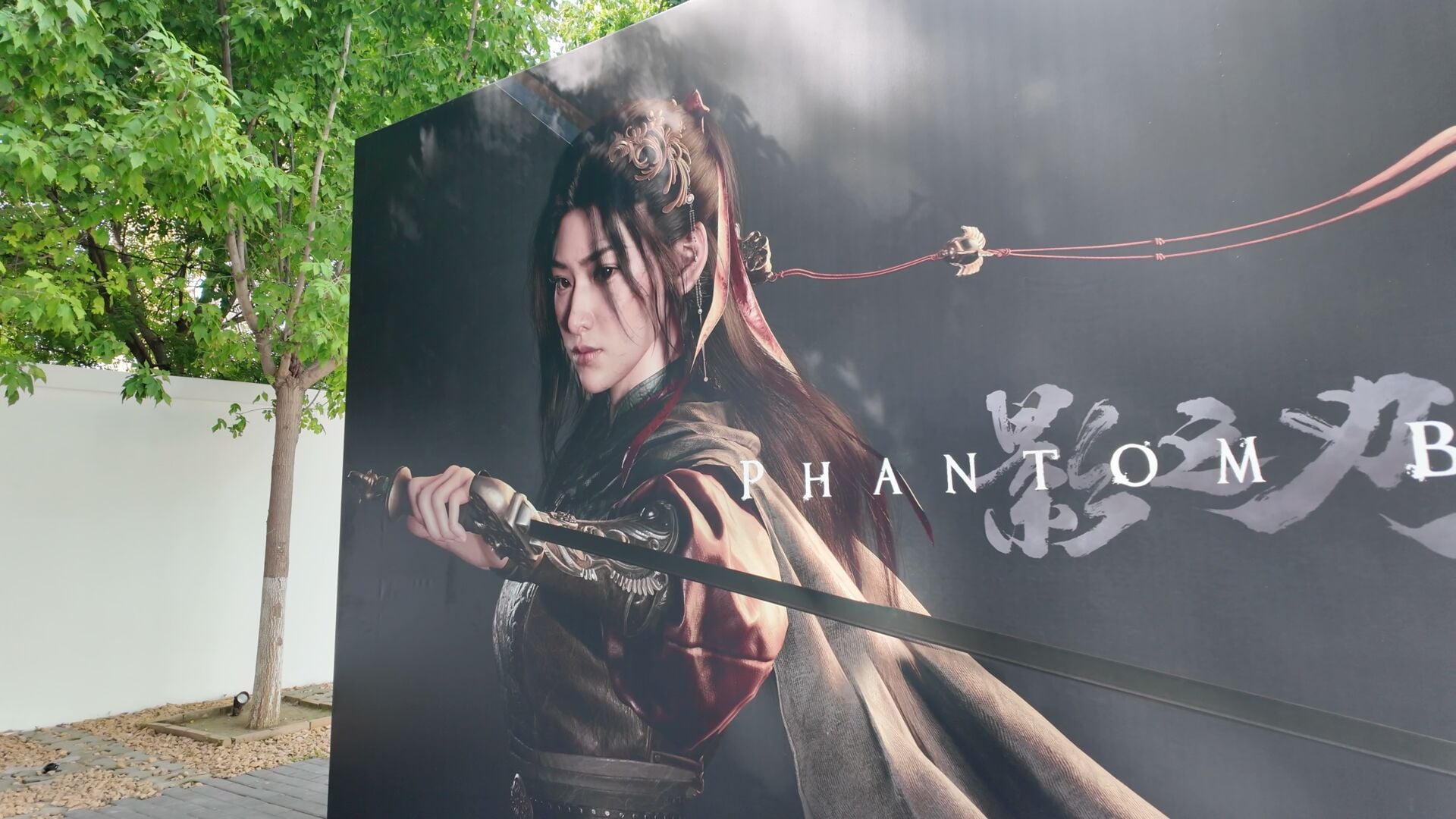
Soulframe Liang: First of all, Phantom Blade Zero is built on a wholly original universe, one I first imagined and that our team then developed collectively. It isn't an adaptation of an existing work. We created our own world and wove elements of Chinese culture into it. The story is fairly easy to follow. You play an elite assassin hunted by his own organisation — a bit like John Wick.
Maxime Chao: So that's why Donnie Yen is in the game… (laughs)
Soulframe Liang: Exactly! We want the game to be deeply rooted in Chinese culture, and in kung-fu culture in particular. We're proud of our heritage and we want to keep it authentic. But we don't want that cultural dimension to become a barrier to understanding the story. Culture should enrich the game, give it a particular flavour and make it different from what players already know. It shouldn't lose them or stop them grasping what's going on. That isn't necessarily easy to pull off. So we try to build our narrative around universal emotions: friendship, love, revenge, hatred. Those are feelings anyone can understand, whatever their culture.
At the same time, we're working on the authenticity of the movements, the weapons, the landscapes and the art direction as a whole, in order to show the beauty of China and its heritage. We're trying to strike the right balance between those two dimensions. The story and the emotions have to speak to everyone, while the cultural elements give the game its personality. There are deeper references to Chinese philosophy too. Bruce Lee, for instance, often spoke about water and the moon reflected in water. We've also folded in ideas drawn from our own philosophy and traditions.
People sometimes ask us whether Phantom Blade Zero is an indie game. Given its scale and its budget, I wouldn't call it indie in the economic sense of the word. On the other hand, if we're talking about the spirit in which we're developing it, then yes, I think there's something deeply independent about it.
You don't need to catch every one of those references to enjoy the game. But if some players do pick up on them, feel them and find an extra layer of meaning there, we'll obviously be delighted. We want to express something that comes from deep within our culture, without that dimension being essential to enjoying the experience. To sum up, I'd say the visual and cultural elements are very much present, but the emotions and the core themes remain universal. That's the combination we're trying to make work in Phantom Blade Zero.
Maxime Chao: The fights in Phantom Blade Zero have a very cinematic choreography. How did you manage to translate all those real martial arts movements into gameplay while still letting the player stay in control of their character?
Soulframe Liang: That's an excellent question. I'd even say it's the source of about 80% of the difficulties we ran into over these four years of development. Our ambition was to create something genuinely different from anything we'd seen before. We wanted to design a kung-fu film the player could take part in — a playable kung-fu film. The problem is that we didn't really have a template to lean on. So we had to explore a lot of avenues and build our own method.
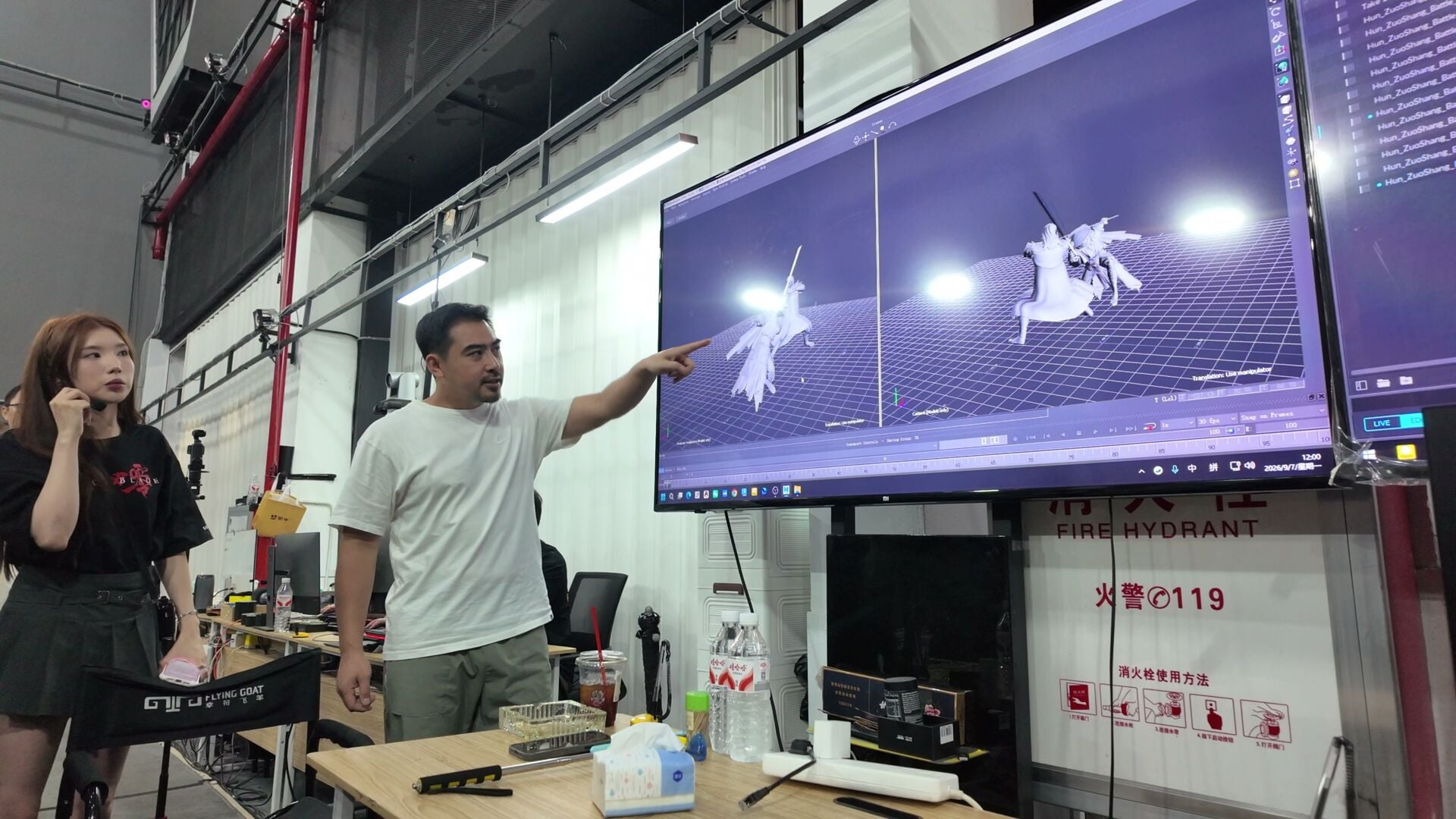
We studied classic martial arts films, worked with Donnie Yen and learned from kung-fu masters and traditional schools. But all of those references were built first and foremost on the language of cinema. In a film, movements flow into one another smoothly and continuously. A choreography can unfold without interruption, because it's designed to be watched. In a video game, it's different. Every movement has to be triggerable by the player, respond to an input and slot into an interactive system. So we had to break those long sequences down into shorter segments, pin down precisely where movements begin and end, and then devise the mechanics that link them together. We had to work out how to preserve the fluidity of a choreography while still letting the player decide what they do. We also added effects and visual elements to certain movements to reinforce their impact. All of that takes an enormous amount of work.
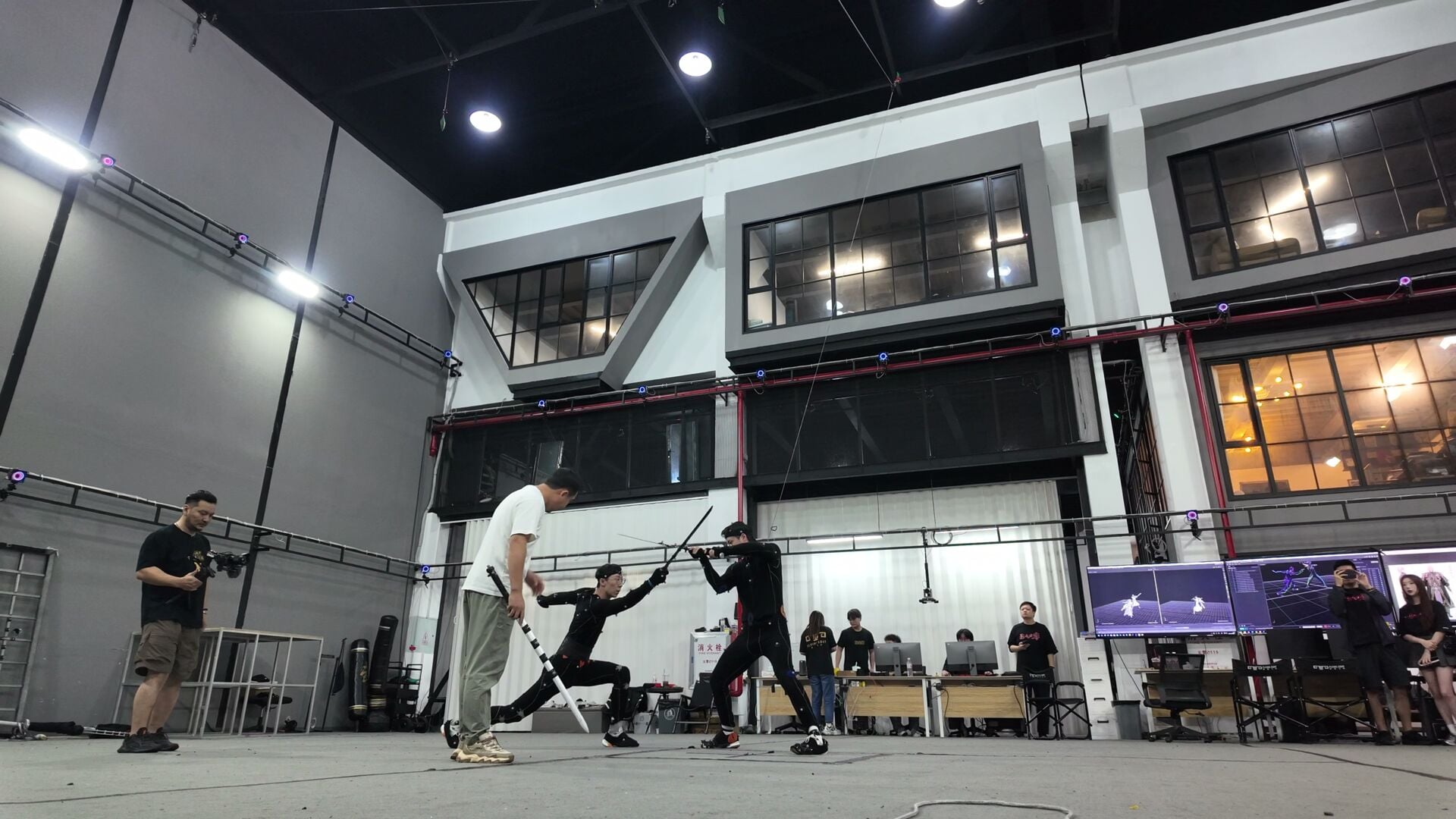
Maxime Chao: I imagine performance capture made the job a bit easier, though?
Soulframe Liang: Our in-house kung-fu team plays an essential role here. They take in the knowledge and the movements brought by our external partners, whether that's Donnie Yen, the lion dance troupe or the martial arts masters. I think of our team as a translator. They turn the language of cinema into the language of games. Its members have to define every movement, every stop, every transition frame, then come up with different ways of linking the sequences together. The aim is to let the player chain actions as fluidly as possible without the fights losing their spectacle. It's quite hard to explain with words alone. That's also why we're giving you access to our motion capture studio, so you can see first-hand how we assemble different action segments to create a continuous combo.
Maxime Chao: The game is often compared to Souls-likes, sometimes to Sekiro or Devil May Cry. How would you define Phantom Blade Zero's genre yourself, and what were your main influences?
Soulframe Liang: I think a lot of you have been surprised by how the game actually feels in combat. So far, we've only shown a small part of what we're working on. Our trailers and previous demos focused essentially on the fighting. Inevitably, seeing only those sequences, players might imagine an action game in which you wipe out a group of enemies before moving on to a new area to take on another one. But when you actually play Phantom Blade Zero, you realise the experience goes well beyond that formula.
You can also talk to characters and pick up, in the middle of a conversation, clues about the secrets of this world. Exploration is very much part of the experience.
The game has a substantial story, exploration and plenty of secrets to uncover. So I'd define it as a blend of several genres, a sort of hybrid genre. We set out to extract the essence of different categories of game, keep what struck us as the most interesting in each one, then combine those elements without carrying over all of their complexity. If I had to represent that approach as a pyramid, its base would be an RPG system. You have side quests, a map and pointers to guide you. But we don't want to clutter the screen with dozens of markers. We'd rather highlight the important information, so that exploration stays clear and natural.
You can also talk to characters and pick up, in the middle of a conversation, clues about this world's secrets. Exploration is therefore a full part of the experience. At its middle difficulty level, we borrow certain elements from Souls-like level design. That doesn't mean the whole game belongs to that genre, though. We take some of its ideas, but we fold them into a structure that is our own. Finally, at the top of that pyramid, you find the fast combat, the combos and the spectacular clashes you'd more readily associate with hack-and-slash games. All of these elements have to work together naturally. You progress through the story, you explore the world, you uncover secrets and, when you meet a boss, the tempo picks up and the fight becomes far more intense.
So I wouldn't say Phantom Blade Zero is a Souls-like. Nor is it a straightforward hack-and-slash, or an open-world RPG. Perhaps we could call it a wuxia adventure, a journey into the world of Chinese martial arts. But ultimately I think Phantom Blade Zero should above all be seen as an experience of its own.
Maxime Chao: You coined the term “Kung-fu Punk” to define Phantom Blade Zero's identity. What exactly does it mean to you?
Soulframe Liang: As I explained, we've created our own world. But presenting that world to an international audience also gives us the chance to put forward a new concept, a new aesthetic identity and, in time, perhaps a new genre. Our ultimate ambition is to make Kung-fu Punk an idea everyone can understand and recognise, like cyberpunk or steampunk.
Kung fu is a part of our culture that we're proud of. It's also a way of paying tribute to a tradition, but we don't want simply to reproduce it as it stands. We want to add new elements to it, new sensations and a touch of fantasy, in order to turn it into a form of modern popular culture that can speak to everyone. Bruce Lee achieved something similar decades ago. He helped introduce kung fu to Hollywood and turn it into a global popular culture. Even though its roots are Chinese, kung fu no longer belongs to China alone. Its spirit has inspired people all over the world, through his films, his philosophy and his approach to martial arts.
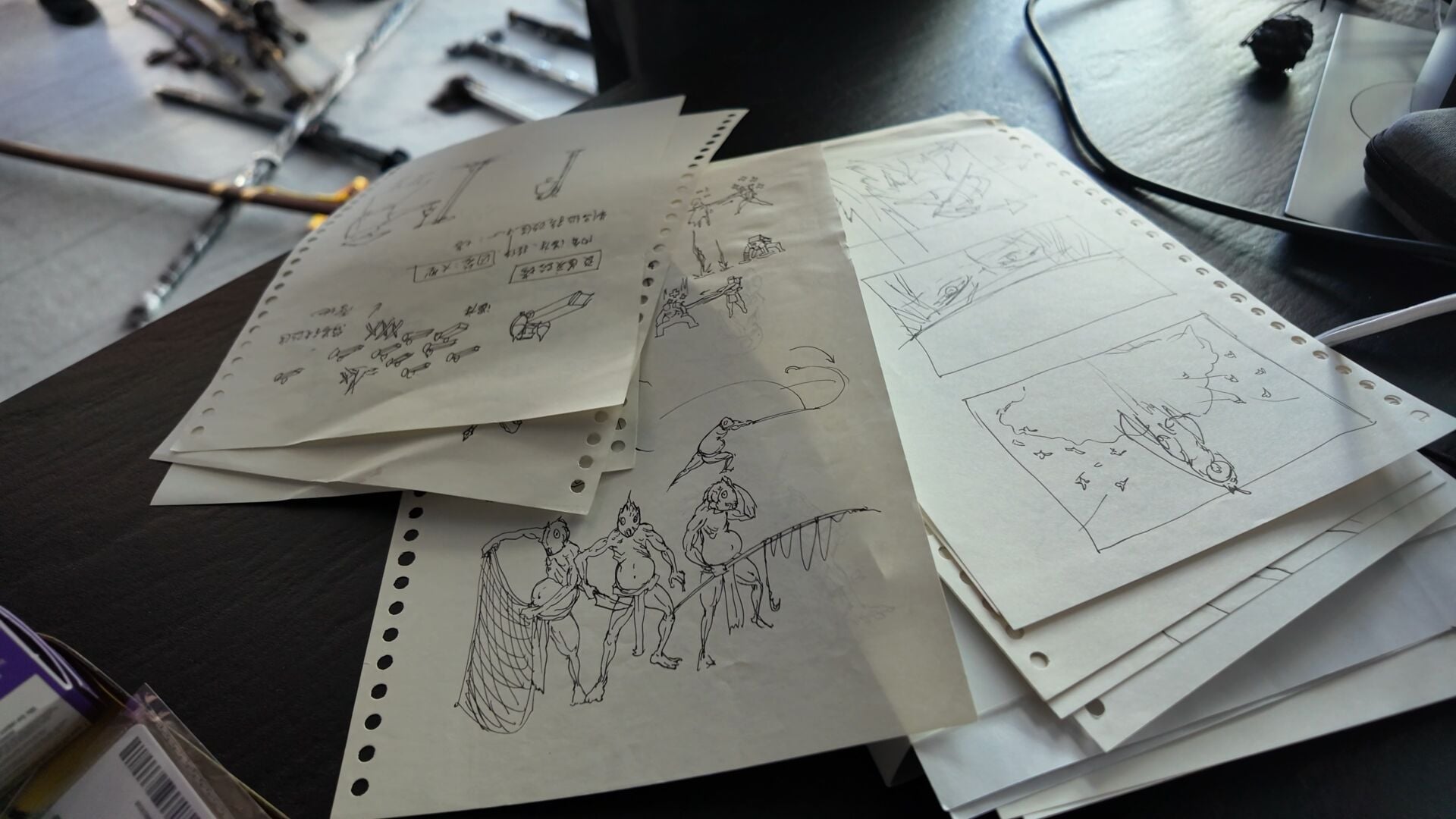
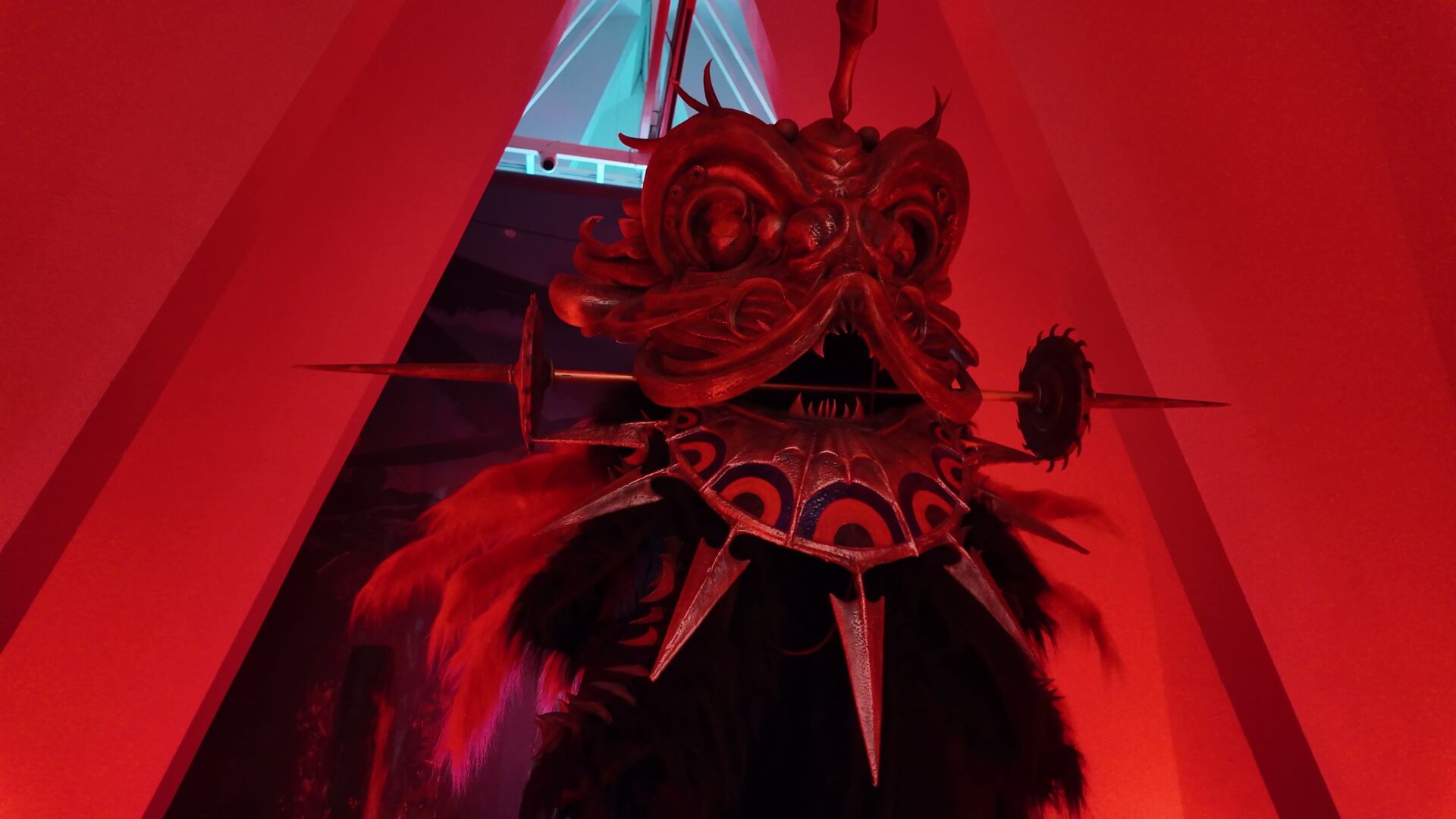
We want to recapture that spirit in video games. We take elements from the various influences that have marked us, whether Hollywood cinema, Japanese manga and anime, or our own kung fu and wuxia culture. We blend those references to create something new, while keeping a real coherence to it. It's also a form of fantasy. In Phantom Blade Zero, you'll come across hollowed-out faces, mechanical towers and red threads that can be attached to characters' bodies, as if to guide or control them. All of these visual elements help build a coherent world, with its own aesthetic and its own rules. That's what we call Kung Fu Punk.
We're not dealing in obvious fantasy, where you simply see dragons flying across the sky, skeletons or necromancers. We're after something more subtle, something that stays rooted in our culture while developing its own logic. With Phantom Blade Zero and, I hope, with other games in the future, we'd like to make Kung-fu Punk a term everyone understands, in the same way as cyberpunk.
Maxime Chao: What's the starting point when you design a boss? Do you begin with its appearance, its weapons, its story or its combat mechanics?
Soulframe Liang: I can start with any of those. Sometimes I look at a flower and think that could be the starting point for a boss. It might also come from an object, an emotion or a piece of music. There's no single method. In the end, a boss is a way of telling a story and offering the player a memorable experience. Several elements have to come together to produce a fight with its own identity. There's usually a weapon, a story, an appearance and a piece of music. We assemble all of that to create a genuine show. Imagine going to see a big Broadway production or a show in Las Vegas. We approach every boss fight a little like that. There's a staging, a set, music, an entrance and a particular way the character fights. It all has to work together to produce an epic encounter.
We don't want to simply turn a boss into an opponent with more health and more damage. We want their behaviour to change, we want the fight to force you to learn new things and we want you to genuinely feel you're facing a different challenge.
We also study authentic weapons and their prototypes. We think about their real characteristics, then we try to express the boss's personality through its weapon. We can alter that weapon, add variations or develop certain aspects to make it more spectacular and more in keeping with the character. The idea is also to extend that experience when the player wins the fight and takes the boss's weapon. By wielding it in turn, they can find something of that opponent's spirit in their own fights. For us, then, every boss has to be a complete show, with its own identity, its own story and its own mechanics.
Maxime Chao: Phantom Blade Zero has four difficulty levels. Was that the plan from the start, or is it a way of reaching a wider audience? And what actually changes as you crank it up, beyond enemies simply having more health or hitting harder?
Soulframe Liang: That question follows on from the one about Souls-likes. In a lot of games in that genre there's only one difficulty level, and everyone has to face the bosses under exactly the same conditions. With Phantom Blade Zero, we first thought about the Chinese market. A big part of our potential audience comes from mobile games and doesn't necessarily have much experience with very demanding action games. So we had to find a way to make our game accessible to those players. But we quickly realised this wasn't just a Chinese question. All over the world, plenty of players are drawn to kung-fu culture, to the beauty of the movement, to the spectacle of the fights and the clash of blades. Not all of them, though, want to go toe to toe with extreme difficulty.
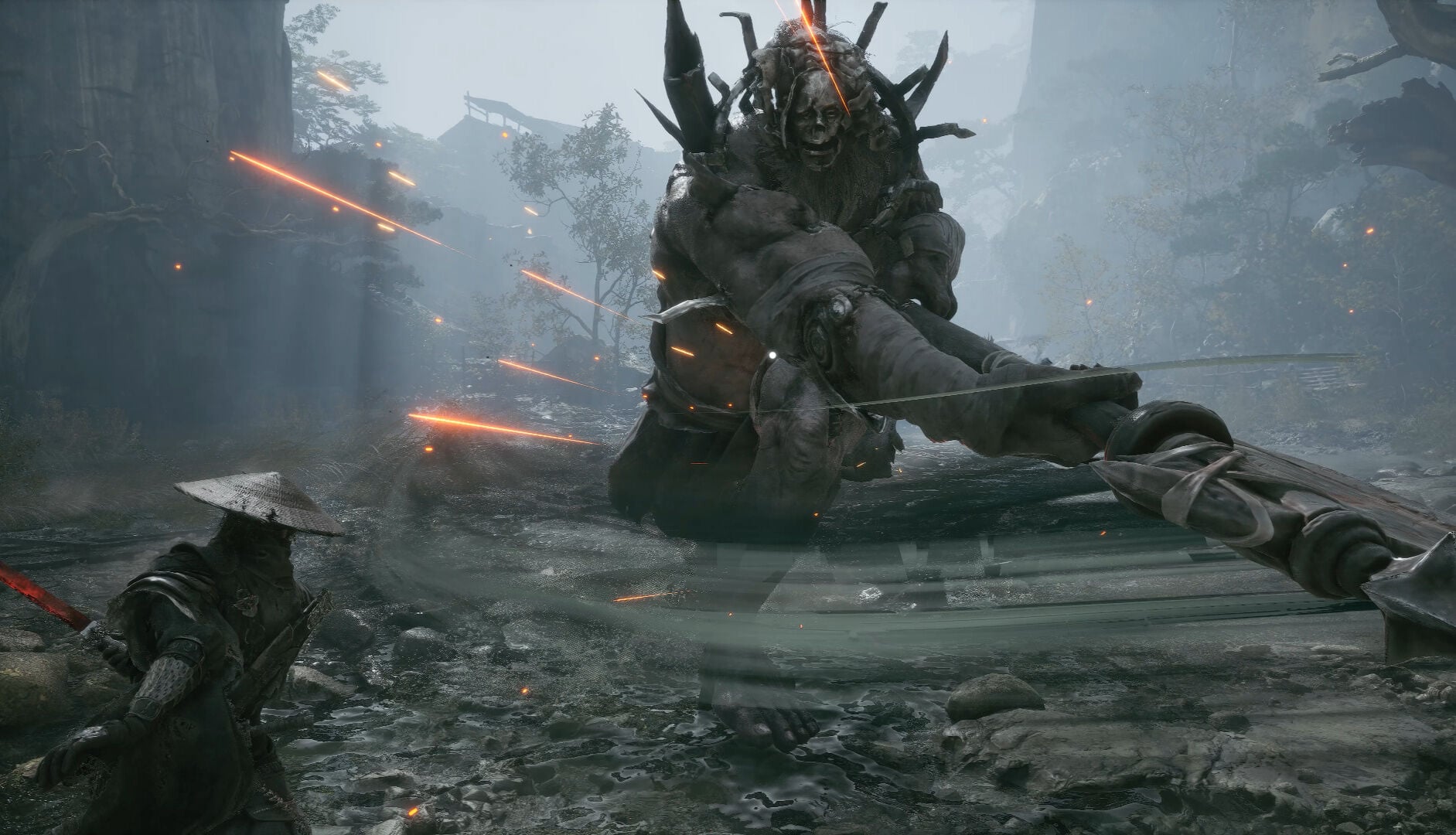
We didn't want to shut those players out of our game simply because they don't have the experience needed to finish a particularly punishing Souls-like. That's why we decided to offer several difficulty levels. The approach also lets us go the other way and design challenges even harder than what you usually find in the genre. Our 66 Days mode is a good example: it's extremely demanding and limits how many attempts you get. You only have 66 tries to complete that challenge. I think some of you have already burned through about twenty of them during today's session, and you were still only on the first or second chapter!
So the different difficulty levels let us cater to very different audiences, from players who mainly want to soak up the world and the combat, through to experienced players, streamers and content creators looking for seriously tough challenges. But I should stress that we don't just tweak enemy stats. We also work on their AI and their behaviour. As you raise the difficulty, opponents become more aggressive and may gain extra abilities, some of them far more dangerous.
You were probably still at the start of the second chapter, then. I'd say it takes roughly 25 to 30 hours to finish the main adventure in a straight line, at least for an experienced player.
Take the Flower Bride boss. Even some members of our development team struggled with that fight. At higher difficulty levels, the Flower Bride attacks more actively and can multiply her white flowers. You then have to deal with three flowers attacking in different patterns, which forces you to rethink your strategy entirely. That's exactly what we're after. We don't just want to turn a boss into an opponent with more health and more damage. We want its behaviour to change, we want the fight to make you learn new things, and we want you to genuinely feel you're facing a different challenge.
We've got plenty of other examples like that lined up for the rest of the game. It's a huge amount of work, because we sometimes spend an enormous amount of time designing very high-difficulty fights that only a fraction of players will ever see. But if someone enjoys taking on those challenges, then all that work is worth it.
Maxime Chao: Are PS5 Pro-specific optimisations planned for Phantom Blade Zero?
Soulframe Liang: Of course. We're working on several improvements for the PS5 Pro. That includes ray tracing, which benefits from the console's specific capabilities, but also improvements to the quality of the 3D models, the characters, the environments and the lighting. We're also working on more subtle lighting effects and various visual details that will make fuller use of the machine. We'll share more precise details about these features later on, with information that will be published on the PlayStation Store.
Maxime Chao: Is a New Game Plus mode planned? If so, what can players expect compared with a first playthrough?
Soulframe Liang: As I explained, we want Phantom Blade Zero to stay accessible to as many people as possible. We don't want to create a hierarchy among players by locking certain content behind the highest difficulties or multiple playthroughs. In principle, most players should be able to get the platinum trophy in a single playthrough, whatever difficulty they choose, as long as they take the time to explore, fight and learn the mechanics.
New Game Plus and the extra difficulty levels are therefore aimed more at players who want to push themselves and experiment with other ways of playing. We're not holding back exclusive story content for New Game Plus. What we do want is for that second run to offer new sensations. We've designed a huge number of weapons, and some only turn up very late in the adventure, sometimes after you've beaten particularly tough bosses, or even the final boss. Designing them represents a considerable amount of extra work for our team. But if you only play through once, you won't necessarily get the chance to make the most of those weapons. You might, for example, pick up the final boss's weapon when you've got barely any fights left. It then risks sitting in your inventory without you ever really using it.
We reckon at least ten or so of the late-game weapons can offer a completely different experience on a replay, in "New Game Plus" or in the "66 Days" mode. Imagine going back to fight the early bosses with a weapon you only obtained at the very end of your first playthrough. You'll discover new possibilities and approach those fights in a totally different way. That's the kind of freedom we want to offer. We're not locking new content behind New Game Plus, but we are giving experienced players plenty of scope to experiment, find other uses for the weapons and freshen up their fights.
Maxime Chao: After more than six hours of play, I feel like I've barely seen anything of the adventure. How long should we expect to spend finishing Phantom Blade Zero?
Soulframe Liang: Where exactly had you got to? Had you finished the first chapter or were you on the second?
Maxime Chao: Midway through the second.
Soulframe Liang: You were probably still at the start of chapter two, then. I reckon it'll take about 25 to 30 hours to finish the main story in a straight line, at least for an experienced player. For everyone else, it's harder to say. If you get stuck on certain sections for a while, your playtime can obviously go up considerably. But one thing is certain: we want every minute spent in our game to be interesting and to make you feel something. For us, length isn't everything. What matters above all is how dense the experience is.
When I look back on these last three years of development and everything we've been through, I find it incredible. The most important thing for us is to keep moving forward and keep the project evolving.
We don't want to force players to repeat the same activities, farm resources for hours or cross empty maps for no reason. Those are precisely the things we want to avoid. Even the side quests have to enrich the world. You'll notice they stay tied to wuxia, to kung fu and to the spirit of our setting. It's not about asking you to unclog a toilet or fight a cat to help an old lady! We want every quest to make you feel like a wuxia hero, a true swordsman who can find himself at the heart of dangerous, spectacular situations. Everything should help enrich the world and deepen your immersion.
If players feel that every minute spent in the game is worth it, then we'll have hit our goal. The total length will then depend on their skill and how much time they spend on the bosses. But we've also built in several ways to adapt to the difficulties you run into. Unlike some Souls-likes, you can change your build, swap weapons or adjust your accessories. If a boss is giving you trouble, you can rethink your loadout and find a more effective approach. We don't want you to be forced to fight the same opponent a hundred times with exactly the same setup, hoping you'll eventually get through. That's another advantage of our RPG system. We want players to be able to experiment and find their own solution.
Maxime Chao: One last question. At Summer Game Fest 2024, Phantom Blade Zero closed out Geoff Keighley's show, generating a real surge of hype and interest around the game. How did the negotiations to take part in that event go? Looking back, now that the game is approaching release, how important was that moment in its development?
Soulframe Liang: That's a great question to finish on. When I look back at how far we've come, I feel a lot of emotion and gratitude. We've been incredibly lucky to receive so much support from the community, from players and from all of you. I still remember being at the PlayStation Showcase in 2023, and then Summer Game Fest in 2024, when we showed our demo for the first time. Back then our studio was still little known in the industry and very few players knew who we were.
Today, millions of people are waiting for the game, and we've passed, if I remember rightly, 3 million wishlists. We've also been able to invite you over to discover the game for yourselves and share these moments together. When I think back over these three years of development and everything we've been through, I find it incredible. The most important thing for us is to keep improving and keep moving the project forward. Every time we show a new trailer, a demo or a new part of the game, we want to be proud of what we're putting in front of the community. We have to feel we've created something we're fully happy with, and we hope that in turn makes you want to see what comes next.
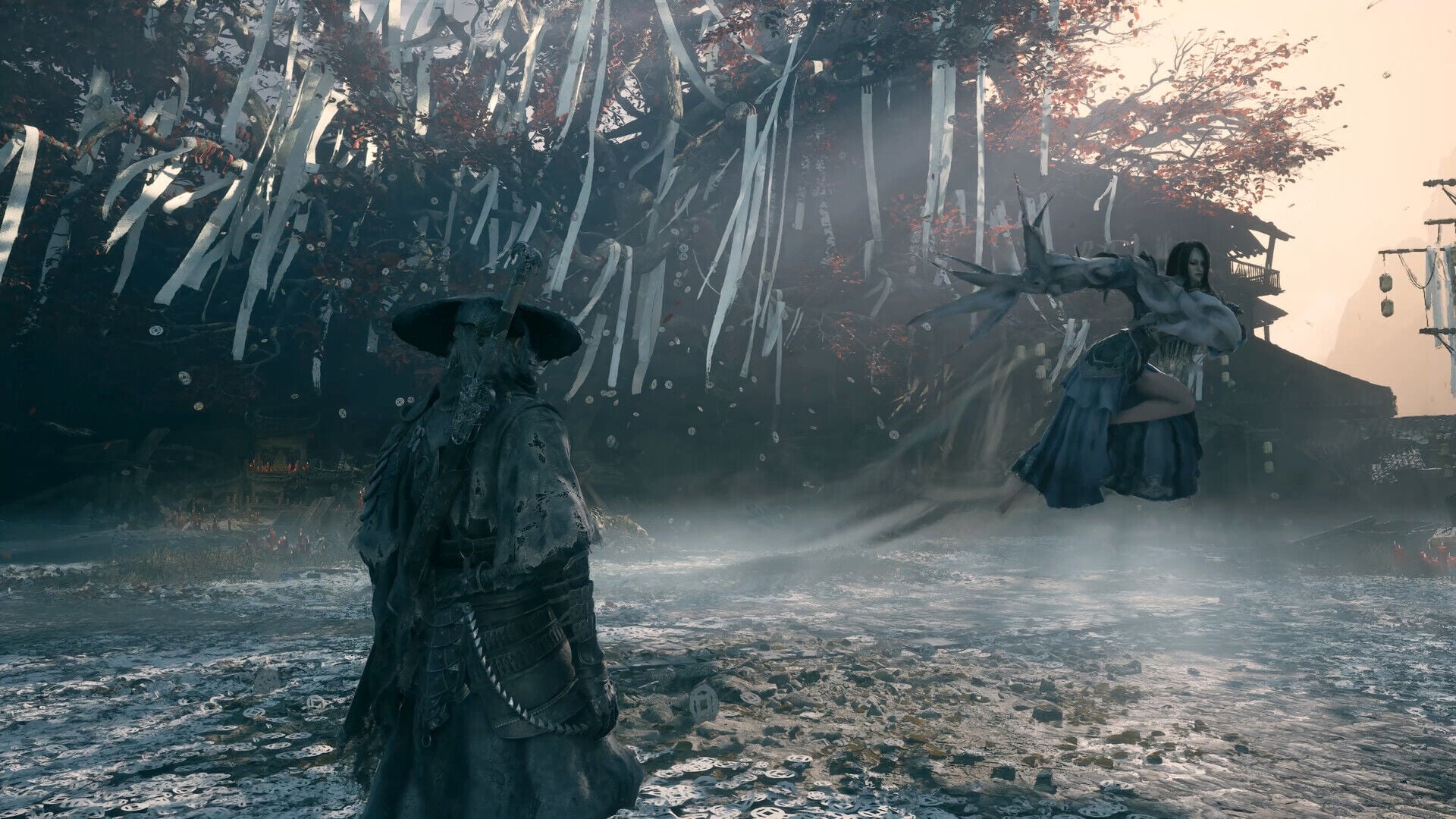
Summer Game Fest was a really important moment for us. I think that's also where we got to know journalists like yourself. Back then, our demo only had three bosses, one after the other, with no real exploration to speak of. Some of you even told us that three bosses of that quality would be enough to make a full game, with a dozen fights in the same vein. Since then, we've obviously built a great deal more content!
We want to share our passion for kung fu and show everything we've built around that idea. We want you to discover our Kung Fu Punk style, our motion capture work, the skills of our teams and the methods we've put in place to develop the game. We also want to shine a light on the young developers who have only just finished their studies and whom we've entrusted with real responsibilities. They have plenty to show as well, and we're proud of the work they've done.
Through the game, our whole team wants to pass that passion on to you. We hope you can feel our enthusiasm while playing, because that's ultimately why we chose to work in this industry. For my part, that passion goes back to my student years, more than 20 years ago. It's what made me want to become a developer and it's still what drives me to create games today. I think that desire to keep improving and to share our enthusiasm remains at the heart of our team's DNA.
Maxime Chao: Thank you for your time.