
September was a particularly busy month, and October clearly has no intention of easing off. Yet as we edge closer to the release of GTA 6, it's becoming clear that fewer and fewer games dare square up to the Rockstar Games juggernaut. And you can hardly blame them. Everyone fears GTA 6's gravitational pull, its ability to hoover up everything in its path, to monopolise attention and make everything around it vanish like a genuine black hole. Everyone? Not quite. Nintendo, with its remake of Zelda Ocarina of Time, seems perfectly relaxed in the face of the oncoming wave. The game even has the cheek to launch just a week before GTA 6. But there's another title that clearly has no intention of making itself small either: an outsider from China. Its name? Phantom Blade Zero.
A wuxia action kungfupunk game
Ever since its first appearance, Phantom Blade Zero has been a game that intrigues as much as it impresses. It intrigues because it came out of nowhere and because its world looks like nothing else out there. It impresses above all thanks to its hyper-choreographed combat, but also its kungfupunk setting that blends Chinese martial arts with steampunk influences, plus that sense of speed that turns every clash into something like an interactive kung-fu movie. Plenty of people cried fake when the first demos landed, but after several years of watching the project evolve and trying it out in demo form at shows like Summer Game Fest, we've all come to realise just how much potential it has. Today, Phantom Blade Zero sits on more than 3 million wishlists, which gives you a sense of how eagerly it's awaited around the world. We've finally been able to get properly up close to the beast, with a hands-on session of more than 6 hours on PC, to get a better handle on its gameplay and to see that it has a story to tell us too.
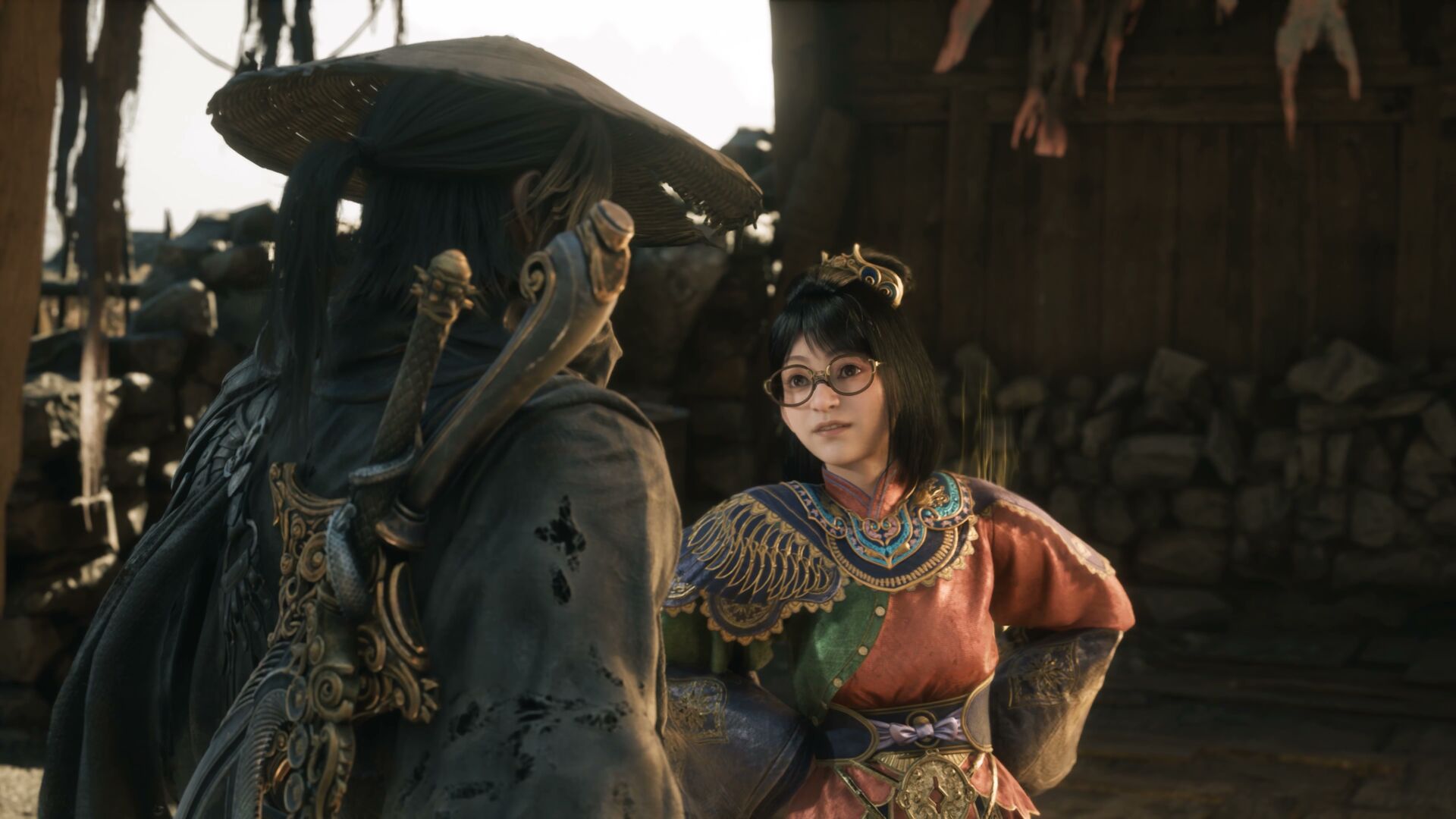
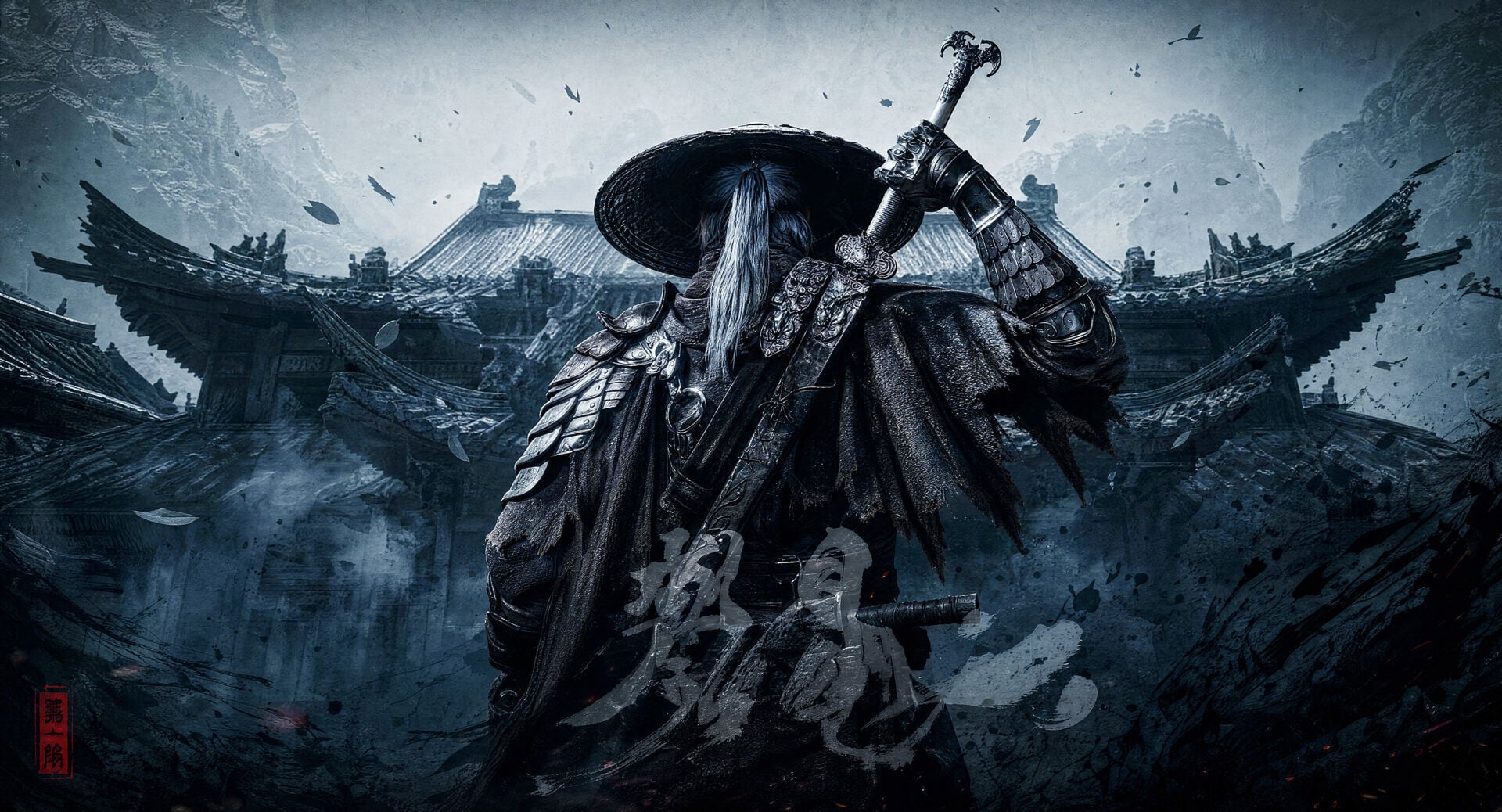
First thing to get straight: Phantom Blade Zero is neither an open world, nor a Souls-like, nor even a straightforward linear action game. What the Chinese studio is offering is an interconnected world made up of fairly compact zones that branch out as you progress. And after several hours of play, you understand that Phantom Blade Zero isn't just a tech demo, and that it has genuine gameplay ambition, with the bonus of a wuxia approach that has never been pushed this far. But before we talk about the combat, we need to understand the world in which S-Game has chosen to let its hero Soul loose. Phantom Blade Zero draws its influences from wuxia, a Chinese genre devoted to warriors (not always flying ones, no), codes of honour, clan rivalries and tales of revenge. But to transcend the genre a little, Soulframe Liang, the game's creator, decided to add a more contemporary touch, inspired by what's being done in the West too. Which is why we're talking about kungfupunk here. The result is instantly recognisable, with environments that evoke traditional China while folding in machinery and a far darker aesthetic. But this visual identity isn't just window dressing; it also feeds into the construction of a world that has something to say.
Your Soul is mine!
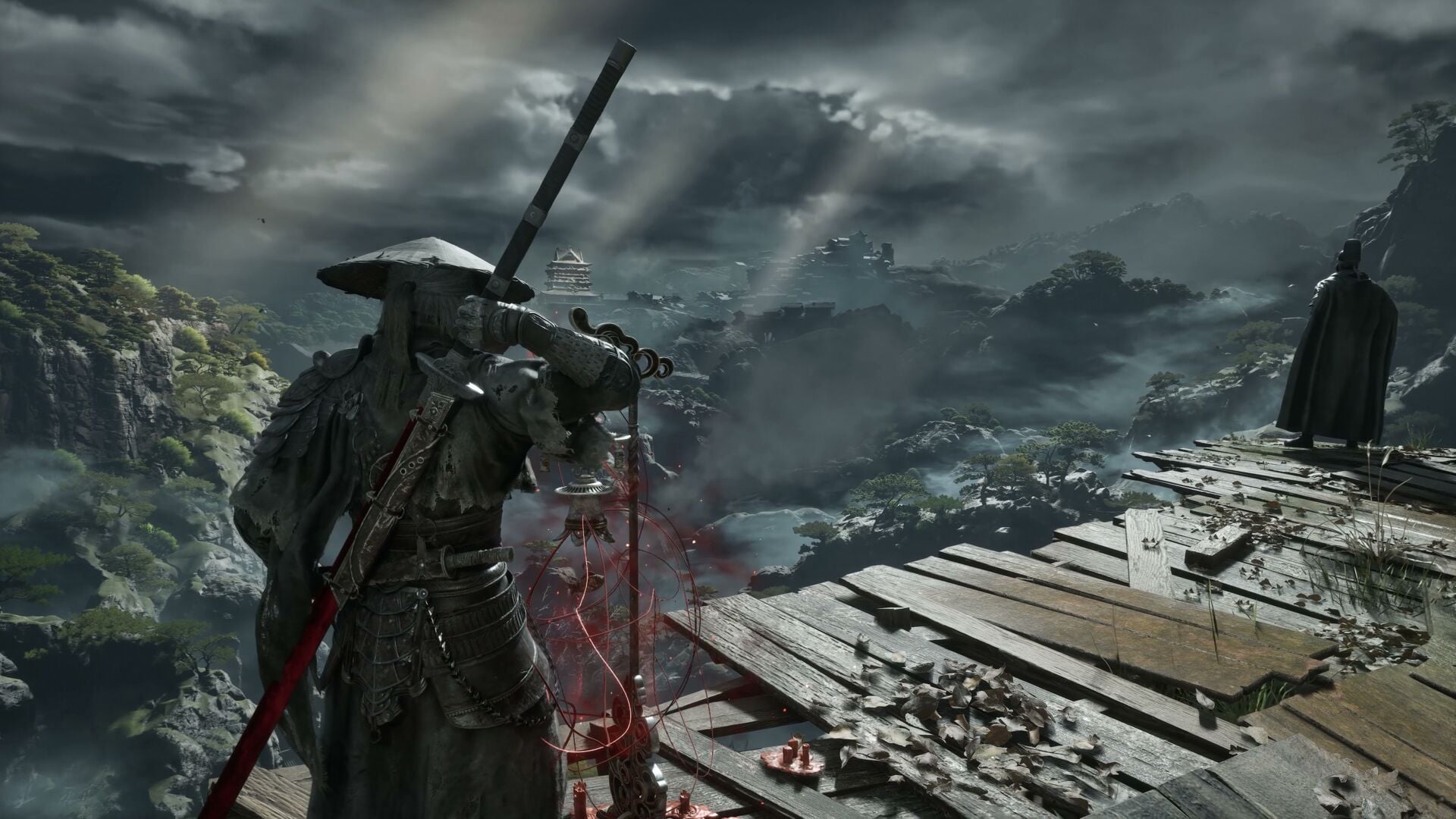
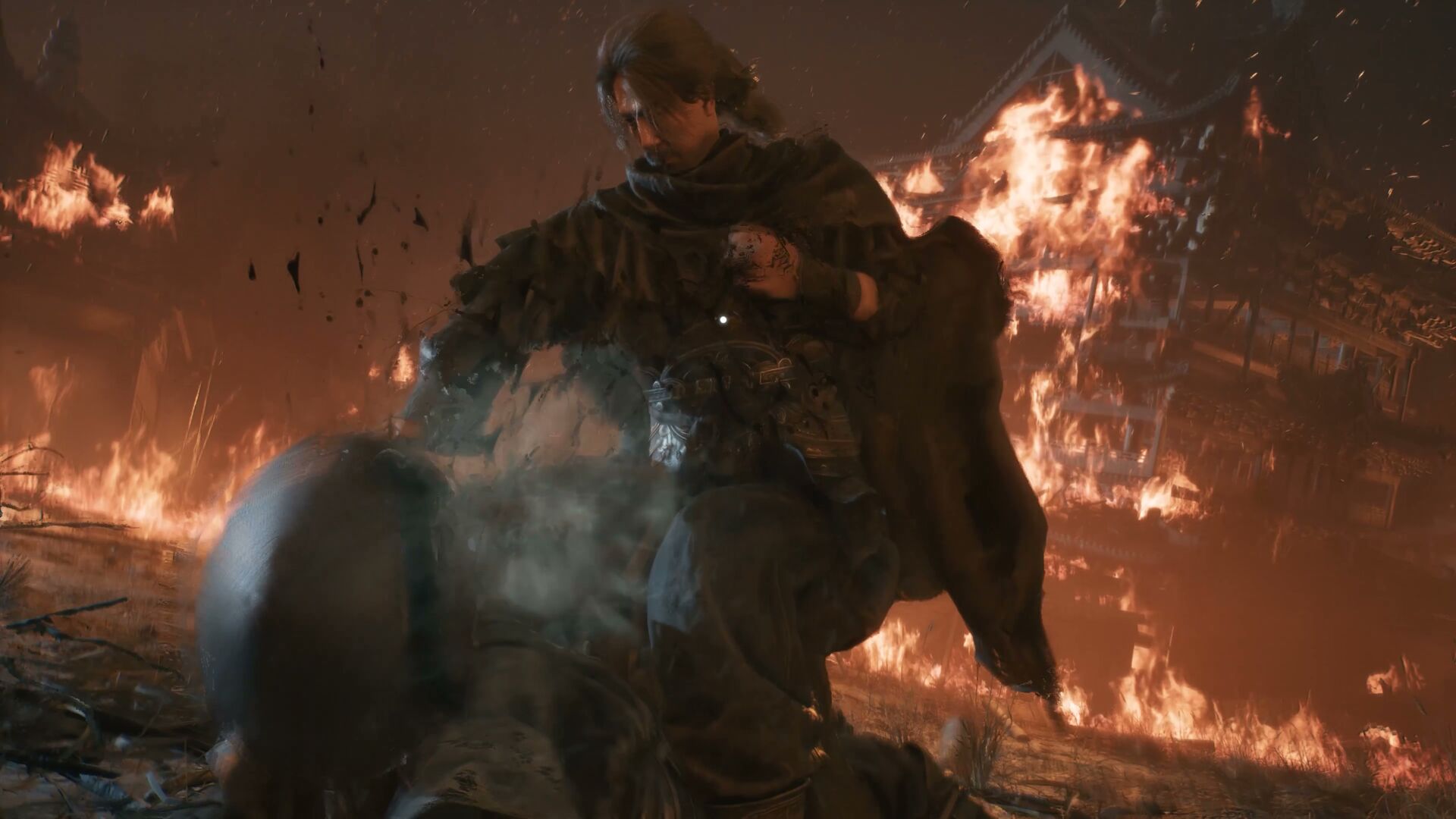
That's actually one of Phantom Blade Zero's little surprises: it has also taken care over its story, its narrative and its staging. It's something S-Game didn't lean on much in its marketing campaign, but we can now confirm it: Phantom Blade Zero has things to tell us. For starters, the story follows Soul, once regarded as one of the Order's most formidable warriors. Accused of murdering his own leader, he's betrayed by those he considered allies and faces Zuo Shang, his blood brother, in a duel that ends with a blade through his heart. Saved by a mysterious Flesh Sculptor, Soul discovers that his resurrection comes at a price: he has only 66 days left to live. That deadline obviously lends the adventure a certain urgency, but the narrative is mostly interested in playing on mystery, betrayal and the relationships between the various figures of the Wulin. Admittedly, we're not convinced the average Western player will be swept away by these quintessentially Chinese tales, but one thing is certain: Phantom Blade Zero takes its time to put on a show.
It's a structure that gives the distinct impression that S-Game wants to have complete command of every space rather than artificially padding out a vast map. Some environments are even built like proper theatre sets, with a particular atmosphere, lighting, sounds and events placed precisely where they need to be.
Open world? Open zones? Linear game?
The good thing about being able to play more than 6 hours straight (we did still grab a bite at lunch) is that you finally get a better idea of the game's structure. Phantom Blade Zero works more like a set of interconnected levels, with various branches that let you step off the main path and discover other places and even a few secrets. The areas stay compact enough to keep a real grip on the staging. There are also side paths that lead you to optional bosses, bearing in mind that the game is also built like a Metroidvania. That means unlocking certain weapons will grant access to passages that were previously out of reach. There's also an altar system (with a bell to ring) that doubles as a landmark, a save point and, of course, a customisation hub, and which also lets you fast travel between the various places you've already discovered. So yes, there will be fast travel — rest easy.
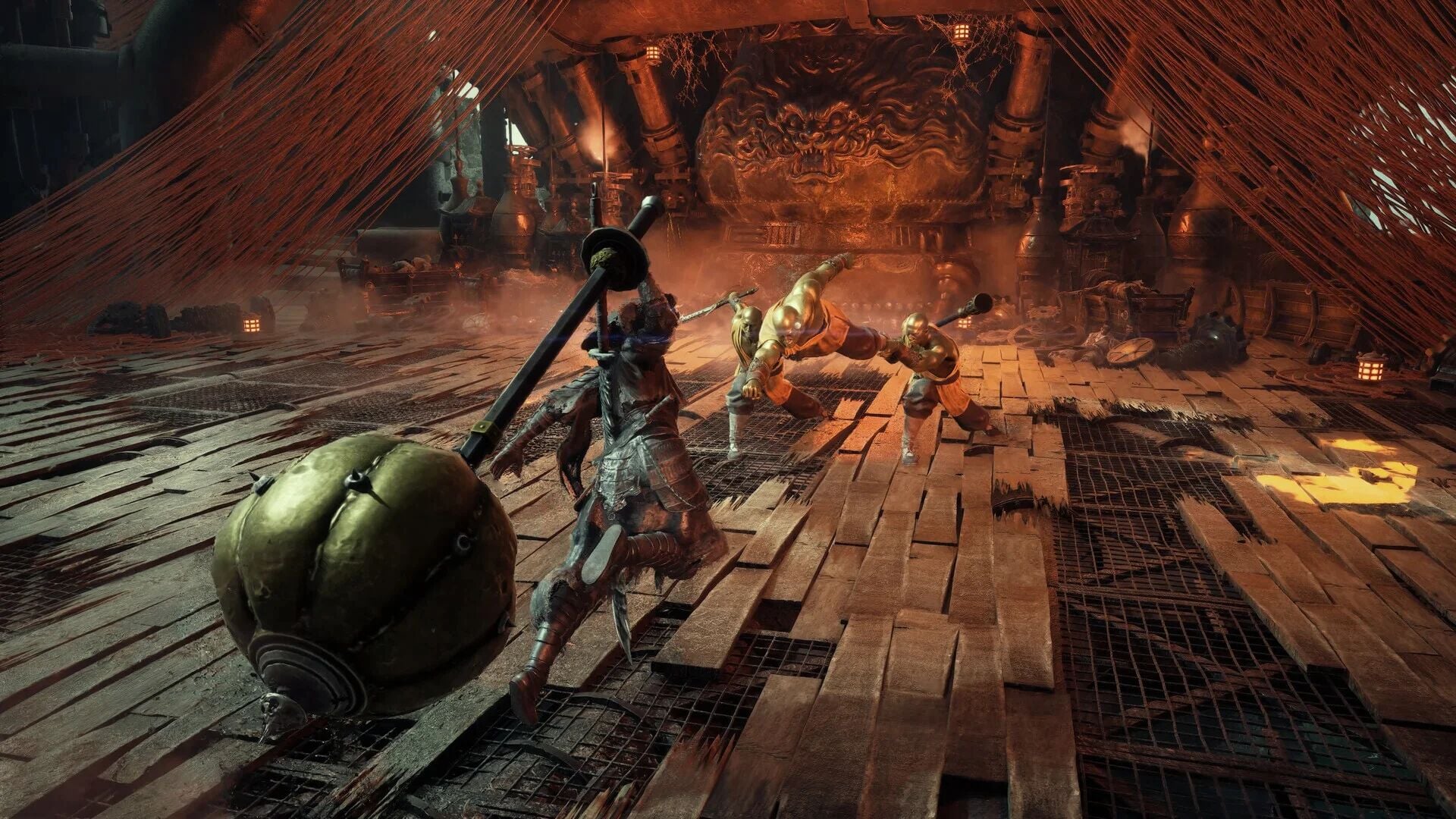
It's a structure that above all gives the impression that S-Game wants to master every space rather than artificially padding out a huge map. Some environments are even built like proper theatre sets, with a mood, a particular quality of light, sounds and events placed precisely where they need to be. Take the moment you arrive in an abandoned warehouse filled with hanging puppets and red threads that give the place such a singular atmosphere. And that staging, simple but effective, is enough to build tension before the first fight has even started.
Speed combat
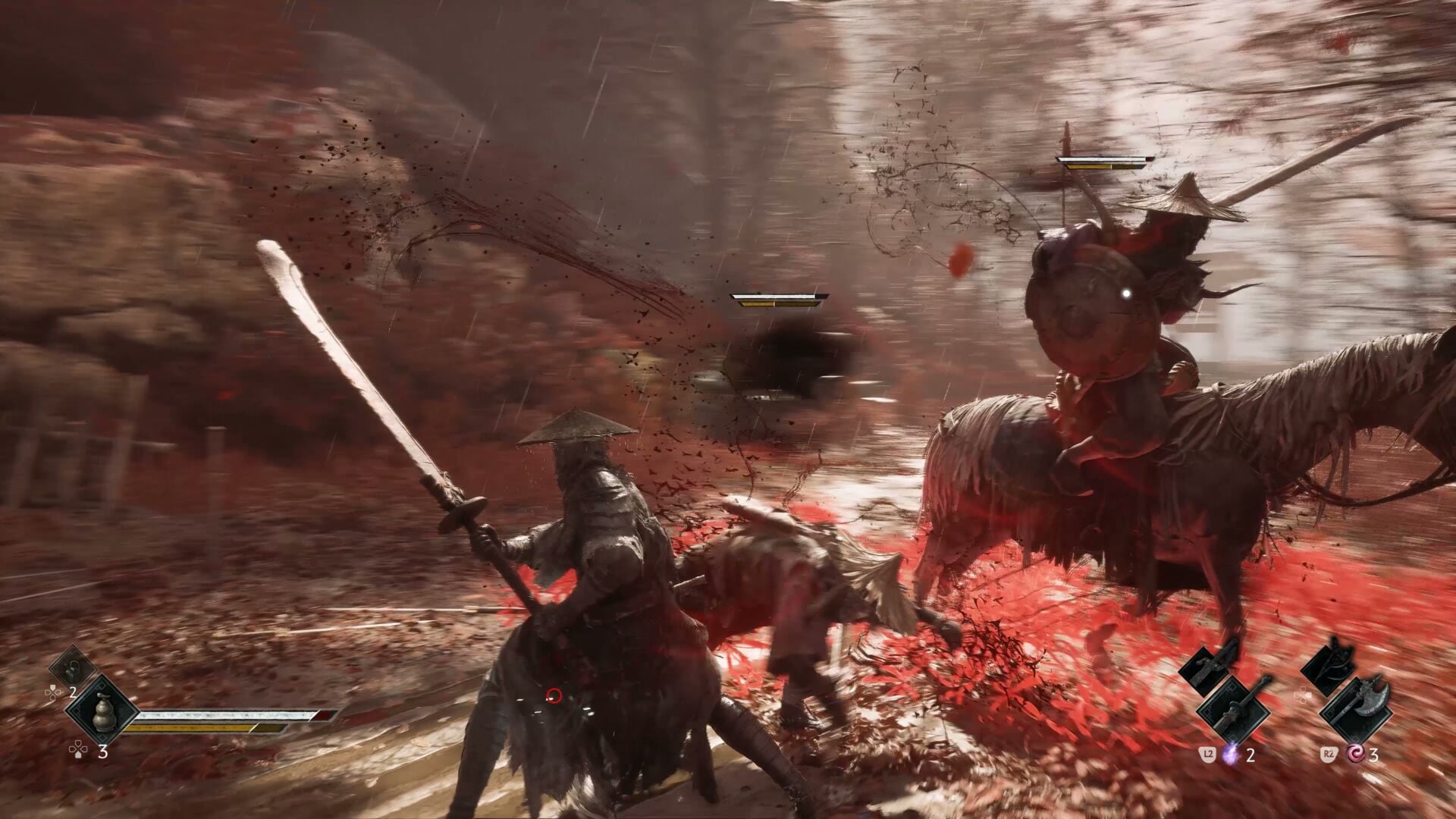
But obviously, the real draw of Phantom Blade Zero is its combat system. And after several hours of play, it's hard not to understand why S-Game insists so much on this aspect. The game is fast, spectacular in the way it strings moves together with grace and fluidity, and above all beautifully choreographed. But it doesn't just ask you to mash buttons to produce pretty animations and combos — you'll need a bit of skill all the same. The system actually rests on a resource called Sha-Chi (basically the stamina bar), used both to attack and to defend. Special attacks consume this energy, as does guarding, which forces you to constantly weigh up the urge to keep the pressure on against the need to retain enough resources to absorb enemy attacks. When an enemy's gauge hits zero, they suffer a Guard Break, opening a window to counter-attack.
Of course, in Phantom Blade Zero the parry also plays a central role. By pressing L1 at the precise moment an attack is about to connect with Soul, you can parry the blow without spending any Sha-Chi while draining a sizeable chunk of your opponent's gauge. The game therefore demands you stay alert to enemy animations rather than simply leaning on the dodge. Attacks flagged by a red flash work differently, as they can be neither blocked nor parried (a classic), which means you'll have to pull off a perfectly timed dodge, while attacks accompanied by a blue flash can be blocked or parried to trigger a Ghoststep and leave you behind the enemy.
55 weapons to blow them away with
It's hardly a secret any more: Phantom Blade Zero will offer no fewer than 30 main weapons, plus 25 secondary ones dubbed "Phantom Edges". These aren't just there for the joy of wielding them or to tweak the damage you deal, since they also change how you play. Some favour brute force, others speed or reach, while a few come with unique mechanics. The 'Drunken Sword', for instance, generates 'Drunken Energy' (sorry, we didn't have the French terminology to hand) designed to improve Soul's evasion during his attacks. There were also the twin swords "White Serpent & Crimson Viper", one short, one long, letting you use the longer blade to hurl the other at range. As for the Soft Snake Sword, it has the ability to coil around an opponent's guard to reach body parts that are normally protected.
As for the Phantom Edges, the secondary weapons, they too have their own attacks and suit certain specific situations. A hatchet, for example, can be used to break chains and open up passages that were previously inaccessible, while other weapons are there to deal with enemies at range or crack defences that are a touch too sturdy. That's precisely why you can carry two weapons at once, with a simple press of the d-pad to switch between them. In any case, the game encourages you to try out every new weapon you pick up, even if the developers confirmed to us that it's possible to finish the game with one and the same weapon if you fancy it. And so as not to frustrate players too much, S-Game has also put in a system that lets you recover the resources invested in a weapon in order to transfer them to a new acquisition. Rather handy when you want to change style partway through.
Boss fights, not boss lite
Six hours of play also means crossing paths with plenty of bosses. In the manner of a classic Souls-like (it isn't one, I'll remind you), Phantom Blade Zero lets you take on both mandatory and optional bosses, depending on how you progress through the game, and on the map too. Either way, it gave us a good measure of all the variety S-Game is trying to bring to its combat system. Some fights rely more on reading enemy patterns, while others require picking the right gear or making clever use of the abilities of certain weapons we had to hand. Because yes, Phantom Blade Zero is one of those games that lets you claim the weapon of the boss you've just slain, with the guarantee that its powers will help you punch through the defences of the next area enemy waiting for you further along.
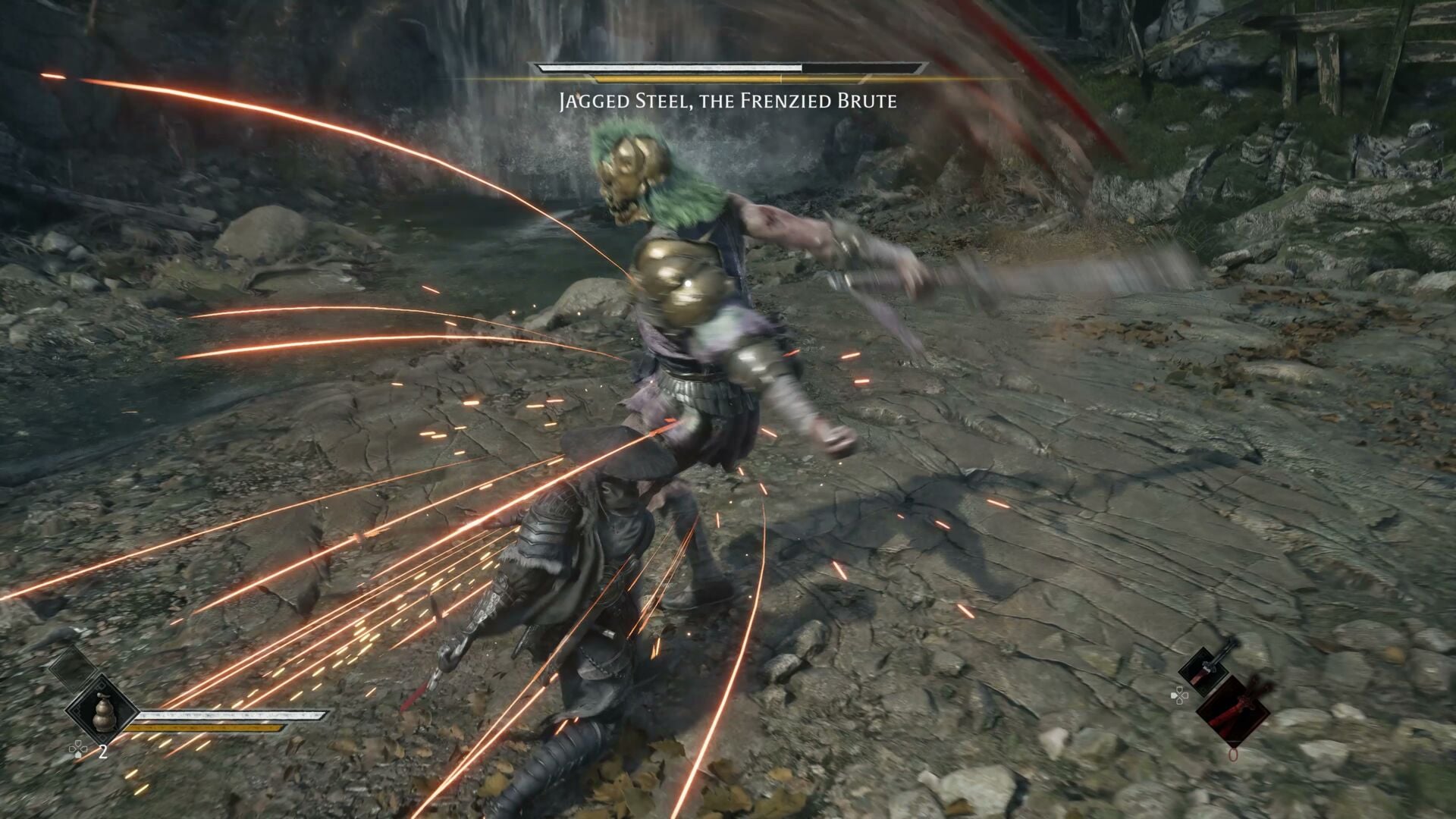
For instance, the fight against Jagged Steel, a colossus in a golden mask with a bloated design, nets you a bleed-based weapon. Every blow landed fills the enemy's Bleed gauge and, once it's full, you trigger a far nastier haemorrhage effect. Peng Meng, the axe master, hands over a very handy secondary weapon. Charging it unleashes a heavy attack capable of breaking even the sturdiest shields. You can also use it to smash the padlocks on doors leading to different areas. The same goes for the chain sickle you get by beating the boss The Hunt. Not only is the weapon ideal for attacking at range, it also lets you grapple onto certain walls and so reach otherwise inaccessible spots. And then there was Hua Qianxiao, the Drunken Master boss you have to face on a bridge in driving rain. Once he's down, Soul can recover Sha-Chi more easily and can then enter a drunken state, which lets him throw flying blades while dodging becomes automatic — at the cost of much more limited mobility.
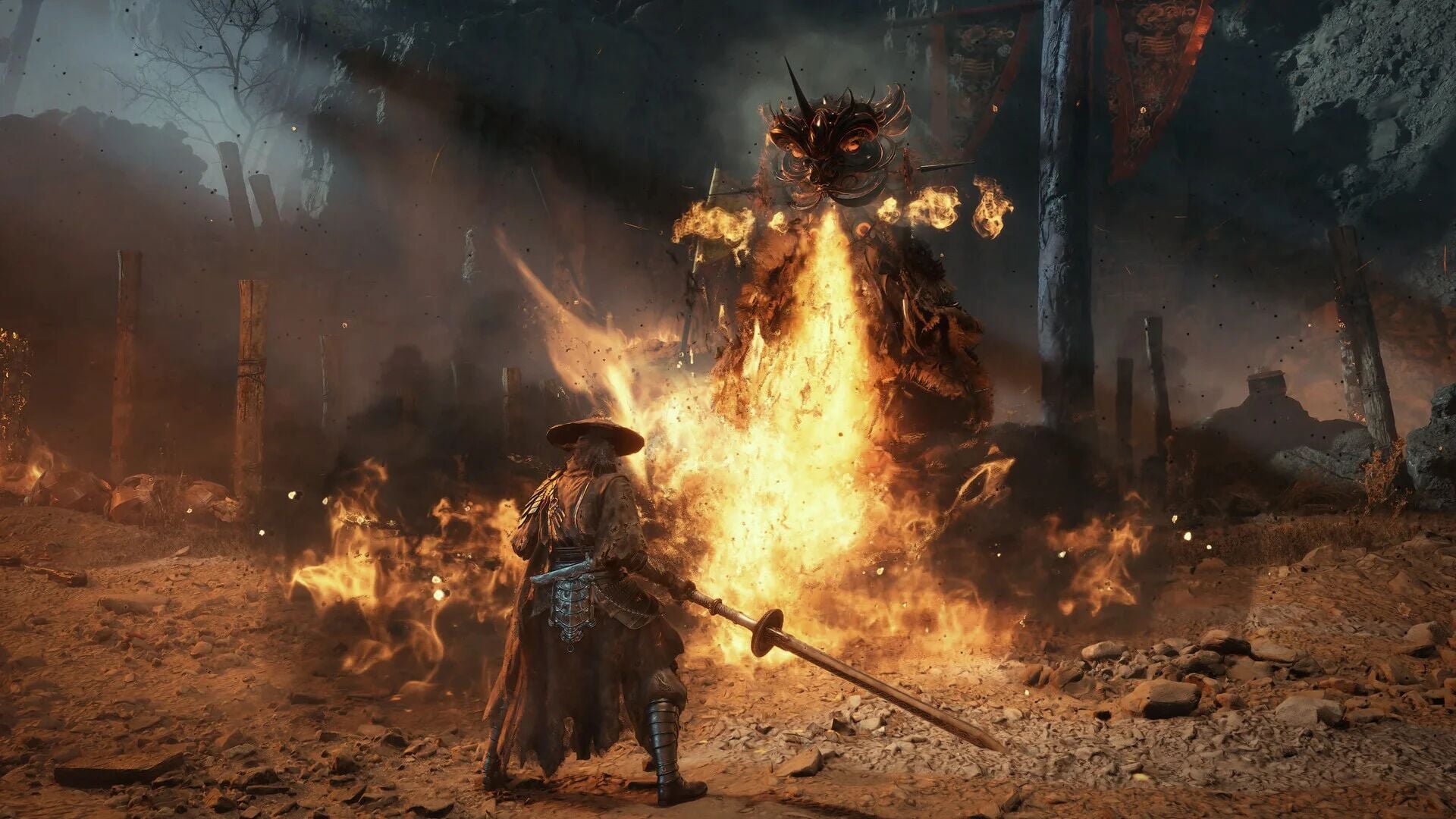
But the most memorable fight is surely Flame, the Lion Dance master. Visually alone, the character is pretty wild, with that imposing lion's head and a very distinctive way of moving that draws on the conventions of traditional Chinese dance. And behind that completely bonkers look sits an inventive boss, able to chain several patterns together and force you to switch strategy, keeping you under constant pressure. He can even spit fireballs during a sequence where you have to hop from one pole to another, and also fling miniature versions of himself about, all in an atmosphere that's festive and sinister at once. In short, every weapon has its pros and cons, and it's up to the player to juggle what's been put at their disposal.
Demanding, but not frustrating
We also need to talk about the difficulty, because Phantom Blade Zero is far from a walk in the park. The game can be demanding, sometimes downright brutal, especially when you're discovering certain enemies or facing a boss whose patterns you haven't learned yet — but S-Game had no intention of confusing difficulty with frustration. To that end, several difficulty tiers are on offer so everyone can find the level that suits them. Those who really want to suffer can push the experience much further (mode 66, named after the number of days Soul has left to live, is the extreme setting, and it forgives nothing), while players less comfortable with action games can adjust the difficulty to enjoy the adventure without feeling like they're constantly fighting the game itself. But consider yourself warned: even on the lowest setting, you'll still be bleeding from the nose.
Thankfully, the game is fairly generous with checkpoints. They crop up regularly as you progress, but also in places where you wouldn't necessarily expect them. Even boss fights are broken up so you're not forced to redo the entire encounter after every death. The various phases have their own checkpoints, letting you pick things up quickly right where they went wrong. Souls-like purists will take issue with that choice, but it's how Phantom Blade Zero can reach a far wider audience — and that's precisely what S-Game is after. We'll see you on 29 October for the final verdict, but I'll spoil it in advance: this is shaping up very, very nicely indeed!