
In just two instalments, the 'A Plague Tale' series has managed to stamp its own mark on things. An artistic one, above all. It has to be said that the French team at Asobo Studio have become the standard-bearers for a home-grown know-how we thought was the preserve of Ubisoft and the indie scene. A Plague Tale Innocence, released in May 2019, took everyone by surprise with its successful blend of narrative adventure, endearing characters and striking visuals. Its sequel, A Plague Tale Requiem, which landed three years later, considerably ramped up the staging and the ambition of the whole package. Neither game was free of flaws, far from it, especially where the gameplay was concerned, but they both had something that plenty of far more ambitious productions lack: a genuine personality.
Well, of course — everyone knows that reaching a bigger audience means serving up spectacle. And that's exactly why Resonance A Plague Tale Legacy wears its cinematic action-adventure influences so openly...
France had incredible talent
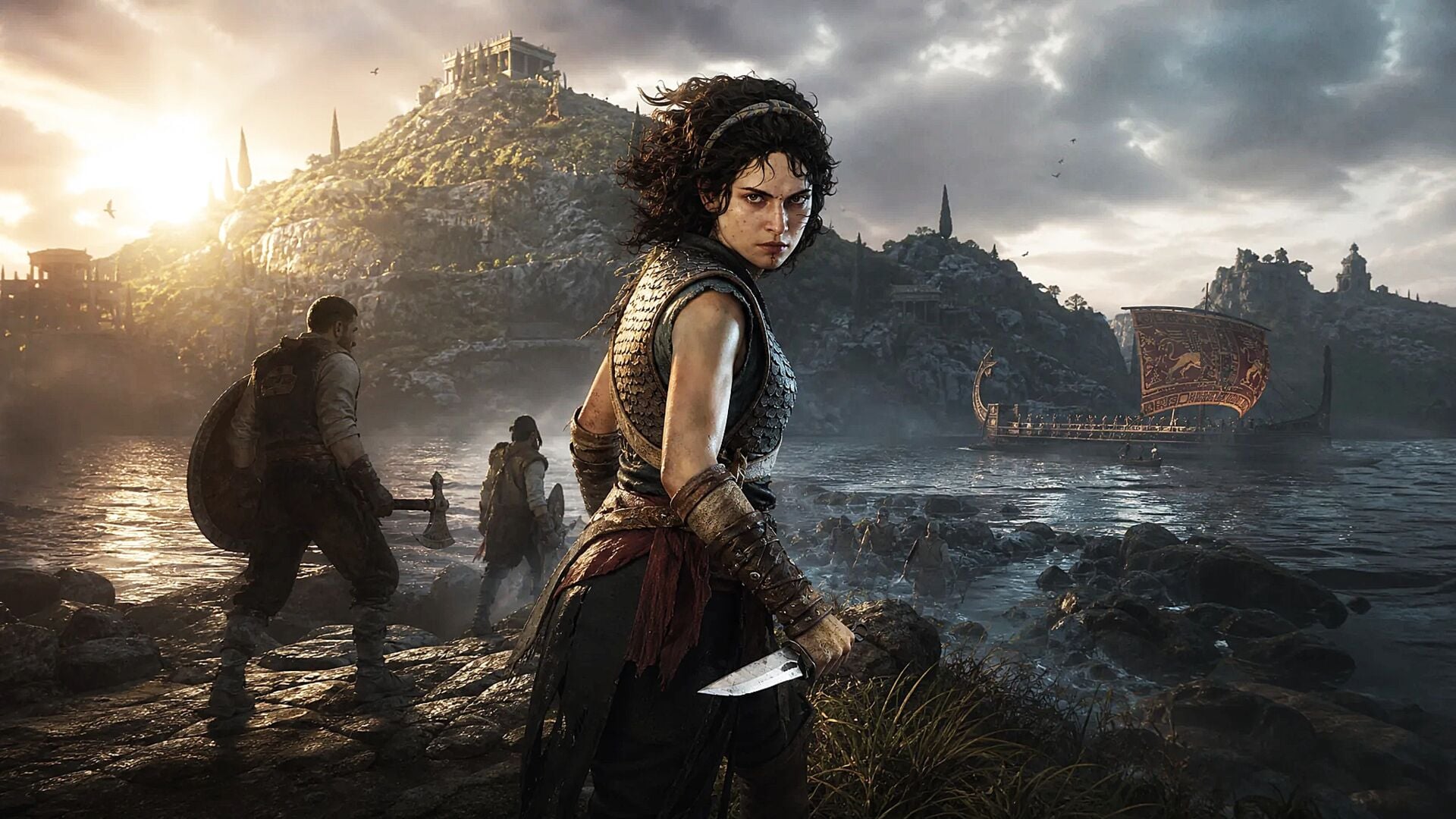
With Resonance A Plague Tale Legacy, Asobo Studio could easily have carried on down that road and simply told a new story within the same historical setting, but the Bordeaux studio chose to take a far sharper turn, leaving Amicia and Hugo behind to focus on two other characters. Remember Sophia, who we bumped into in Chapter 7 of the second game? Well, clearly the Asobo Studio team felt there was a story to tell with her. To tell it, though, we're mainly digging into her past, which means winding the clock back 15 years before the events of A Plague Tale Requiem. A fairly interesting choice on paper, all the more so since this prequel traces the origins of some of the series' mysteries, but it comes with a pretty radical change of formula. Sophia isn't Amicia, she's a fighter, which means this third outing sets out to shake off the stealthy, slightly plodding feel of the first two games and head towards action instead. Well, of course — everyone knows that reaching a bigger audience means serving up spectacle. And that's exactly why Resonance A Plague Tale Legacy wears its cinematic action-adventure influences so openly, to the point where it feels as though it was built around the Uncharted 4 formula, just without Naughty Dog's mastery behind it. Because, as you'll see, that's both one of the strengths and one of the main limitations of this new adventure.
Fancy a quick Crete-away tonight?
But first, a bit of context. The story of Resonance A Plague Tale Legacy takes place in 1334, that's 15 years before the events of A Plague Tale Requiem. At this point Sophia is still a young smuggler running with a band of raiders led by Faro, a close associate of her biological father Alec. Since childhood she's been plagued by mysterious visions that seem to draw her towards an island in the Mediterranean, deep among the remains of the Minoan civilisation. What begins as a personal quest quickly takes on a far greater dimension when Sophia discovers that the island is home to an ancient evil, directly tied to the Macula. The decent thing about Resonance A Plague Tale Legacy is that this prequel can be enjoyed without having played the first two games. Granted, anyone coming to the series this way won't have all the pieces of the puzzle, but it also makes a fine way in before tucking into the other two instalments. Failing that, there are always recaps and walkthroughs on YouTube to help you out. Be proactive, folks, come on.
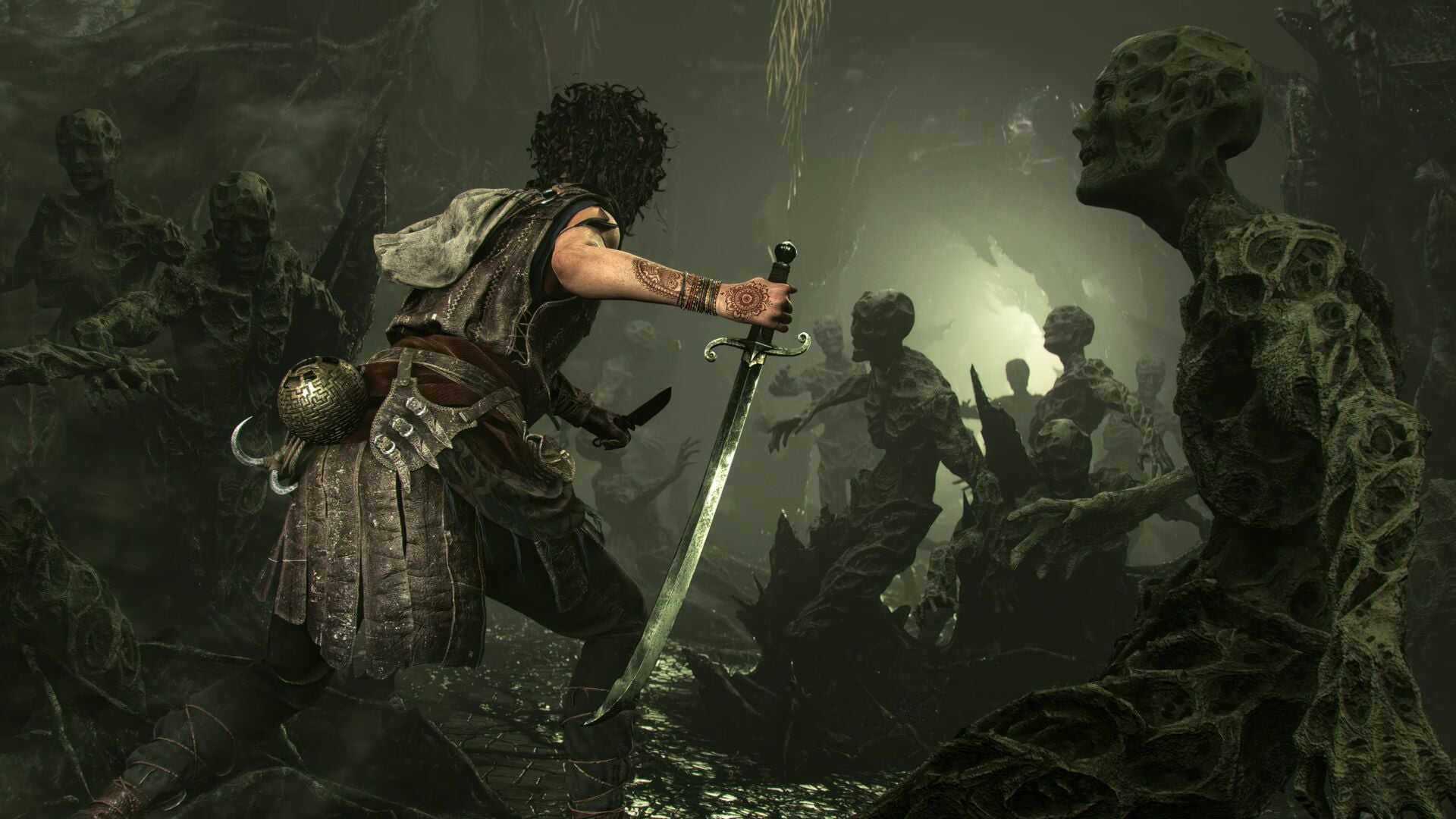
In any case, setting off on this brand-new adventure well away from Amicia and Hugo's bleak world is probably the best idea in the game. Because yes, Asobo isn't merely trying to fill in the blanks around a supporting character from A Plague Tale Requiem. The studio uses this new heroine to open another door onto its universe and blend 14th-century history with Greek mythology. Minos, Daedalus, Theseus, the Labyrinth and the Minotaur: all these historical names become the new building blocks of a plot that seeks to connect ancient tales with the mysterious force that has run through the franchise since the first instalment. The game even rests on a dual timeline that's exploited particularly well, since Sophia uncovers her past thanks to a mysterious sphere capable of manipulating light, while the player gets to live through certain events several thousand years before those of the main story. That's where you discover you'll be able to play as a second character, Theseus, so that the two narratives end up echoing each other, gradually shedding light on the origins of the curse afflicting the island.
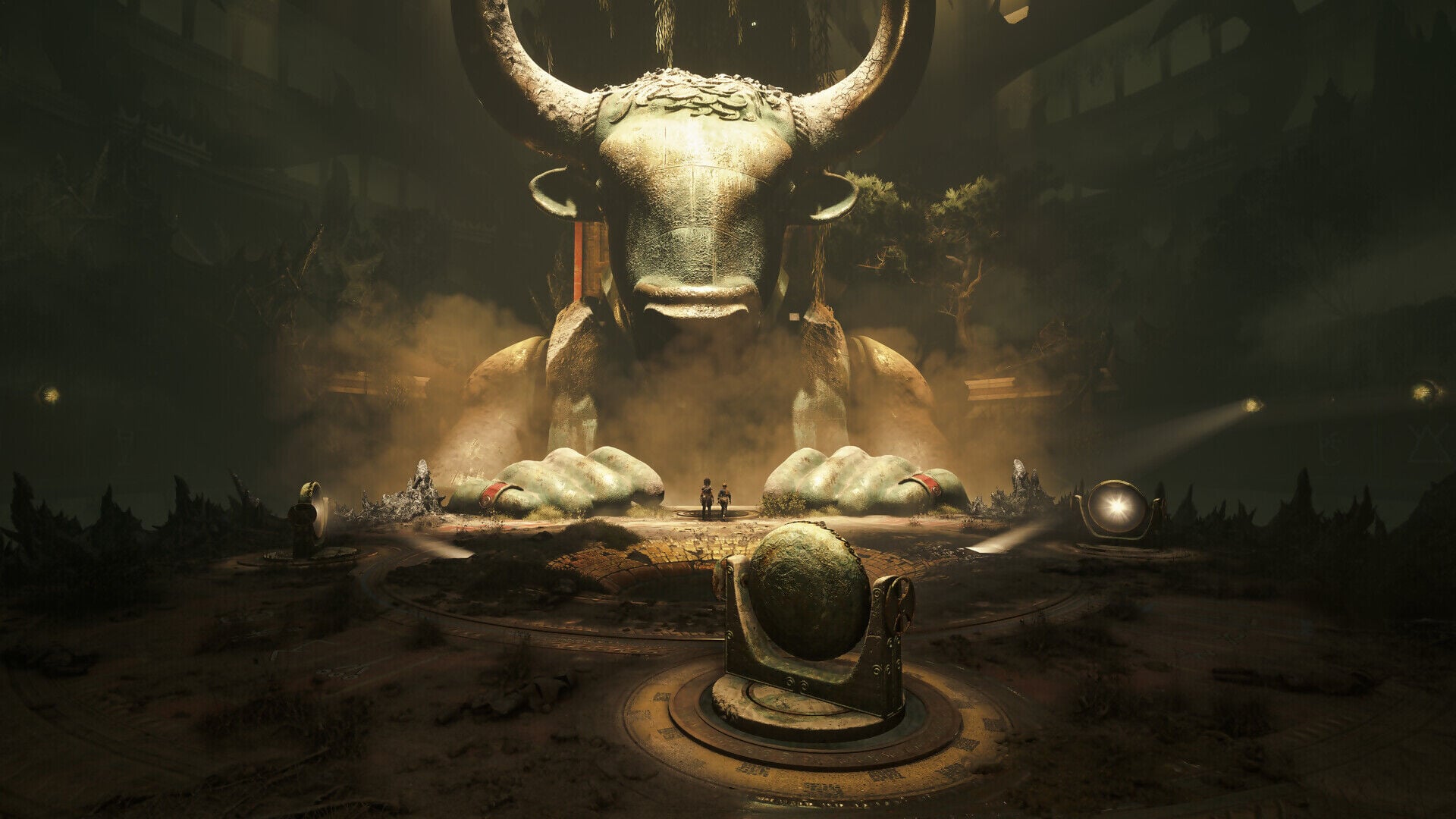
The structure works rather well at first, especially as Asobo doesn't treat these sections as mere flashbacks meant to drip-feed a few extra narrative details. They feed directly into progression and gameplay, which lets the studio advance Sophia's story and that of the Minoan civilisation at the same time. For those already familiar with the A Plague Tale series, the connections with the Macula add genuine extra depth, even if, once again, Resonance A Plague Tale Legacy remains standalone enough to be enjoyed without having played the first two games.
Sophia Drake, is that you?
In truth, it's when you actually start playing that the change of direction leaps out at you. Amicia was a survivor who constantly had to work around her physical frailty, all while looking after her little brother, whereas Sophia is presented from the opening minutes as a young woman perfectly capable of defending herself. She has a grappling hook, can parry attacks, stun enemies with objects from the environment, drop on them from above and chain several attacks together to break their guard. In short, we're on a completely different page in terms of what the game lets you do. Above all, though, Resonance A Plague Tale Legacy largely abandons the structure of the first two instalments in favour of that of the big cinematic adventure game. And at that point, it's impossible not to think of Naughty Dog's Uncharted saga, chiefly the fourth game, and all the imitators that followed.
The problem is that this is 2026, not 2016. What looked impressive and modern back then has since become an extremely common language.
Wall climbing, narrow crawl spaces, millennia-old ruins, platforming, mechanisms to activate, vistas designed to be admired for a few seconds before you move on, spectacular chases, sequences where the scenery collapses around the character: Asobo borrows an enormous amount from what made Naughty Dog's 2016 game so strong. Even the general rhythm, with its alternation between exploration, puzzles, dialogue, combat and big set pieces, keeps harking back to that era when Uncharted 4 was one of the absolute benchmarks of the narrative adventure game. The problem is that this is 2026, not 2016. What looked impressive and modern back then has since become an extremely common language. Over the past decade, action-adventure games have piled on the climbing sequences, the ruins to explore, the environmental puzzles and the carefully placed panoramas meant to elicit the player's obligatory "wow". Resonance A Plague Tale Legacy executes this formula sometimes with enough craft to be enjoyable, sometimes with enough fumbles to remind you that Asobo Studio isn't Naughty Dog. Most of all, though, it lacks that one strong idea that would let it stand out rather than being a pale copy of Uncharted.
Light, the game's one genuinely good idea
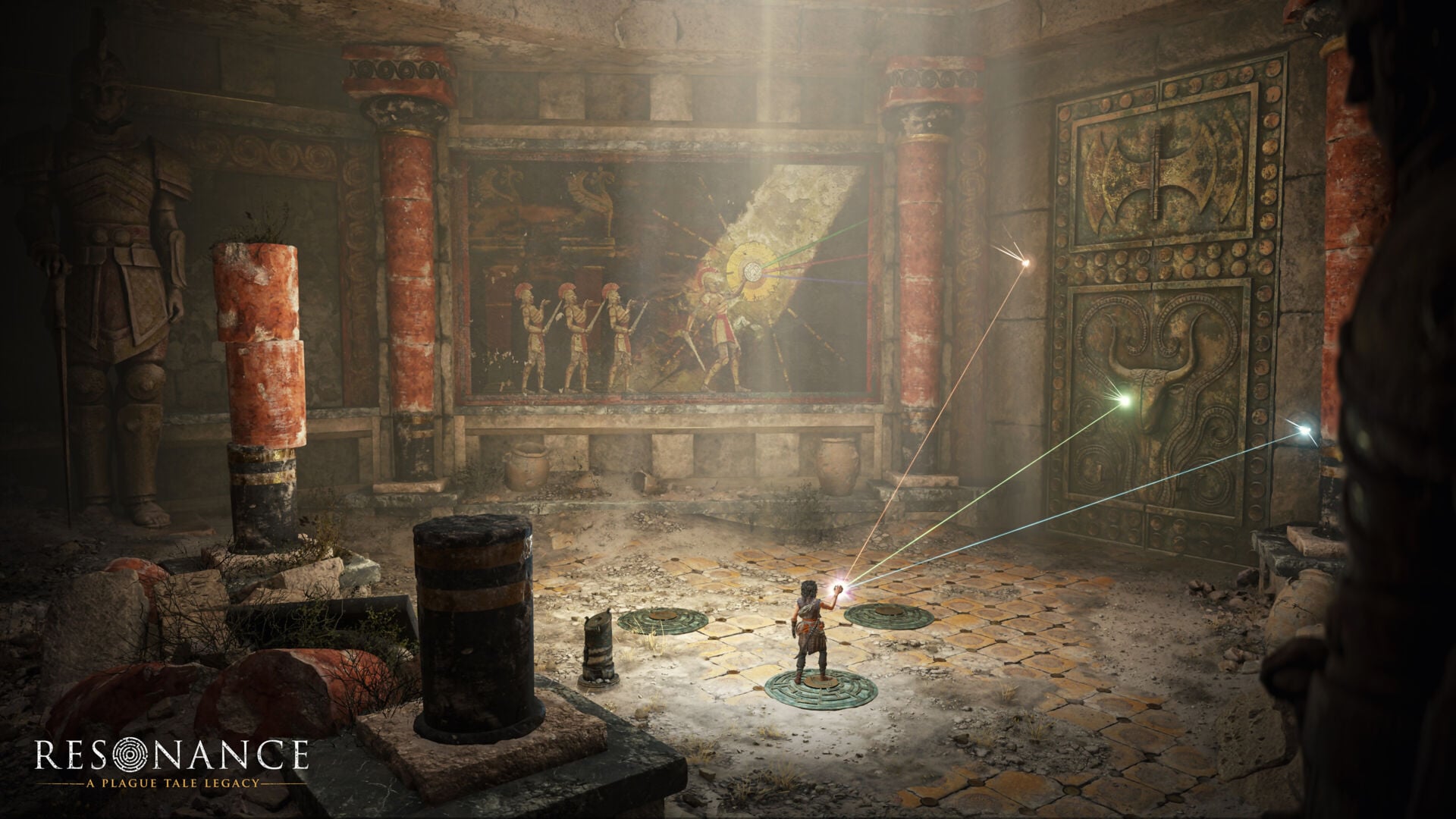
There is one neat idea in Resonance A Plague Tale Legacy, mind. It's the ancient sphere Sophia picks up very early in the adventure, which lets her manipulate light and quickly becomes her main tool for progressing. It's especially effective during the — numerous — puzzles that punctuate the adventure, which are ultimately among the game's best sequences. Why? Because they don't just plonk a few arbitrary mechanisms in front of the player; they use the concept of light directly to create pathways, alter the environment or reveal hidden elements. Granted, the puzzles' difficulty is fairly low for anyone with half a brain (don't look at us like that, you'll make us blush), but given that the game has been built to appeal to as wide an audience as possible, Asobo Studio's decision is understandable.
The fact remains that this light mechanic also ties back into the DNA of the 'A Plague Tale' franchise, given that light has always held a special place in the series, particularly when facing the rats and the hazards that force the characters to stay within certain lit areas. Well, Resonance A Plague Tale Legacy takes up that symbolism and this time turns it into a genuine gameplay tool. And this is where Asobo Studio is far more interesting — when it sets about developing its own ideas rather than reproducing other people's, Uncharted being the obvious name to avoid mentioning yet again. The best moments in this third instalment are the ones where light, the Macula and Minoan mythology meet, because the game has something to say and something to let you experience that genuinely belongs to it.
The problem is that this originality gets watered down considerably, and very gradually. By the end of the ten or so hours needed to finish the adventure, you realise that Resonance A Plague Tale Legacy remains an extremely linear affair, with a few side branches tucked away for picking up items or collectibles, but the bulk of the journey runs on rails. That isn't necessarily a flaw in itself, especially for a narrative adventure, but it only reinforces the sense of playing a formula you already know very well indeed. Too well. Had the game landed in the wake of Uncharted 4 a decade ago, it would have gone down a treat. But in 2026, you feel like you've played this sort of thing a hundred times over.
Goddess of War?
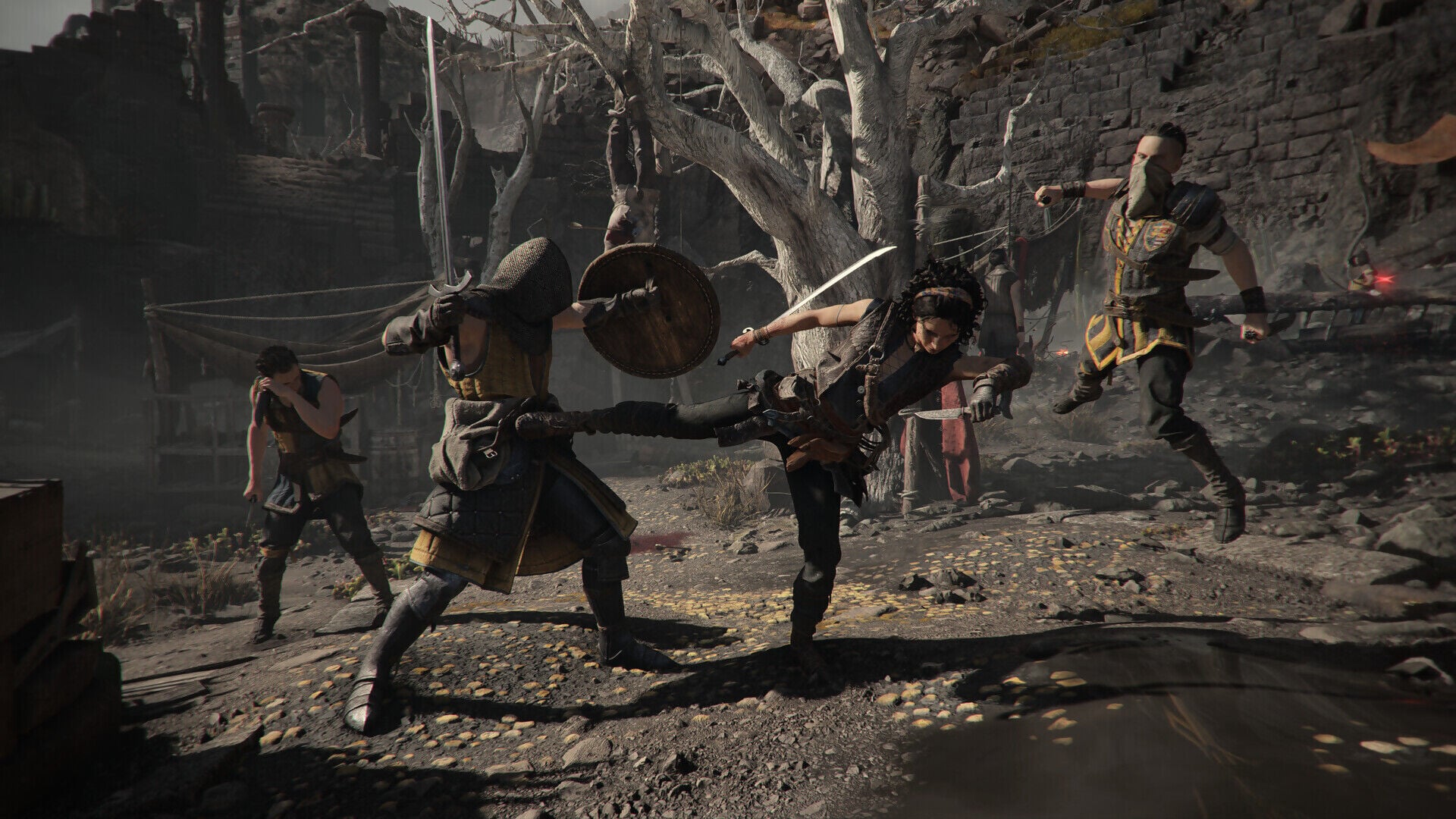
The other big new addition in Resonance A Plague Tale Legacy concerns the fighting, obviously. As I said above, Asobo Studio wanted to win over a different crowd, the big one, the one that buys games for action, combat and spectacle. That's also why Sophia was chosen as the 'main character', and not solely for her lovely hair. The Bordeaux studio has given her enough options to make the early encounters rather exciting. The young woman can pull certain enemies in with her grappling hook, hurl them into one another, use the scenery, dodge, parry and string together several attacks with a certain brutality. There are even a few sequences where you can feel a touch of God of War in the way the blows chain together and the way Sophia literally ploughs through groups of enemies. Obviously, we're a long way from the depth of Santa Monica Studio's combat system, but at least the game tries to give its fights some heft.
Sadly, that ambition quickly runs into execution problems. The animations sometimes lack fluidity, the lock-on is temperamental and the fights end up resting on a fairly limited loop: dodge, parry, stun, then hit. The skill tree adds a few extra options, but it's far too thin to genuinely transform the system. The upshot is that you're forever cycling through the same combos, and after 10–12 hours of adventuring you're performing the moves almost mechanically, without surprise and, above all, without much pleasure. I know, it's hard to hear, but it's the plain truth. And then there's another snag: the game sometimes tries to compensate for this simplicity by throwing far too many enemies at you. Some sequences become frankly interminable, and one of them even asks you to see off more than 40 opponents back to back. At that point, Sophia's show of strength becomes mostly a show of quantity.
Sophia go round
The game also falls down on structure and pacing, and the second half of the adventure is very clearly the less convincing one. Partly because you've started to learn the game's workings off by heart. In fact, as Sophia pushes deeper into the island, Resonance A Plague Tale Legacy gradually drops the puzzles and the exploration in favour of piling on fights, stealth sections and chase sequences involving a mythological creature that quickly becomes one of the game's main threats. The first encounters work well, because the monster conveys a real sense of danger and lets Asobo reconnect with the fragility that characterised the previous episodes. But the problem surfaces once the game starts reproducing the same game of hide-and-seek over and over. You regularly find yourself watching the creature's movements, waiting for the right moment to push forward, then doing it all again a few minutes later. It works narratively, but it ends up predictable. And since the fights also take up more room at this point, and lack variety themselves, the game loses some of the variety it had managed to establish in its opening hours.
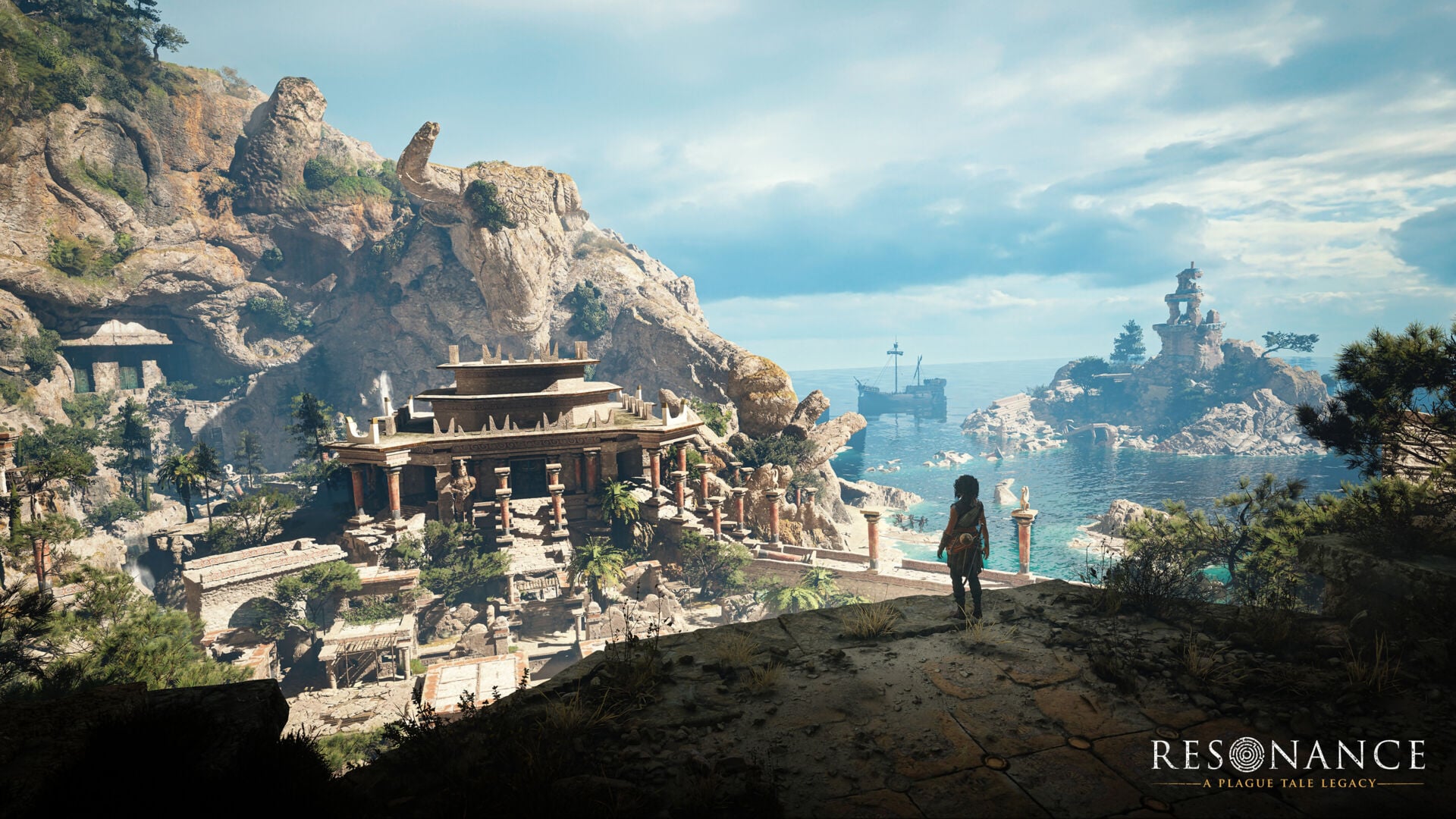
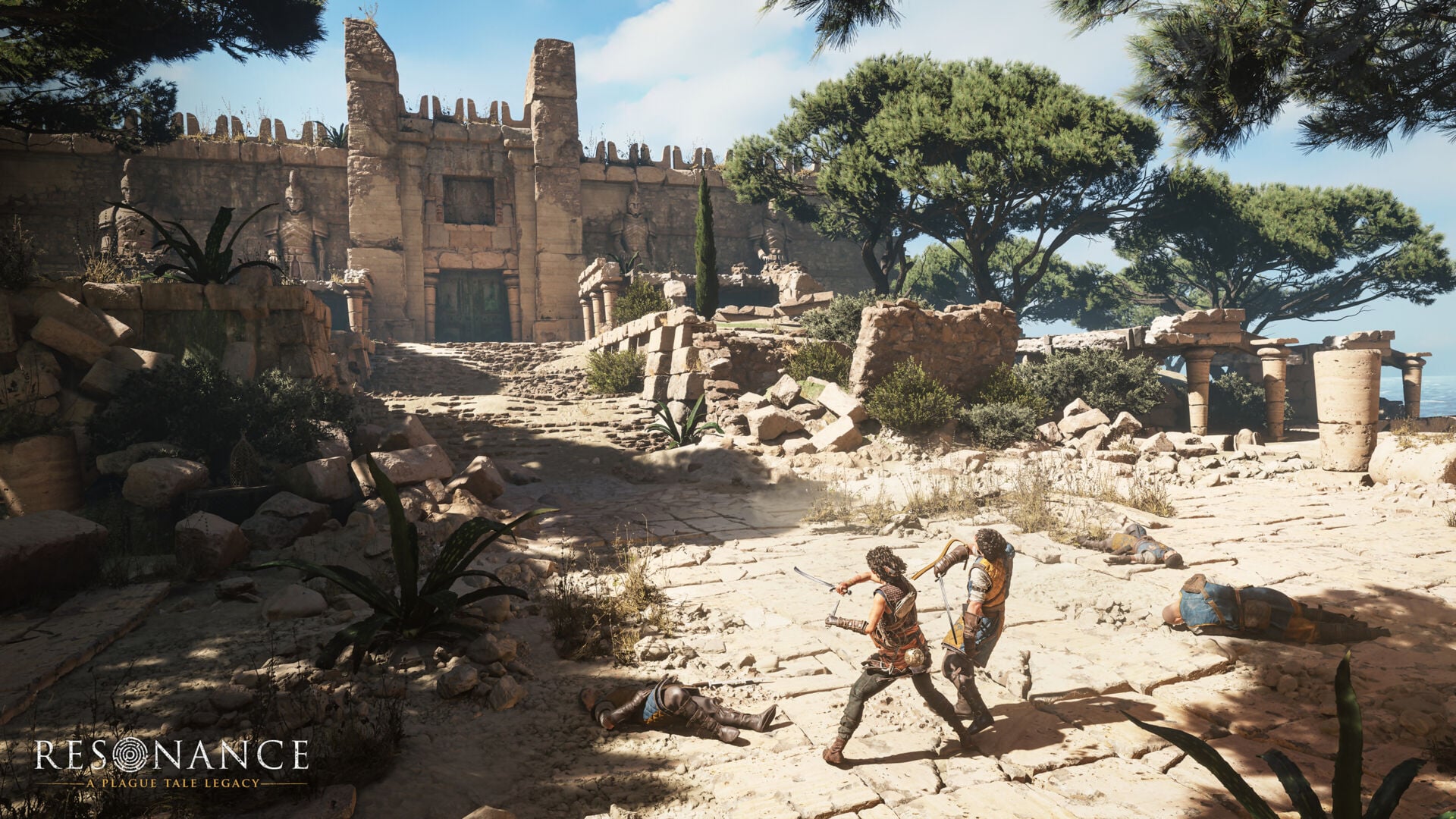
Thankfully, Resonance A Plague Tale Legacy regularly returns to what Asobo does best: establishing a mood, an atmosphere and, above all, telling a story through its environments — and the opening hours are particularly strong on that front. Exploring the island gradually uncovers the remnants of Minoan civilisation, while Sophia's visions offer another reading of the places she passes through. Light, shadow and the shifts between eras are used intelligently to give the environments a genuine narrative dimension. This is also where the art direction impresses most, and once again Asobo proves it has a quite remarkable eye for scenery. Some areas really do make you want to stop and take in the view, with colours, lighting and the work on the Mediterranean ruins giving the game a strong visual identity, very different from that of the first two instalments. It's brighter, less bleak and oppressive, and honestly, that's rather refreshing.
Bordeaux's finest
That said, this is still a AA production, and at times it shows. The characters are generally very well realised, Sophia chief among them, but some animations lack naturalness, whether in combat or in general movement. The enemies, too, can behave rather mechanically. Nothing that sinks the game technically, but enough to remind you that Resonance A Plague Tale Legacy doesn't have the resources of a blockbuster like Uncharted 4. Is that a flaw as such? No, but it's worth pointing out all the same.
The soundtrack, on the other hand, is a lovely success. Olivier Derivière, already behind the previous instalments, delivers a rather inspired score that perfectly accompanies the move to the Mediterranean and Greek mythology. Is it his finest work? Not really, no — we preferred what he did on last year's South of Midnight — but it's obviously quality stuff, as so often with the man. The sound design also works very well during the chase sequences, where the creature's cries and the ambient noise feed directly into the tension. Play it with headphones, in fact.
The good
- Gorgeous visuals and art direction
- The Mediterranean atmosphere and the Minoan mythology setting
- The light-manipulation mechanic, genuinely original
- Sophia, a more agile and offensive protagonist
- A story that enriches the 'A Plague Tale' universe
- A lovely soundtrack by Olivier Derivière
The bad
- It borrows far too much from the Uncharted formula, without mastering it
- A design language we know — all too — well
- A structure whose seams show all too quickly
- Combat lacks depth and gets repetitive
- Animations and behaviours that sometimes betray the game's technical limits
- Not enough bosses, and the ones there are lack impact
- The second half of the adventure runs short on surprises