
The basics above all else
Seven years. That's how long we've had to wait to see Gears of War back in the spotlight. Since Gears 5 landed in 2019, Microsoft's franchise had kept a decidedly low profile, and in a way that long absence is no great surprise. Let's not forget that the last two instalments weren't exactly convincing: Gears 4 already played it very safe with the formula, then Gears 5 tried to shake up the series' habits by folding in semi-open areas that sometimes felt a bit shoehorned in. It wasn't necessarily what you wanted from a Gears of War, and above all, that open-zone streak ended up diluting what made the licence so strong in the first place — its efficiency, its pacing and its sense of spectacle. But The Coalition has taken the time to go back over its work, understand what didn't land and readjust its aim.
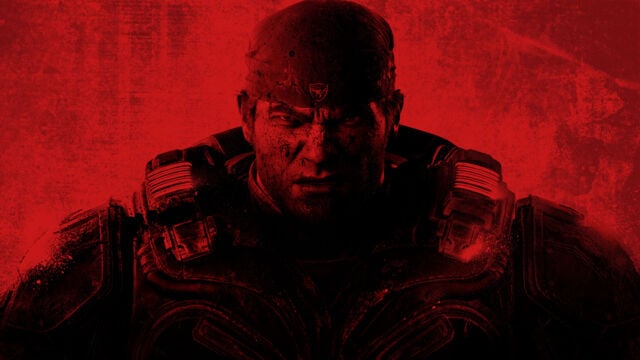
Going back to the fundamentals was probably the best possible call for the series, and rather than picking the story up where Gears 5 left us (honestly, who even remembers Kait Diaz's storyline?), the Canadian studio winds the clock back 14 years before the first game to tell the story of Emergence Day (E-Day, you got it), the day the Locust crawled out of Sera's bowels and plunged humanity into a war that would last years. It's a particularly interesting choice, since it lets us catch up with Marcus Fenix and Dominic Santiago long before the events we know, when they're still just young soldiers. Alongside them we meet Mags Carter, a short-haired and fairly seasoned soldier, as well as Lucas Reyes, a fresh recruit who has to learn to survive in a conflict far beyond anything he could have imagined. The main challenge with a prequel like Gears of War E-Day is obviously telling a story whose ending we already know. We already know Emergence Day is going to be a disaster. We also know what becomes of Marcus and Dom, and we know the part the Locust will play in Sera's history. The Coalition can't really rely on surprise to carry its narrative, then; instead it has to make us want to live through this day alongside characters whose fate we already know.
Marcus and Dom, a missed opportunity
Unfortunately, it's on the character front that Gears of War E-Day struggles most to convince. And that's a shame, given The Coalition had an almost ideal setting in its hands to tell the story of one of the most important relationships in the whole saga. Emergence Day was the perfect chance to go back to the beginnings of Marcus Fenix and Dominic Santiago, to show how these two soldiers met, how their trust was built and, above all, why a few years later Dom would become far more than just a brother in arms to Marcus. With a backdrop like that, you could hardly dream of better ground on which to deepen this iconic duo. Sadly, Gears E-Day spreads itself thin, trying to give everyone a moment, even the characters nobody's especially fussed about. Rather than making Marcus and Dom the true heart of its story, the game tries to chart the journeys of every member of the squad, with Mags Carter, Lucas Reyes and the rest taking up a surprisingly large chunk of the adventure at times. The problem isn't that these characters are bad or have nothing to say — some of them work rather well, in fact — but after a seven-year wait, and with an instalment set precisely at the point where Marcus and Dom are still young soldiers, it's hard not to feel the studio should have made far more obvious choices.
That's all the more regrettable given that some situations had clear emotional potential. Carlos's death, for instance, helps us better understand certain wounds carried by Marcus and Dom, and lends their relationship a little more depth.
Well, yes, we came here to see Marcus and Dom. We came to understand their relationship. We came to watch the birth of a brotherhood that would become one of the emotional pillars of the original trilogy. And yet the game keeps looking away to tell us about everybody else. There are flashes, a few more intimate scenes and the odd passage that genuinely lands. When The Coalition takes the time to let its characters breathe, to show their doubts or simply let them talk away from the battlefield, something more human comes through. Those moments do exist, and they prove the studio was capable of going down that road. But they're too rare and, above all, too isolated to give the whole thing any real weight. The rest of the time, the writing stays resolutely straight-faced, all gravel-voiced American GIs, barked one-liners, blokeish camaraderie and grand speeches about duty, brotherhood and sacrifice. That isn't necessarily a problem in itself, since this tone has been part of the Gears of War identity from the very beginning. But after all these years, you'd have hoped The Coalition would use this new entry to bring a little more nuance to its characters, rather than simply trotting out the same old codes.
It's all the more of a shame given that some situations had obvious emotional potential. Carlos's death, for instance, sheds light on certain wounds carried by Marcus and Dom and lends a bit more depth to their relationship. But even there, the game could have gone so much further. What's missing are the small moments that let you really understand what binds two characters together, beyond the explosions, the firefights and the grand declarations of friendship. In the end, E-Day has plenty to say, just not the thing we most wanted to hear.
For whom the bell tolls
Thankfully, that disappointment over the writing and the handling of the characters evaporates the moment you pick up the controller. In fact, it's quite the opposite! On the gameplay front, Gears of War E-Day is a resounding success, because The Coalition has clearly learned the lessons of Gears 5. The big semi-open zones of the previous game, which sometimes felt like an artificial brake on the adventure with their endless treks and fairly unexciting activities, have been set aside here in favour of far tighter pacing. You advance, you take cover, you blast away, you push on towards the next war zone and you start again. Put like that, the formula might sound extremely old-fashioned, but it's precisely that simplicity that works.
The cover system remains at the heart of the experience, of course, since it's the series' calling card. kill.switch may have got there first, but it was Gears of War that perfected it and, crucially, took it mainstream. Marcus and his squadmates can move from one piece of cover to the next, fire blind, flank enemies or seize an opening to charge them down. And there's still that unmistakable feeling when you approach a piece of scenery and Marcus all but magnetises himself to it to take cover. That mechanic, now inseparable from Gears, remains an absolute joy to play with, because it instantly conveys the fluidity and precision that built the series' reputation. The Coalition has also tweaked movement a little to smooth everything out. Slides let you reach cover faster or get out of a sticky spot, while vaulting makes moving between two pieces of cover feel more natural.
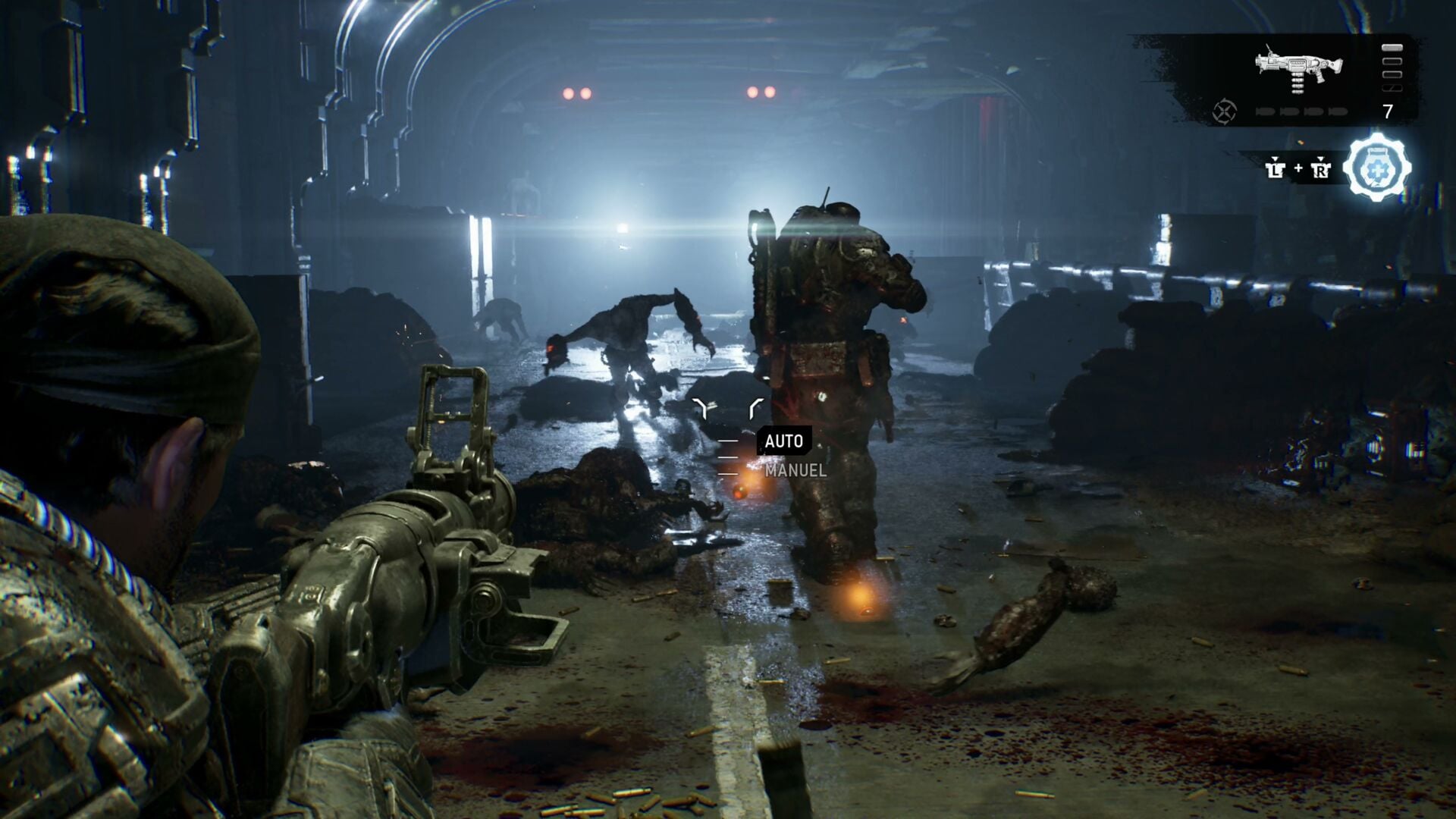
The real novelty, though, is the ability to jump, a mechanic that lets you clear certain obstacles and brings a bit more freedom to how you move. We're still a very long way from a game where jumping is central to the gameplay, and Gears keeps the characteristic heaviness that's part of its DNA, but these new options mainly serve to make movement more supple. All of it injects a touch more dynamism into the firefights and lets you chain actions together more smoothly, though it's hardly a revolution. The Coalition has simply improved a recipe that's worked for years, without trying to turn Gears into something else.
The other neat little addition concerns ground-level cover. Marcus can now take shelter behind far lower objects, staying almost flat against the floor. It might sound trivial on paper, but it adds a new dimension to encounters, since you can now protect yourself behind obstacles that would have been mere scenery in previous games. You have to deal with lower cover, watch enemy movements and pick the right moment to rise up and open fire. It works particularly well in certain arenas where the environment is littered with small objects you can use to push forward while staying behind cover.
"Fire in the hole!"
The series' other great signature is, of course, the active reload system. Here again, The Coalition hasn't tried to reinvent a mechanic that has worked since the very first game and remains hugely satisfying with a pad in hand. When you reload your weapon, a gauge appears and you have to press at just the right moment to pull off a perfect reload. Nail the timing and the gun reloads far faster and gets a damage bonus for a few seconds. Miss it, and your character can be left momentarily stuck with an unusable weapon, which can be particularly awkward in the middle of a firefight. All the subtlety comes from that constant gamble: do you go for an active reload to save a few precious seconds and boost your damage, or simply wait for the standard reload to finish?
And what still works so well is that the timing isn't quite the same from weapon to weapon. The Lancer, the Gnasher, the Longshot and the Boomshot each have their own rhythm, which forces you to find your bearings again whenever you switch up your arsenal. With some of the faster weapons the window is fairly easy to master, while others demand more precision. After a few hours you end up reloading almost instinctively, knowing when to press without really thinking about it. It's the kind of detail that shows just how much this mechanic has become an integral part of the Gears identity. Weapons can also be upgraded over the course of the adventure via chests and side activities. Some modifications increase power or range, or slightly alter how a weapon behaves. The system stays fairly simple, but it gives you a little extra incentive to explore and pick up the bits and pieces scattered along the way.
The Brutalist
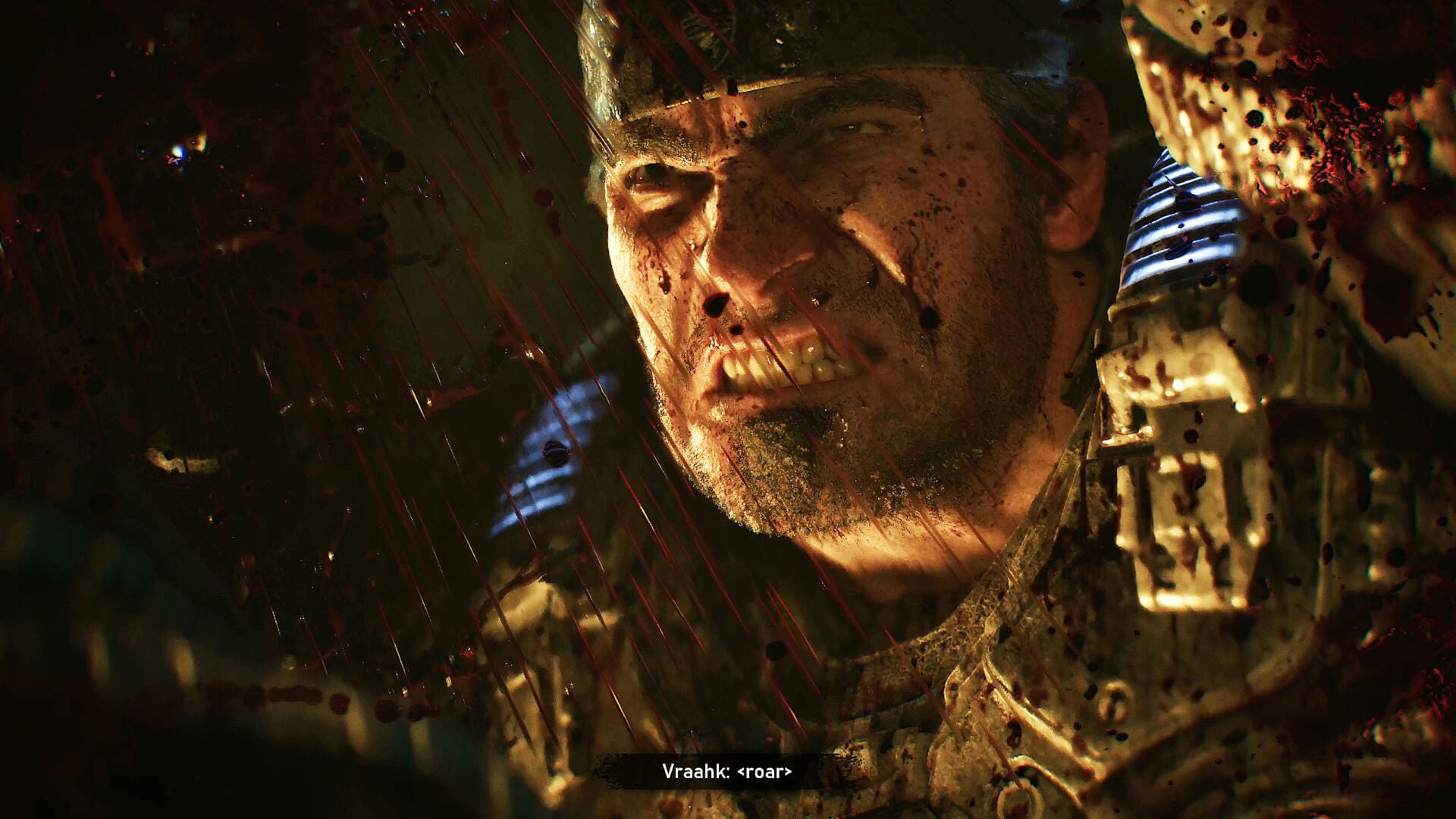
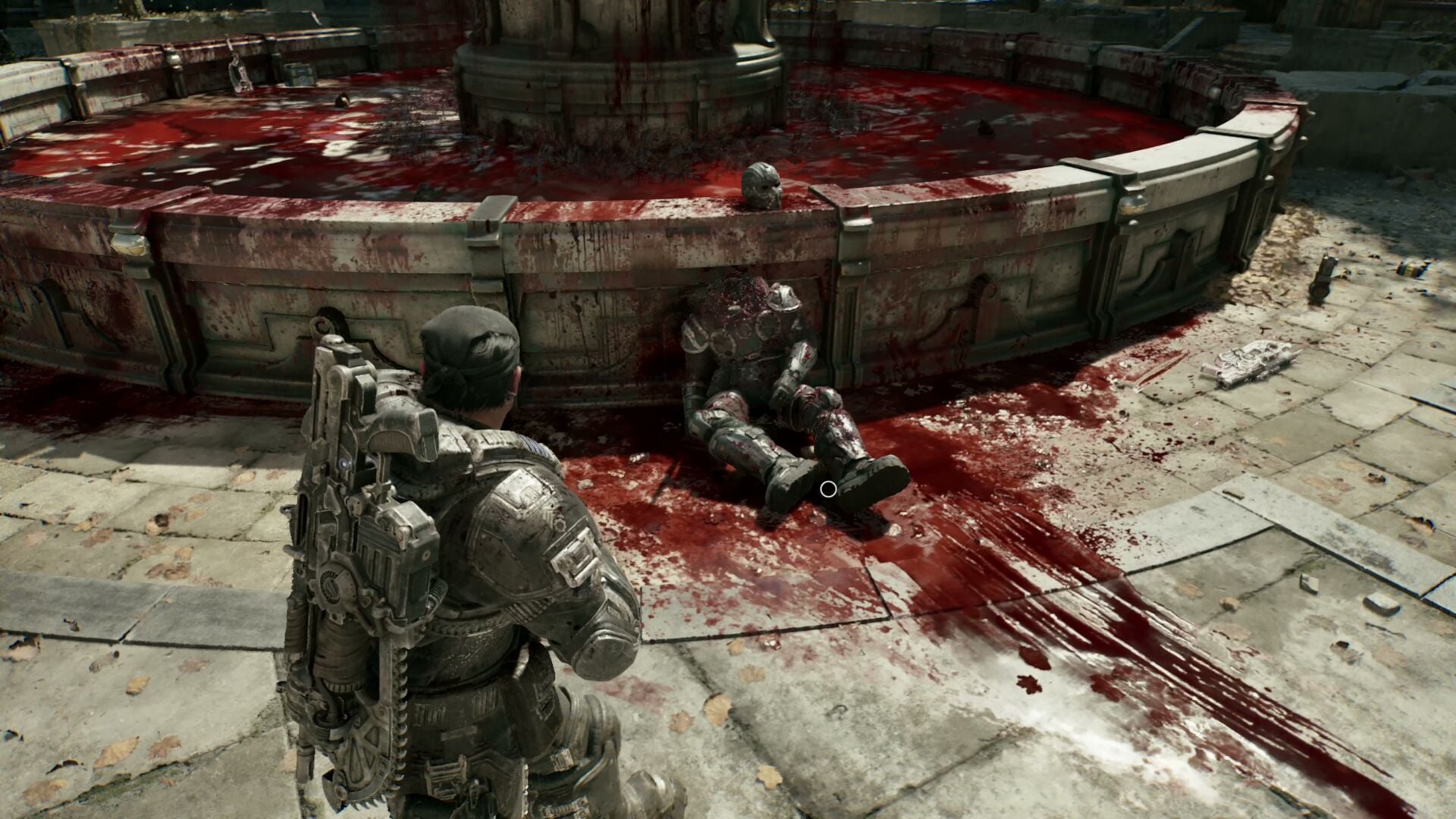
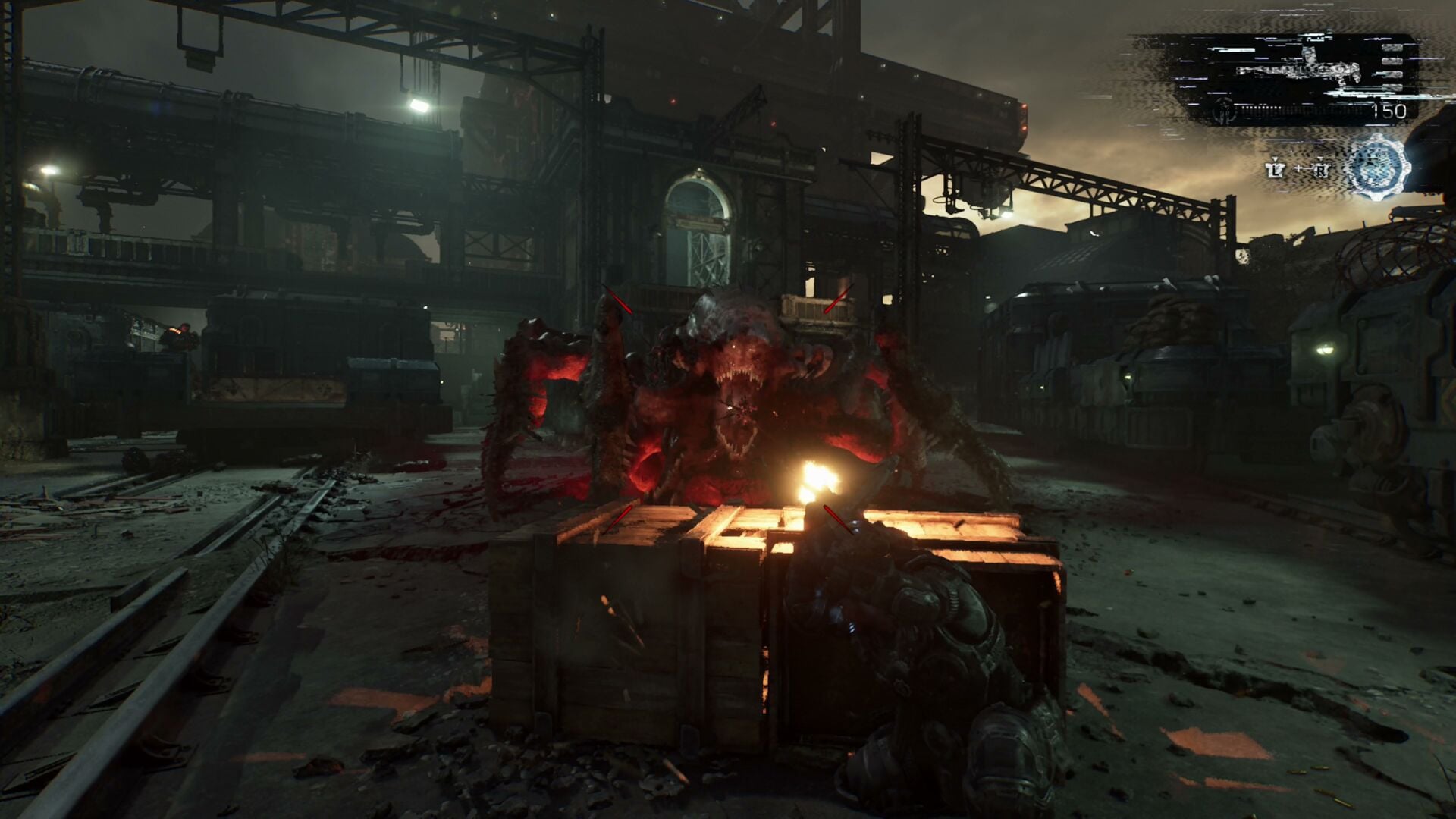
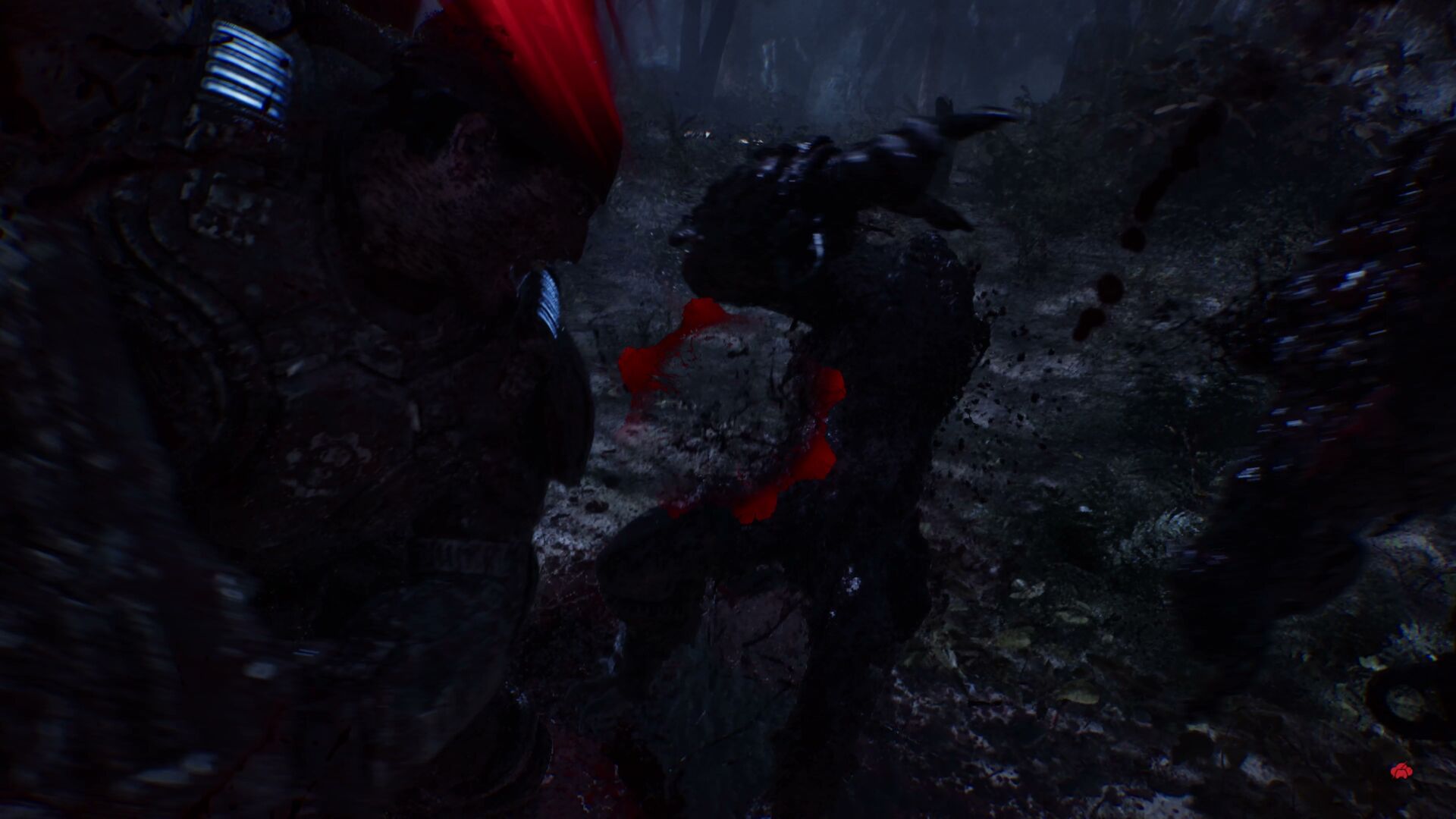
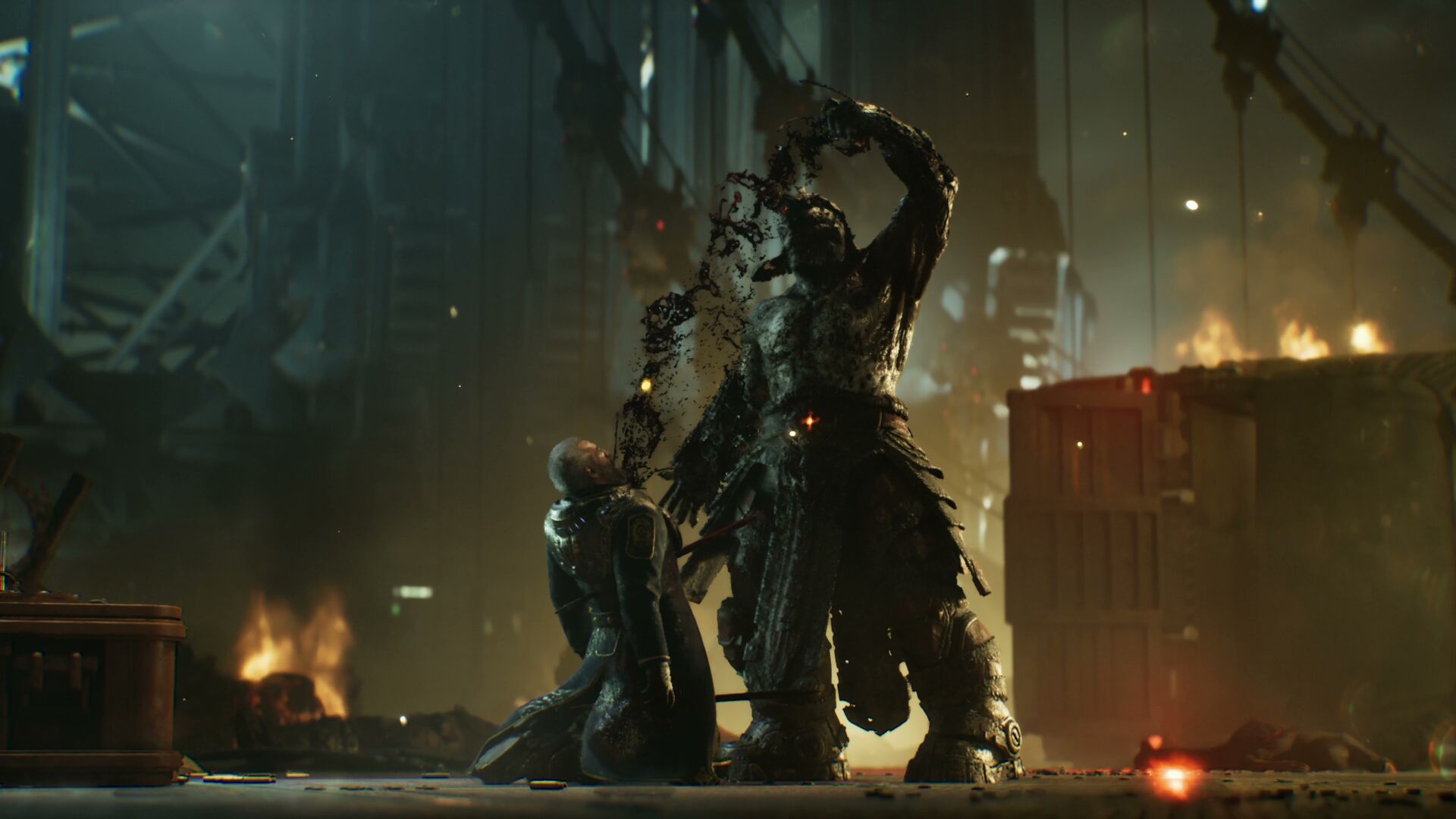
It's in the firefights, inevitably, that Gears of War E-Day is at its most convincing. The combat is as brutal as ever, with graphic violence that remains part and parcel of the series' identity, though here a real line has been crossed: blood everywhere, corpses strewn across the ground, scenes of outright carnage — they want to show us the horror of the war waged by the Locust. The Lancer still lets you saw enemies in half, the executions are especially savage and the bullet impacts give every encounter a real sense of weight and punch. It's rather gratifying. The problem lies more with what's on the other end of our guns. The bestiary is sorely lacking in variety. You run into the same enemy types over and over, with behaviours you end up knowing almost by heart. Early on, each new encounter can still surprise you, but that feeling gradually fades.
And that's where the problem really shows over the long haul. After a dozen or so hours, you know your opponents inside out. You know which ones to take down first, how to flush them out of cover, which weapons to use and how to react to their attacks. The game does keep introducing a few variations, of course, but they aren't enough to genuinely freshen up the fighting. We'd have liked The Coalition to play more with the different enemy types, their behaviours and combat situations. Facing the same adversaries in fairly similar set-ups again and again, the encounters gradually lose some of their impact. That doesn't stop it being fun to play, far from it, but where the early Gears games knew how to create situations that felt wildly different from one another, Gears of War E-Day over-recycles some of its ideas (and its environments, let's not forget) as the campaign goes on.
GoW: Eco-Friendly
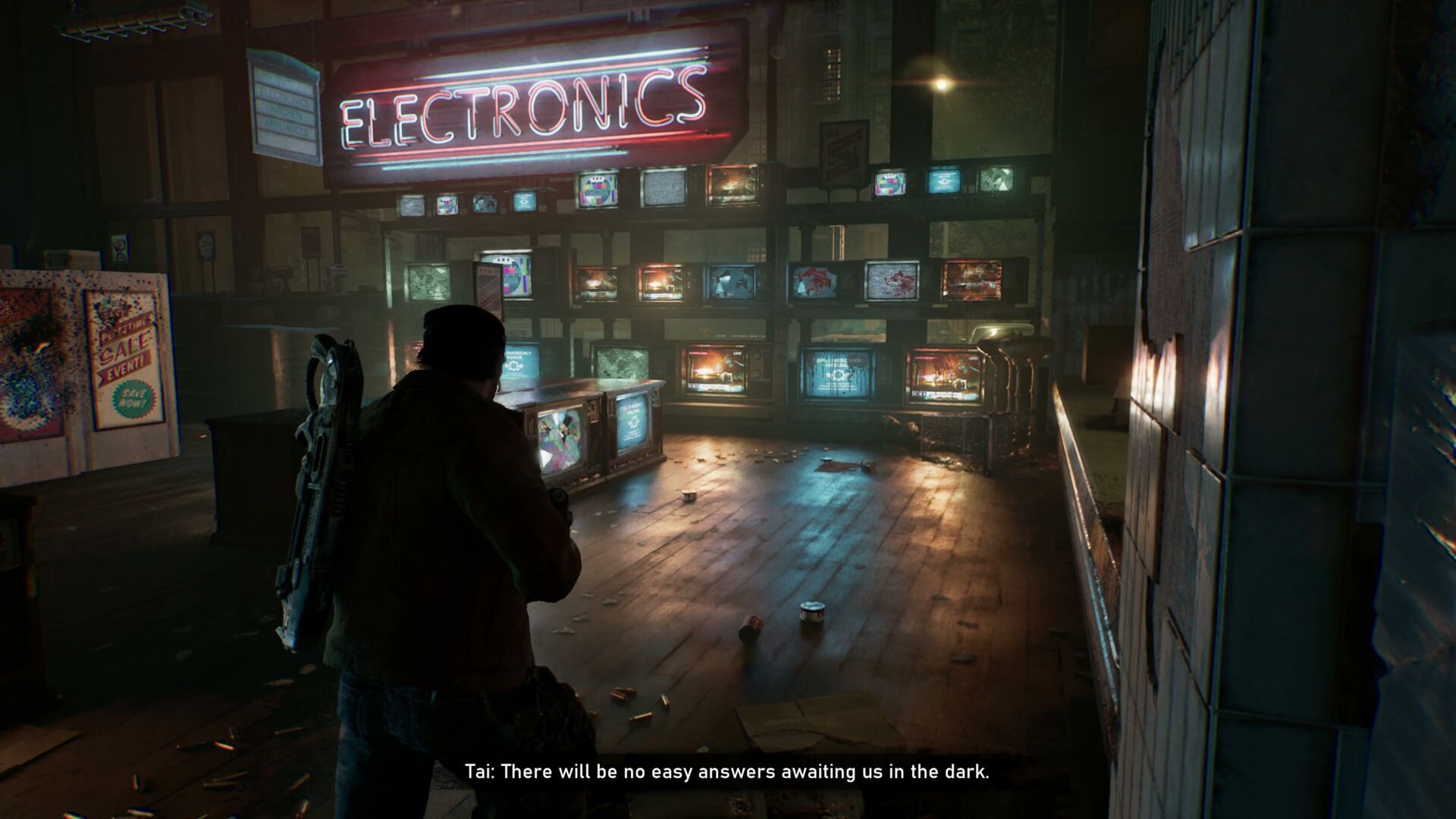
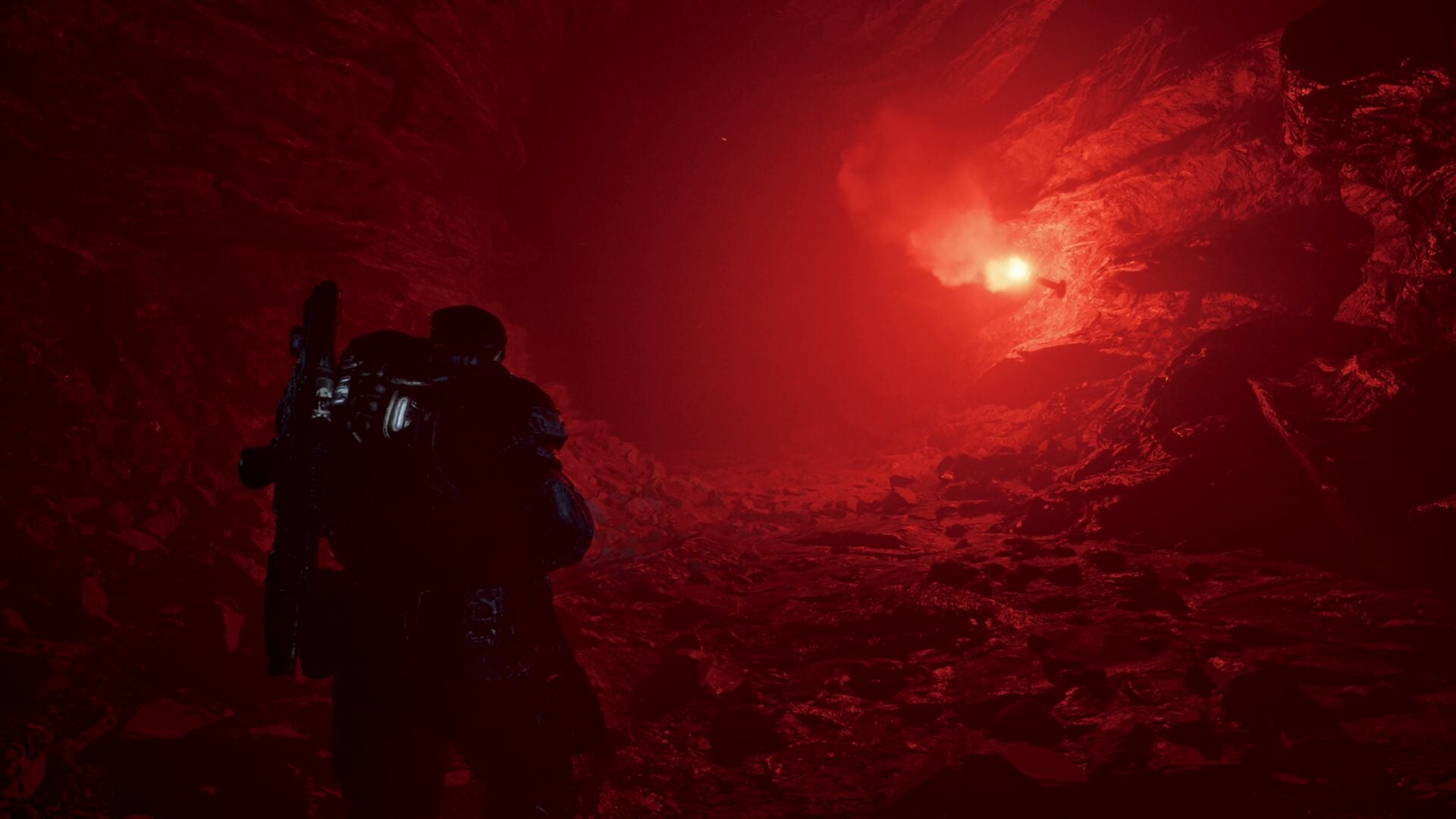
As you'll have gathered, Gears of War E-Day can produce some excellent set pieces, a few of them among the best in the series, but it reuses them far too often. You regularly come across the same environments, the same types of building, the same architecture and sometimes gameplay situations that feel very close to one another. As the adventure goes on, that sense of déjà vu becomes harder and harder to ignore. You can move from one area to the next with the distinct impression you walked through exactly the same place a few hours earlier. The problem, then, isn't that the campaign is linear. On the contrary, that structure suits Gears perfectly. The issue is the lack of variety within that structure. Some sequences work very well the first time they appear, but inevitably lose their impact when they come back in near-identical form a few hours later.
The Coalition does try to vary the pace with slightly more open areas that break up the otherwise strictly linear progression. We're a long way from the vast open world of the previous instalment, and that's no bad thing. Gears of War E-Day is all the better for returning to a more guided adventure. But even within that formula, the studio could have done more to refresh its settings and scenarios. At times the game feels like it has a longer campaign than its ideas can really sustain. Thankfully, the big action set pieces are there to get things moving again. Some of the staging is genuinely impressive, with massive destruction, creatures bursting onto the scene and battles that remind you exactly why Gears still hits so hard when it decides to go all out. It's in these moments that the game is at its most convincing, because The Coalition knows precisely how to build momentum and make the most of the sheer scale of its universe.
A looker, no two ways about it
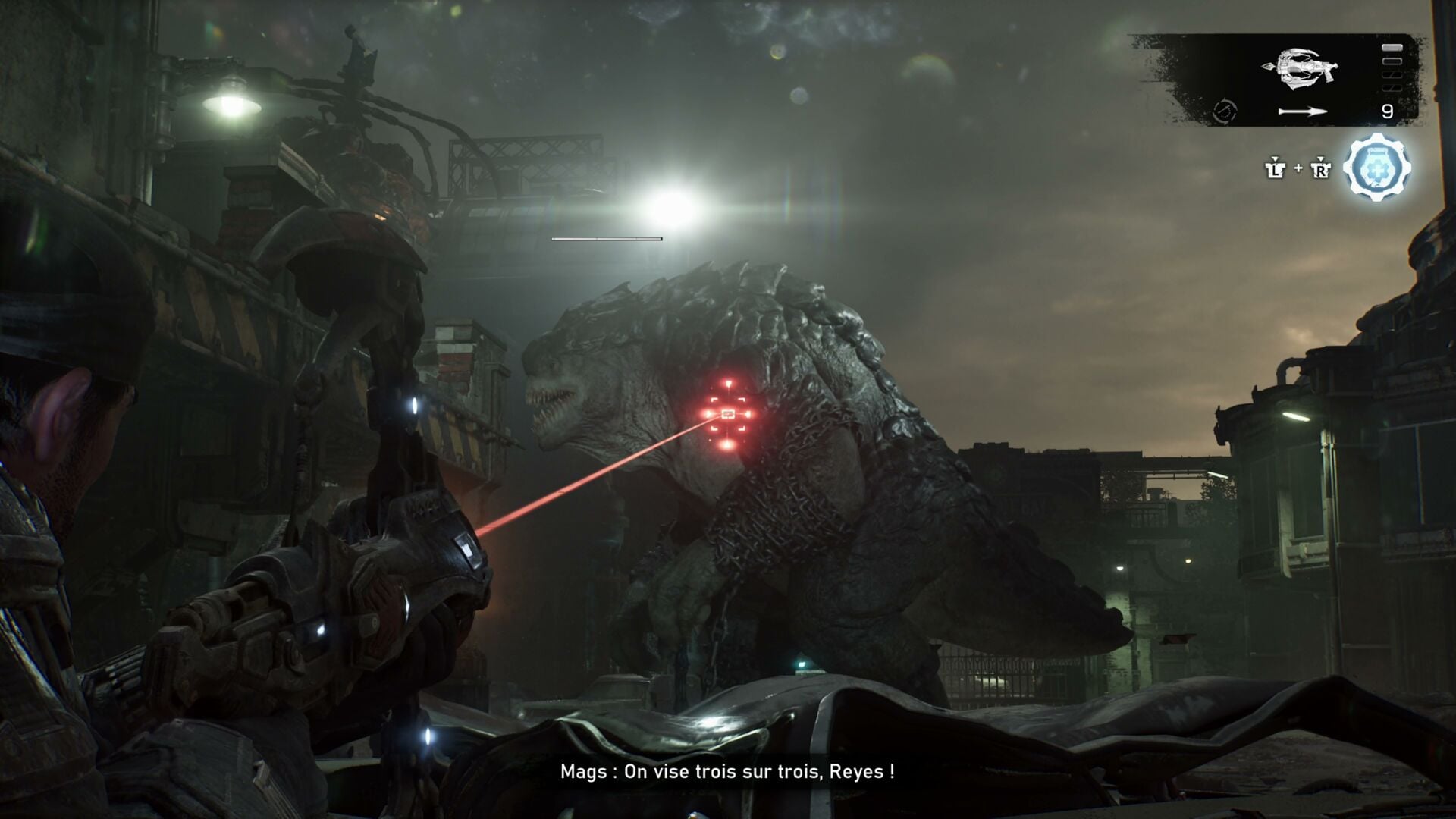
Technically, The Coalition delivers another masterclass in Unreal Engine 5. The environments are incredibly rich and beautifully detailed, with striking lighting effects (the tech on display really is something). The violence of the fighting is impeccably staged too, with particle, blood and destruction effects that heighten that brutality the franchise is known for. The close-ups on Marcus and the main characters are also excellent, with faces that have clearly had a lot of work put into them and facial animations that lend the narrative scenes real credibility. That said, not everyone has had the same level of care lavished on them. Some NPCs are frankly poorly modelled, with far less detailed faces, occasionally rather weak textures and facial animations that stand in stark contrast to those of the main cast. In certain scenes the gap is downright jarring: you can have a perfectly rendered Marcus or Dom opposite a supporting character whose face looks like it came from a previous generation. Nothing that genuinely spoils the adventure, but enough to remind you that even with production values this solid, not everything is quite nailed down.
The good
- Technically, it's a proper beast
- A generous campaign, far better handled than Gears 5's
- The new movement options, which really work
- Ground-level cover
- A return to the Gears fundamentals
- A cover system that's as watertight as ever
- A relentless pace that never lets up
- In co-op, it absolutely slaps
- Same goes for multiplayer
- For whom the bell tolls over the end credits
The bad
- Far too much recycling in the environments and the set pieces
- A bestiary that's sorely lacking in variety
- The Marcus and Dom relationship deserved to be at the heart of the story
- Supporting characters who sometimes hog the spotlight
- Some frankly shoddily modelled NPCs