
It's a pretty wild story currently shaking the computing world, with all the ingredients of a proper spy film. An extramarital affair with a whiff of industrial espionage, contracts worth billions of dollars and, in the middle of it all, Jensen Huang, Nvidia's iconic boss, forced to leave the company he founded through sheer hard graft. But behind this thriller-like affair lies a far bigger issue. Because Jensen Huang isn't merely the head of a company valued in the trillions of dollars: he's also the man who profoundly changed the way we think about computing, and who now finds himself at the centre of a global battle over artificial intelligence.

A plot worthy of a James Bond film
It all starts with some particularly sensitive revelations concerning Jensen Huang, his circle and his private life. Nvidia's co-founder has himself admitted to having had an extramarital relationship, while several American outlets, notably the New York Times, Bloomberg and Reuters, have looked into his links with Alice Huang, a Chinese businesswoman who ran Megaspeed International, a Singapore-based company specialising in computing infrastructure. So far, you might consider this a strictly private matter, except that US intelligence services suspect this woman of having worked on Beijing's behalf, tasked with getting close to Jensen Huang in order to obtain strategic information. And when you know how much weight Nvidia carries in the global AI industry, it quickly becomes clear why this story has blown up to such proportions.
It is important, though, to separate what has been acknowledged from what remains to be proven. While Jensen Huang has admitted his infidelity, the espionage accusations aimed at Alice Huang have not been established. Beijing rejects them, and the US Department of Justice has not yet concluded that she was working for the Chinese secret services. For its part, Nvidia says it has no evidence that any trade secrets were compromised. The investigation will therefore have to determine whether this relationship genuinely allowed sensitive information to reach the Chinese authorities.
Nvidia: from video games to AI
To understand why this affair is provoking such a reaction, you have to look back at Nvidia's utterly exceptional trajectory. Founded in 1993 by Jensen Huang, Chris Malachowsky and Curtis Priem, the American company first made its name with its graphics cards. For PC gamers, Nvidia obviously means GeForce, ray tracing, DLSS and all those technologies that have accompanied the evolution of video games for more than 30 years. But what many people don't realise is that Jensen Huang did far more than develop ever more powerful graphics cards. Above all, he understood, long before many others, that computing was going to have to change its model radically.
For nearly 50 years, computing progress rested largely on Moore's law, the observation that the number of transistors on a chip roughly doubled every two years. In plain terms, to gain power you shrank the transistors and crammed ever more of them onto processors. Except that, by dint of shrinking them, engineers began running into increasingly serious physical, energy and economic limits. And that is precisely where Jensen Huang had a decisive insight. Rather than simply trying to make each processor faster, he bet on massive parallelism — in other words, the ability to set thousands of compute cores working simultaneously on the same problem.
This approach, already at the heart of how graphics processors work, was to become fundamental to artificial intelligence. With CUDA, launched in 2006, Nvidia allowed developers and researchers to harness that power for applications reaching far beyond video games. And the most impressive part is that Jensen Huang didn't stop at chips. He gradually built an entire ecosystem bringing together processors, interconnects, networks, servers and software. Where the industry often sought to optimise each component individually, he wanted the whole thing to operate as a single machine. And it's in that sense that Jensen Huang can be considered a genius, delivering a genuine game changer in computing.
When a data centre becomes one giant computer
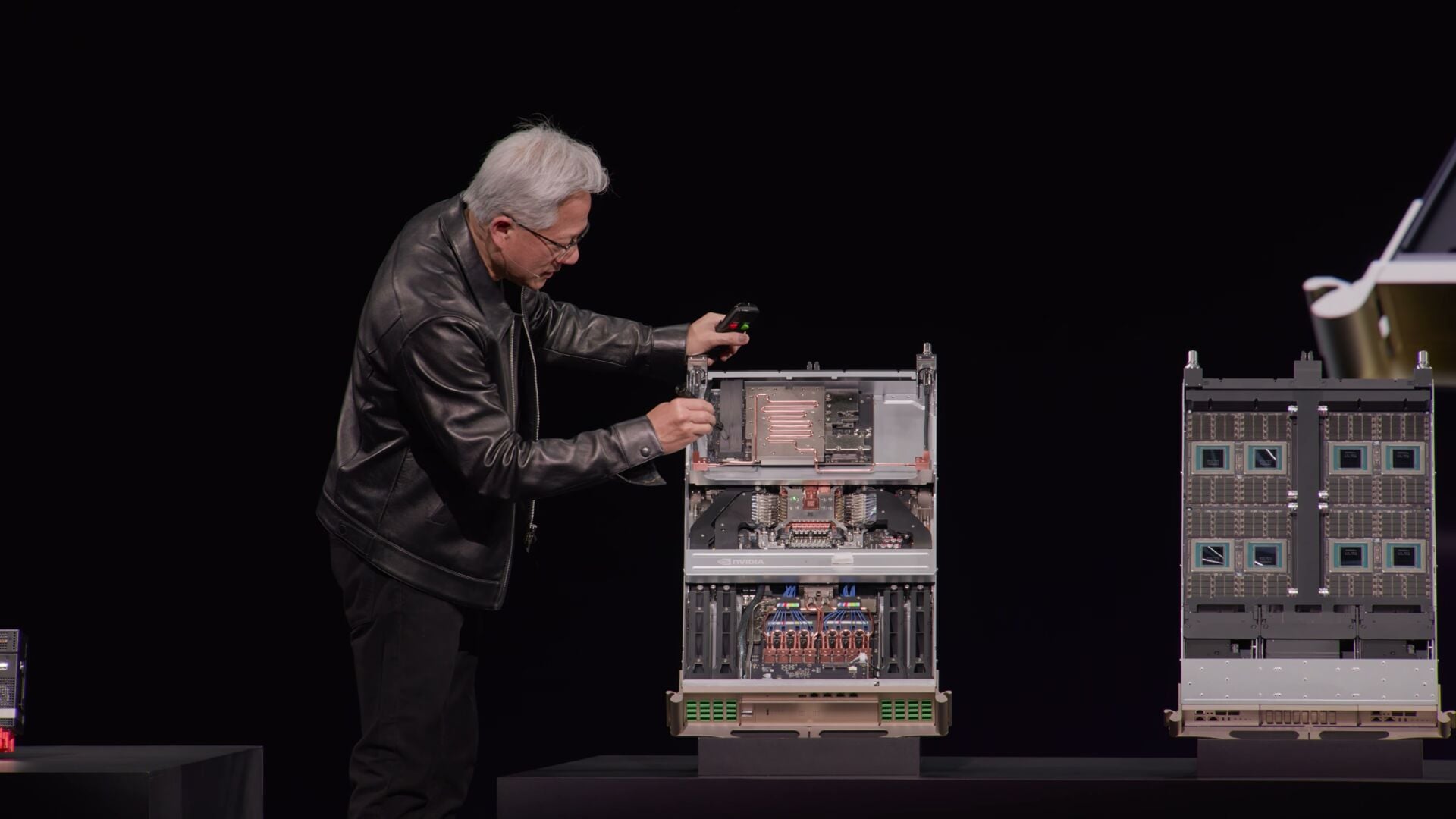
It's probably one of Jensen Huang's greatest achievements, and also one of the least understood by the general public. He helped turn data centres into genuine supercomputers, capable of harnessing tens of thousands of GPUs to carry out tasks of staggering complexity. Today, then, Nvidia no longer simply sells graphics cards or processors: the company offers complete infrastructures, where silicon, networking and software are designed to work together. We're talking about systems that fill entire rooms, even industrial facilities, and that are capable of training the most advanced artificial intelligence models. In other words, while some engineers were still thinking on the scale of a chip, Jensen Huang had started thinking on the scale of the data centre, and then of global infrastructure.
It's this big-picture vision that explains why Nvidia holds such a dominant position in artificial intelligence today. Its technologies have become the benchmark for research labs, tech giants and the companies developing AI models. Other architectures exist, of course, but the Nvidia ecosystem remains one of the most widely used and the hardest to replace. And once you grasp that, you realise that Jensen Huang didn't simply ride the AI boom. He helped build the hardware and software foundations that made that boom possible in the first place.
Open AI versus closed AI
But there's another detail that might help explain why Jensen Huang is also in the sights of the US authorities. Because behind the accusations aimed at him lies a far broader battle over the future of artificial intelligence. On one side are the companies that favour proprietary models, whose most advanced technologies remain controlled by a limited number of players. Their approach rests on protecting their investments, keeping a firm grip on their infrastructure and monetising AI services. On the other, there's a movement in favour of distributing models more widely, notably through open weights, which allow researchers and companies to access the parameters of certain AI systems. An approach that can encourage innovation, model customisation and greater technological independence.
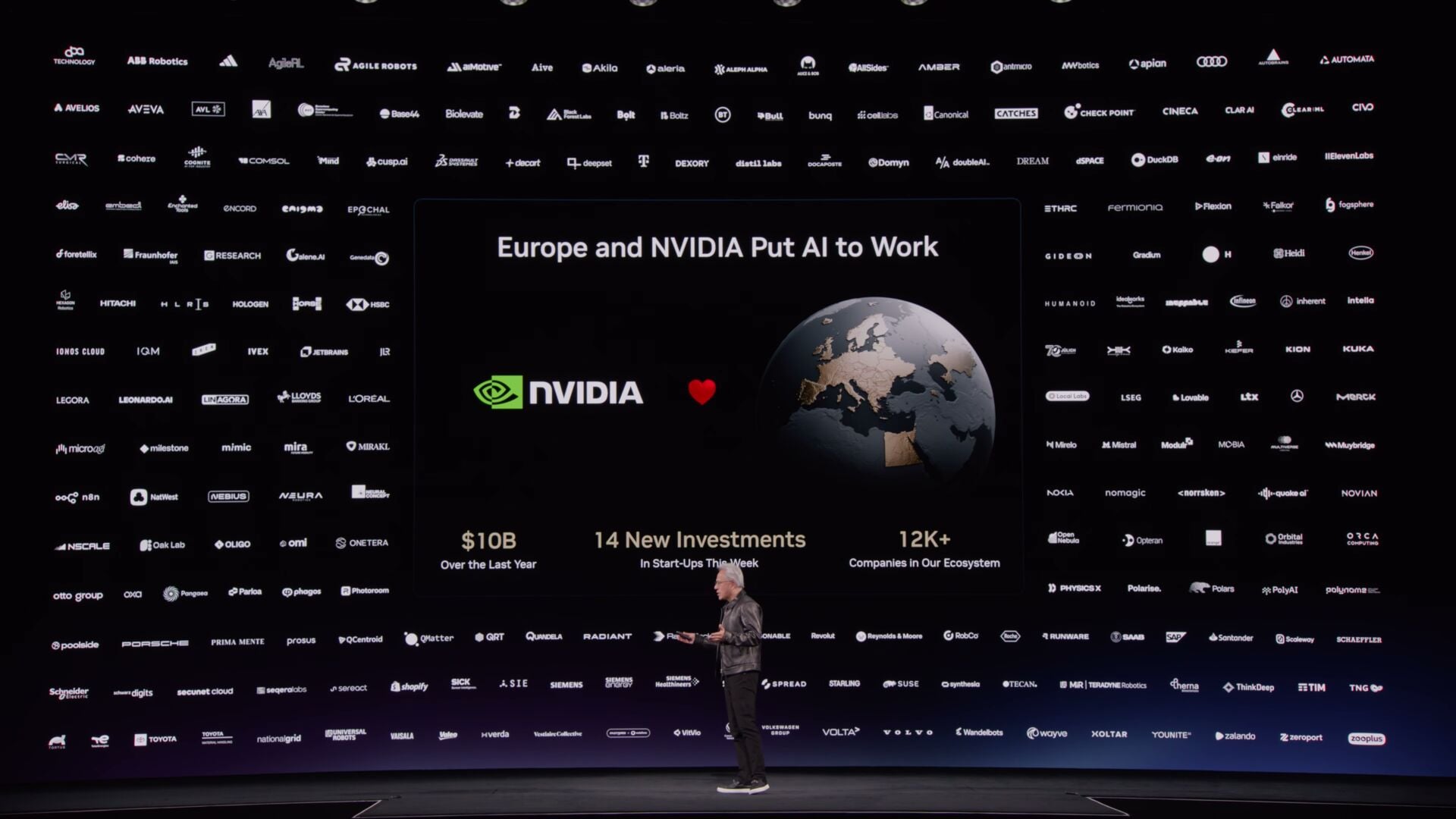
Jensen Huang has regularly championed the importance of an open AI ecosystem, not least because Nvidia supplies the infrastructure needed to run these models. His strategy is also about enabling as many companies, researchers and countries as possible to develop their own AI applications. Because the more widely computing power spreads, the more new players can join the AI race, without depending solely on the services offered by a handful of American giants. And as we've seen in the past (with Huawei, in particular), the United States isn't terribly keen when other powers start nibbling away at its market share.
A technology war that has become a matter of state
There's another factor we can't ignore either: the tensions between Washington and Beijing. The most advanced semiconductors have become strategic resources, almost on a par with oil in the twentieth century. The United States is trying to preserve its lead in artificial intelligence, notably by controlling the export of certain chips to China. Beijing, for its part, is investing massively to develop its own technologies and reduce its dependence on American firms. Some observers believe that democratising computing infrastructure could threaten the dominant positions of companies betting on closed AI models. Others argue, on the contrary, that technological openness needs to be regulated to prevent potentially dangerous capabilities from spreading. That debate, at least, is very real.
Without Jensen Huang, the beginning of the end for Nvidia?
Jensen Huang's journey is pretty remarkable when you know where the man came from. Born in Taiwan in 1963, he arrived in the United States at a very young age, and worked in a Denny's, among other jobs. He washed dishes and waited tables, a world away from the billions of dollars and the spectacular keynotes that fill his diary today. It was in a Denny's, in fact, that the idea for Nvidia took shape in 1993, during conversations with his two future co-founders. A company that then came within a whisker of bankruptcy on several occasions before becoming one of the greatest success stories in Silicon Valley history.
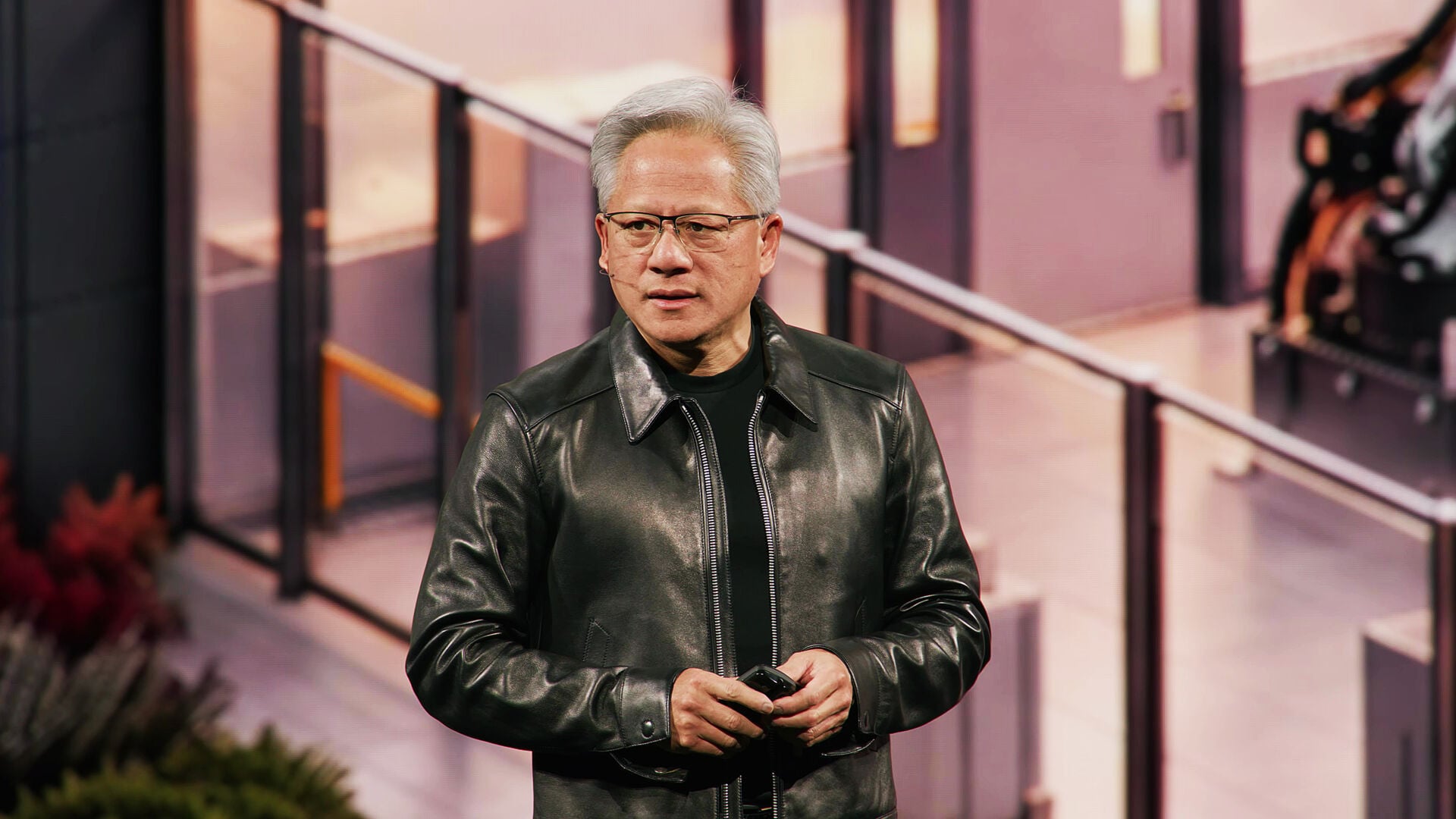
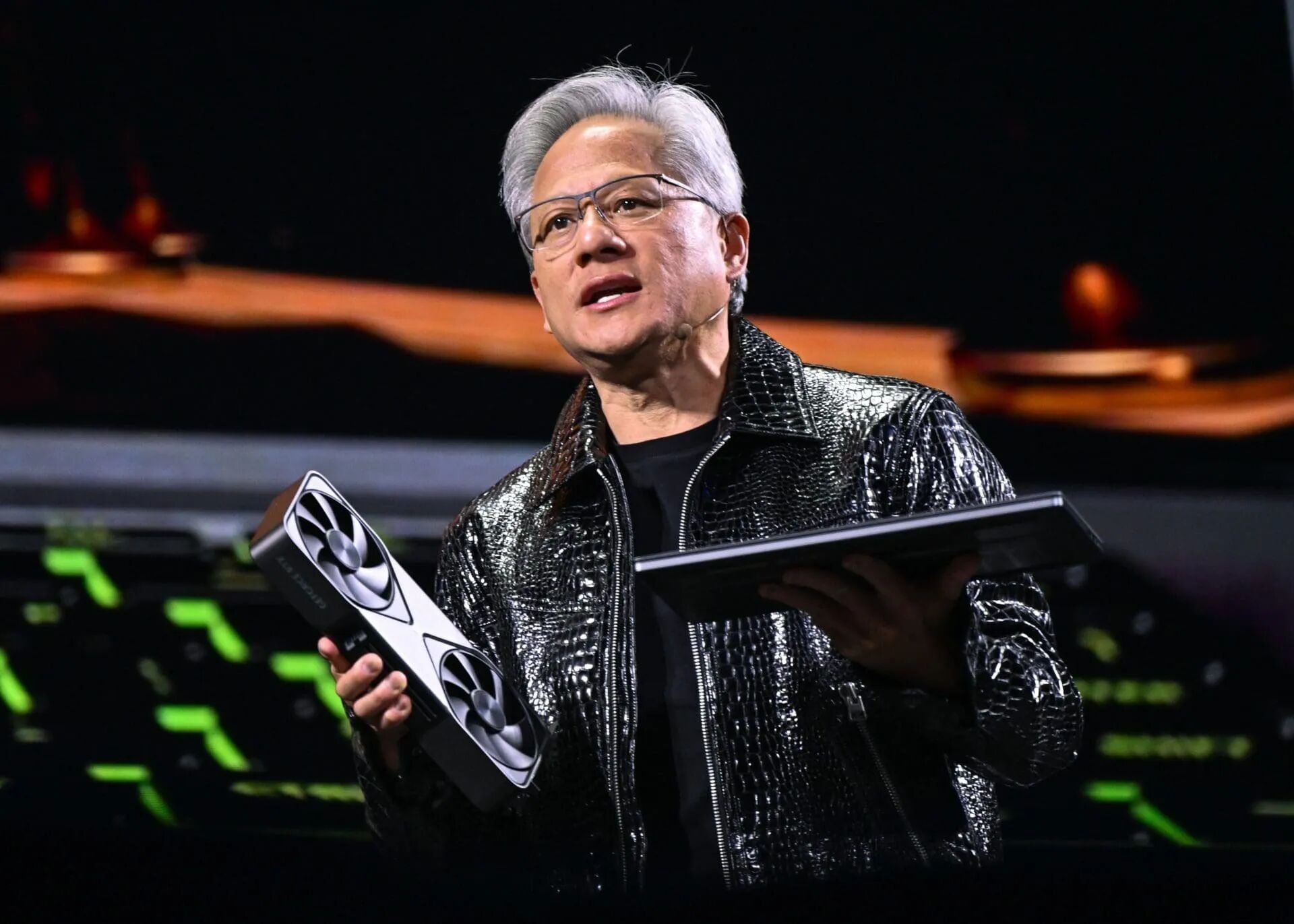
With his trademark leather jacket, Jensen Huang has become a genuine tech rock star. But behind that image is, above all, a boss who has taken considerable risks, sometimes against his investors' advice, by backing a very long-term vision. And that vision is no longer just about video games or computing. It now touches the global economy, scientific research and even the technological sovereignty of nations. In short, Nvidia is him and no one else, and his forced removal inevitably raises a fundamental question: can Nvidia keep growing without a CEO who is himself at the heart of the biggest research breakthroughs of recent years? What's certain is that Jensen Huang occupies a place all of his own in the history of technology. For more than thirty years, he has shaped the evolution of computing, from graphics acceleration for video games to the vast infrastructures now powering artificial intelligence.
One thing is certain: Jensen Huang will have done a great deal to lay the groundwork for this revolution. And whatever the outcome of this affair, his influence on the history of computing and artificial intelligence will remain considerable.