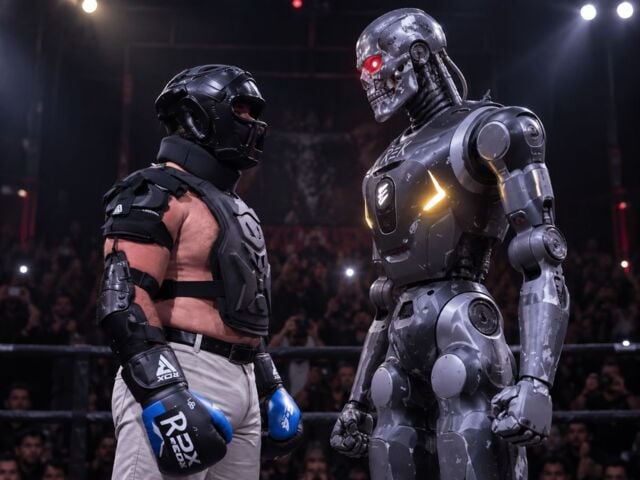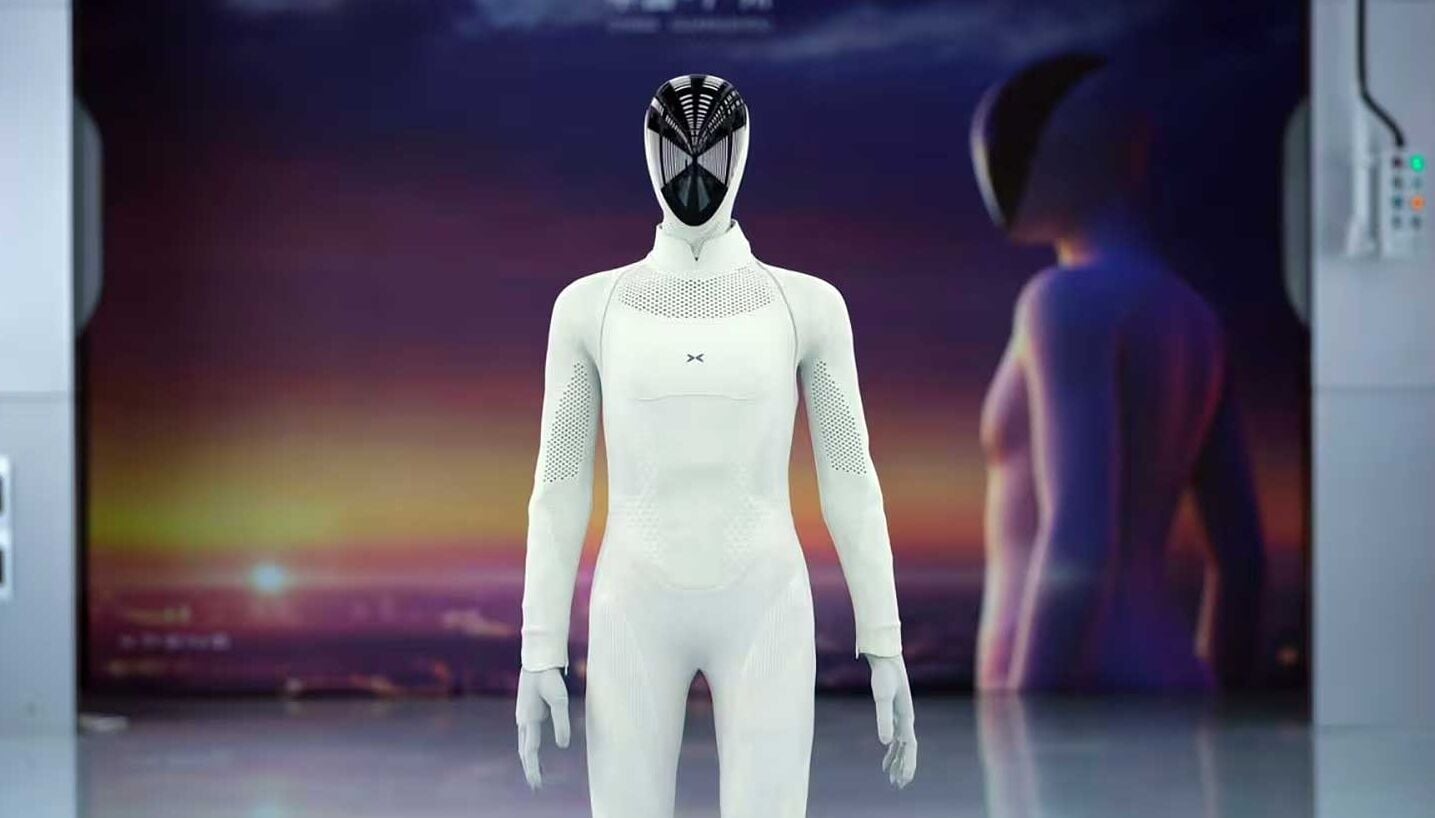

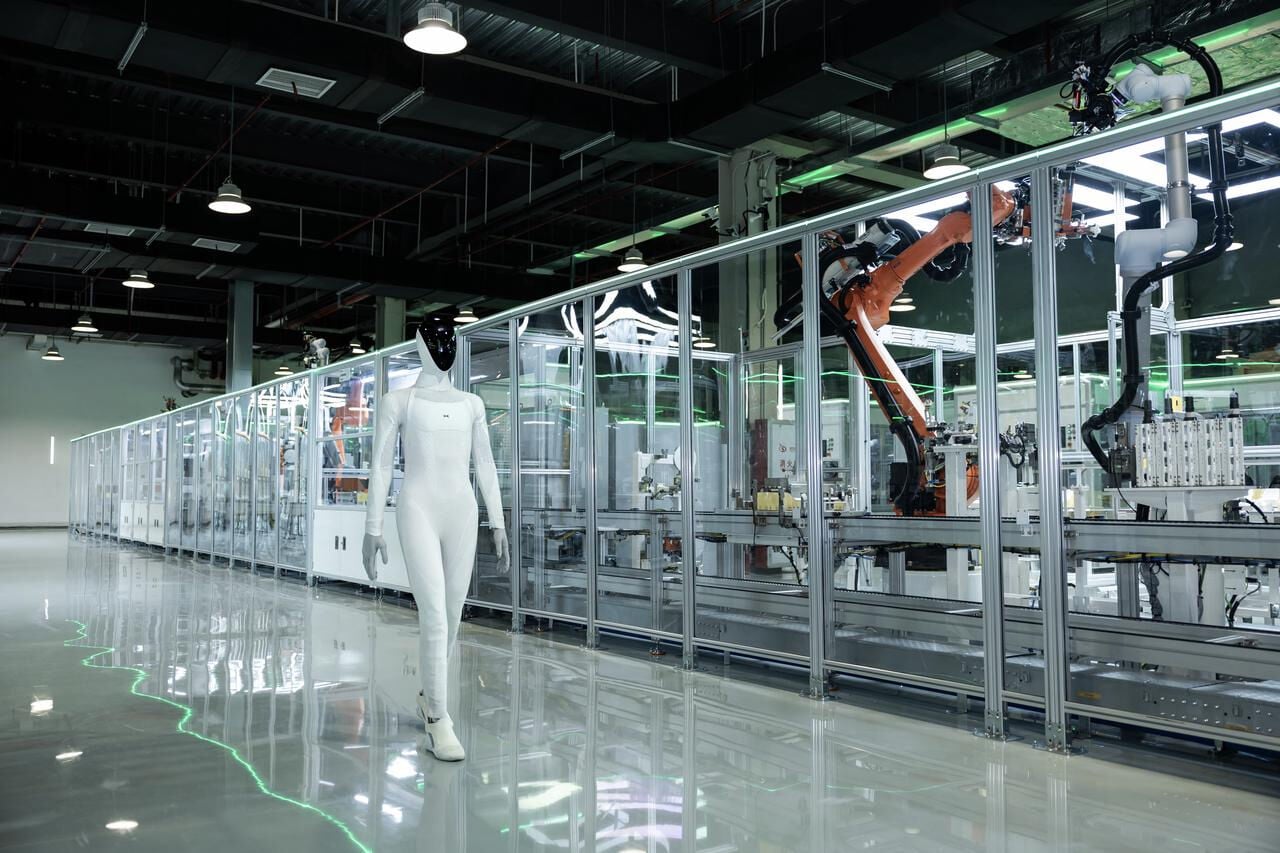
XPeng has decided to step things up on the robotics front with an announcement that hasn't gone unnoticed on social media. The Chinese manufacturer, already known for its electric cars and its work on flying vehicles, has just announced the start of mass production of its IRON humanoid robot. And to mark the occasion, the very first unit off the line did something fairly symbolic: it walked out of the factory on its own. A significant milestone for a project that, only a few months ago, was mainly making headlines for its spectacular demos.
XPeng hasn't yet said how many units will be rolling off the production lines, but the group intends initially to use its own facilities to build the robots, before deploying them in its showrooms and on its technology campuses to test their capabilities in real-world conditions. Ultimately, the ambition is clearly to move beyond the simple demo prototype.

A robot that wants to fend for itself
IRON stands roughly 1.73 metres tall for 65 kg and has 82 degrees of freedom, 22 of them in each hand alone. It can move at a top speed of around 2 metres per second and sports a deliberately neutral look, with a fabric skin and various options for body shape and presentation. But it's above all its autonomy that interests XPeng. The robot is designed to understand instructions, plan its actions, move through an environment and avoid obstacles without needing to proceed by trial and error. It's even capable, in theory, of managing its own charging, meaning that when its battery runs low, IRON should be able to identify a dedicated dock and plug itself in.
XPeng says it wants to make IRON one of the first humanoids able to walk off the production line under its own steam. It's a promise that might sound ambitious, but it takes on a particular flavour when you recall the demonstration staged around the prototype. On stage, the robot was cut open in front of the audience to prove that no human was hiding inside. Its gait was so natural, so human, that people online were convinced it was a fake.
The same brain as XPeng's cars
To reach that level of autonomy, XPeng is leaning heavily on artificial intelligence. The manufacturer says IRON runs the same "world model" it developed for its electric vehicles and its flying car prototypes. The idea is to give the robot a broad enough understanding of its surroundings that it can not only see and hear, but also decide what to do next.
On the technical side, IRON combines several AI models capable of linking visual perception, voice commands, movement and reasoning. Three Turing AI chips are built into each robot, for a claimed combined output of 2,250 trillion operations per second. According to XPeng, that power makes it possible to run locally, with no internet connection, a model comparable to Meta's Llama 3.2.
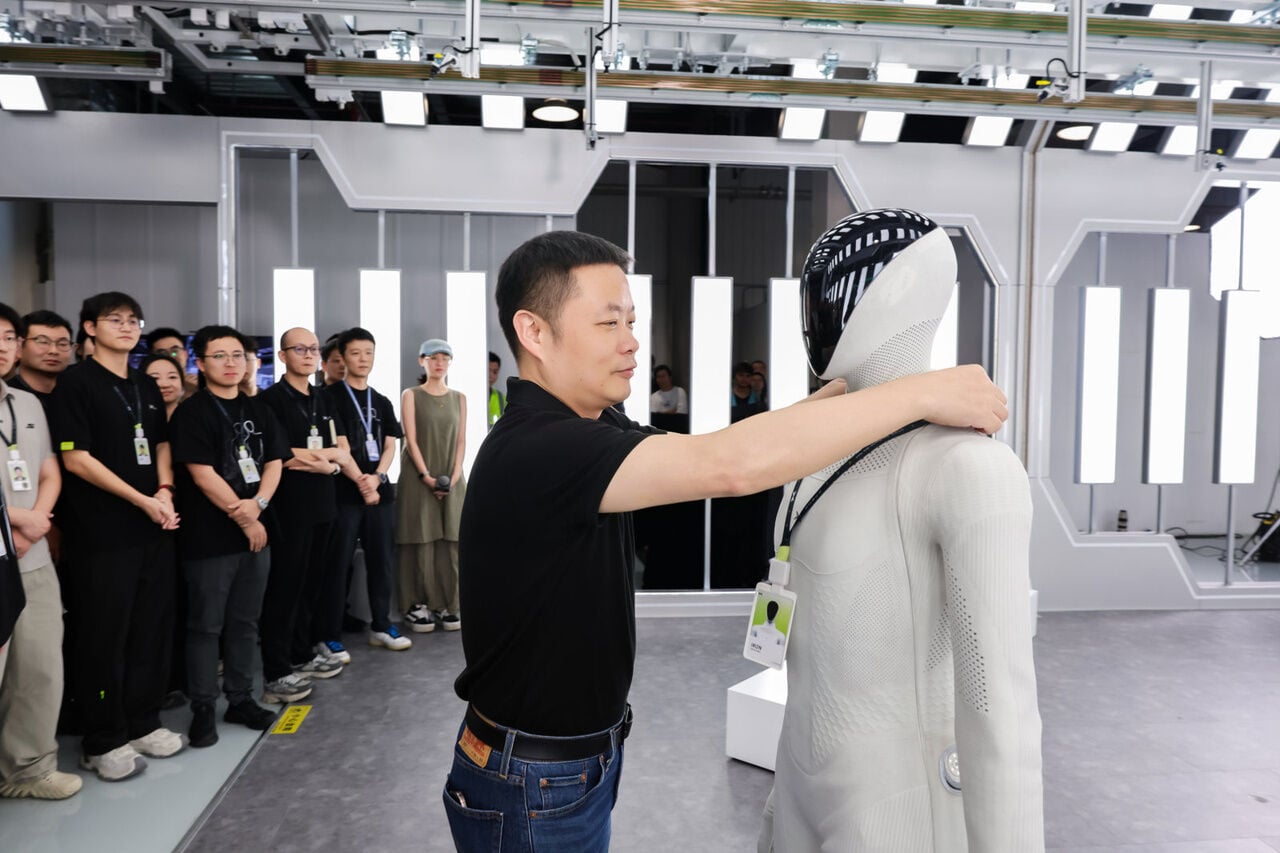
For now, then, IRON will remain essentially a testbed for XPeng. But from 2027, the manufacturer plans to start delivering its robots to business customers, mainly in China, notably to greet visitors or lead guided tours. And if all goes to plan, the next step could be far more ambitious: getting these humanoids into people's homes to handle the housework or even fold the laundry.
The launch comes as Dogotix, XPeng's robotics division, has just raised more than $900 million, at a valuation topping $6.3 billion. The manufacturer now openly regards robotics as its "second growth curve", alongside cars and its international expansion. In short, there's no shortage of ambition.