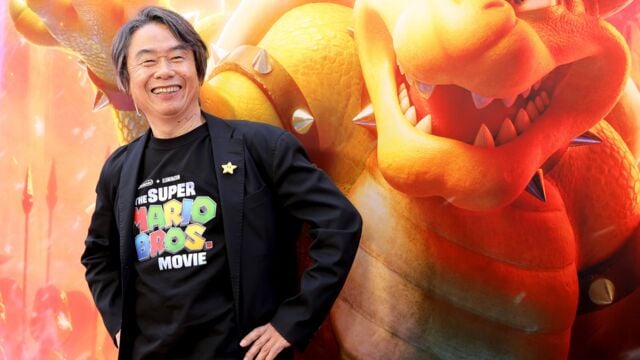
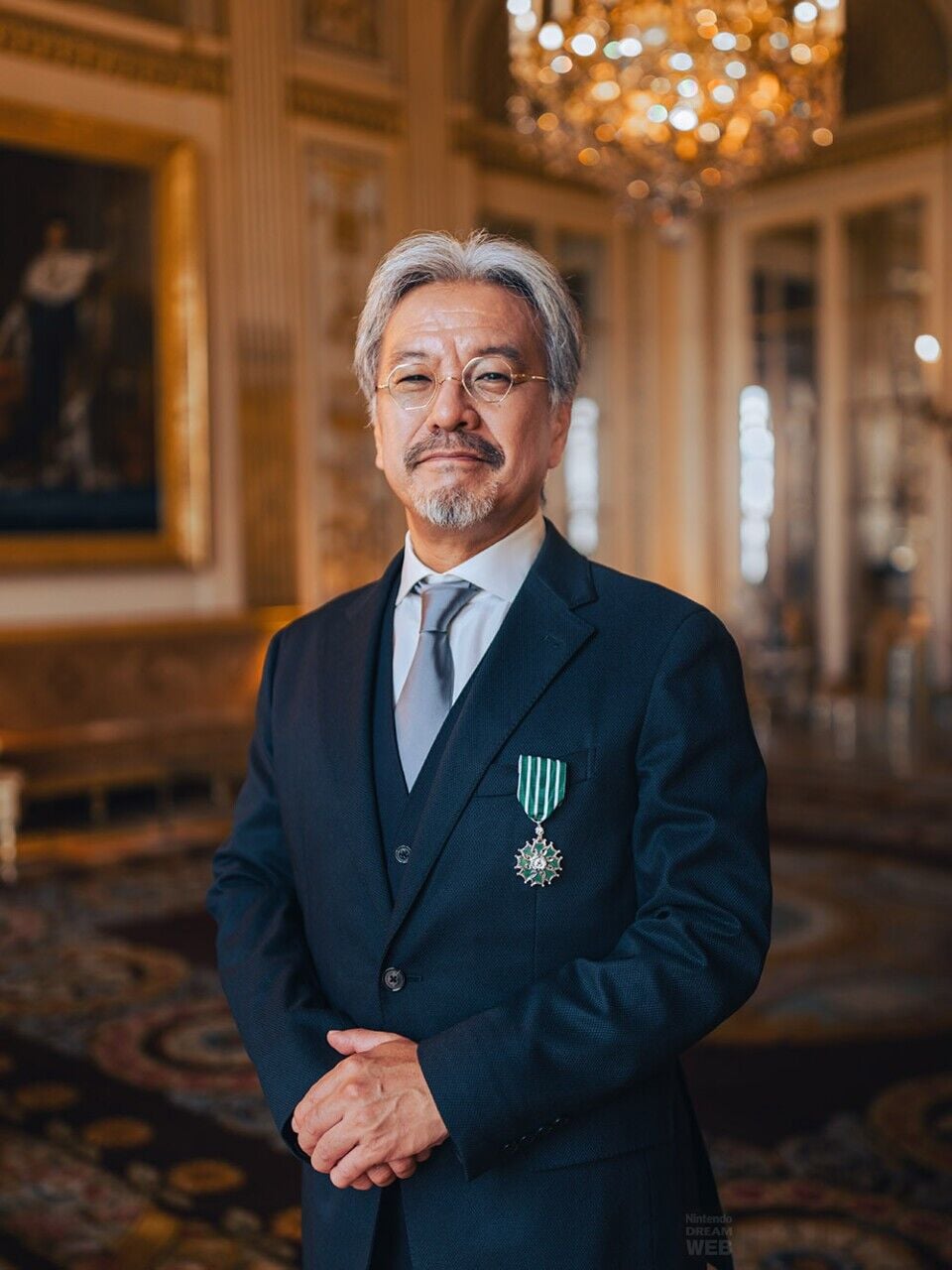
23 October 2026 will go down as a special day for Nintendo. In Japan, Shigeru Miyamoto, creator of Mario, Zelda and Donkey Kong, was named among the recipients of the Order of Culture, one of the country's highest honours. On the very same day, in Paris, Eiji Aonuma, producer of The Legend of Zelda series, received the insignia of Chevalier de l'ordre des Arts et des Lettres at the Ministry of Culture. Two major Nintendo figures honoured on the same day for their contribution to culture. If that isn't a sign from fate...
For Eiji Aonuma, this French honour had been a long time coming, since it was announced back in November 2023, on the sidelines of that year's Paris Games Week, with no date set for the ceremony itself. It therefore took nearly three years for the event to finally take place in Paris before a small gathering of journalists. The most touching moment came at the end of his speech, when the producer addressed his wife, present in the room, in French, telling her: « Merci de m'avoir suivi jusqu'ici, continuons l'aventure ensemble. »

Eiji Aonuma: 30 years shaping the world of Zelda
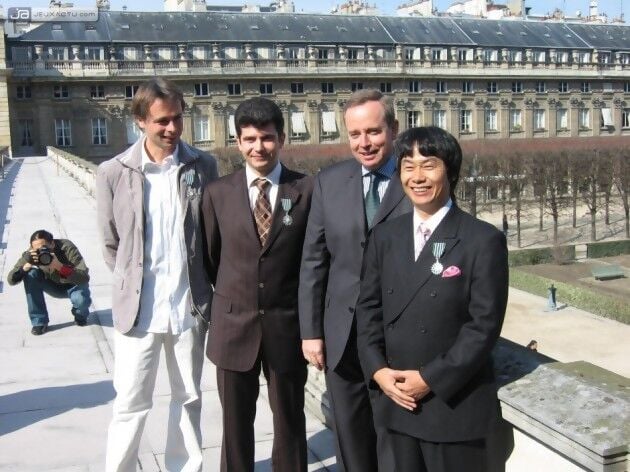
This isn't the first time a Nintendo creative has received such an honour from France. In 2006, Shigeru Miyamoto was also awarded the insignia of Chevalier de l'ordre des Arts et des Lettres alongside Michel Ancel and Frédérick Raynal. We were there in person for that ceremony, 20 years ago now. In any case, the honour arrives at a symbolic moment for The Legend of Zelda, which celebrates its 40th anniversary in 2026. On 5 November, Nintendo is due to release the remake of Ocarina of Time, the game that marked a key milestone in Aonuma-san's career. He is working on the project alongside Hidemaro Fujibayashi, another essential figure in the series. For the man who helped create the original on Nintendo 64, the timing is inevitably rather special.
Having joined Nintendo in 1988, Eiji Aonuma began working on Zelda with Ocarina of Time, released on Nintendo 64 in 1998. He helped design several of the game's dungeons, including the infamous Water Temple, before taking the reins on Zelda Majora's Mask shortly after. Over the years he became one of the franchise's central figures, going on to produce its most recent entries, namely Breath of the Wild and Tears of the Kingdom.
Video games continue to earn their cultural stripes
Created in 1957, the ordre des Arts et des Lettres recognises people who contribute to the influence of culture, in France and abroad. Video games have already found their place there. We've mentioned Shigeru Miyamoto, Michel Ancel and Frédérick Raynal in 2006, but more recently, in February 2026, the 28 members of the Sandfall Interactive team behind Clair Obscur Expedition 33 were also honoured (the Korean team was missing). In Japan, the honour bestowed on Shigeru Miyamoto also marks a new step in the recognition of video games, as he becomes the first creator from the sector to receive the Order of Culture, with a ceremony scheduled for 3 November at the Imperial Palace. A major accolade for the man who helped make Nintendo a cornerstone of global entertainment and a showcase for Japan around the world.
One thing is certain: these two honours, announced on the same day, show just how much ground video games have gained in the cultural landscape. For Eiji Aonuma, the French decoration salutes decades devoted to a universe that continues to leave its mark on generation after generation of players. For Shigeru Miyamoto, the honour received in Japan crowns a career that has profoundly shaped the history of video games.