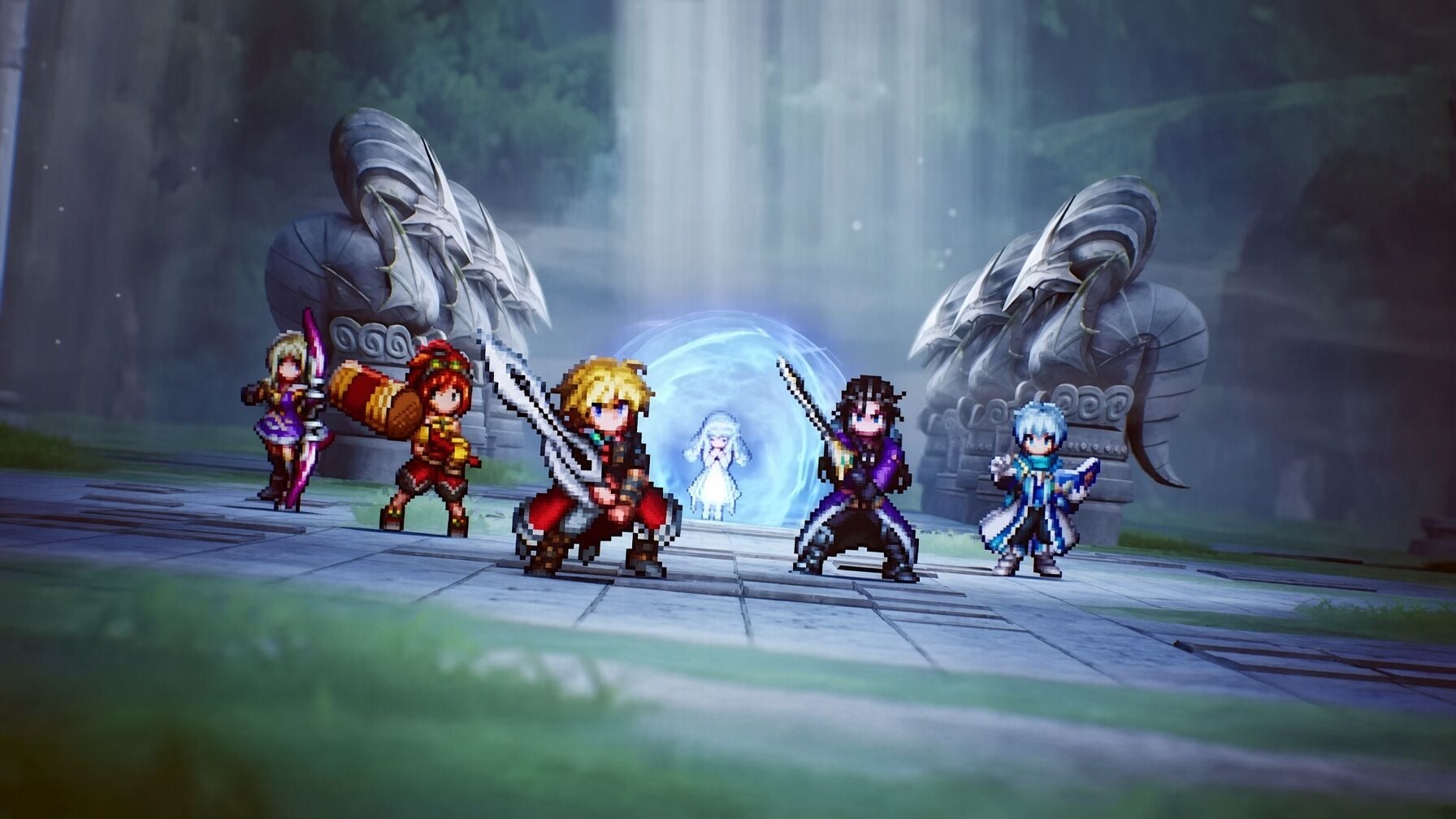

Back in 2018, with the release of Octopath Traveler, Square Enix unveiled its HD-2D art style to the world, dropping pixel-art characters into environments built in 3D. Since then, the technique has worked wonders for Octopath Traveler II and 0, Triangle Strategy, The Adventures of Elliot: the Millennium Tales, as well as the remakes of Live A Live, Dragon Quest I & II and Dragon Quest III. That's a fine line-up, but until now it was missing the prestige of a Final Fantasy. That gap has now been filled, and filled rather handsomely.
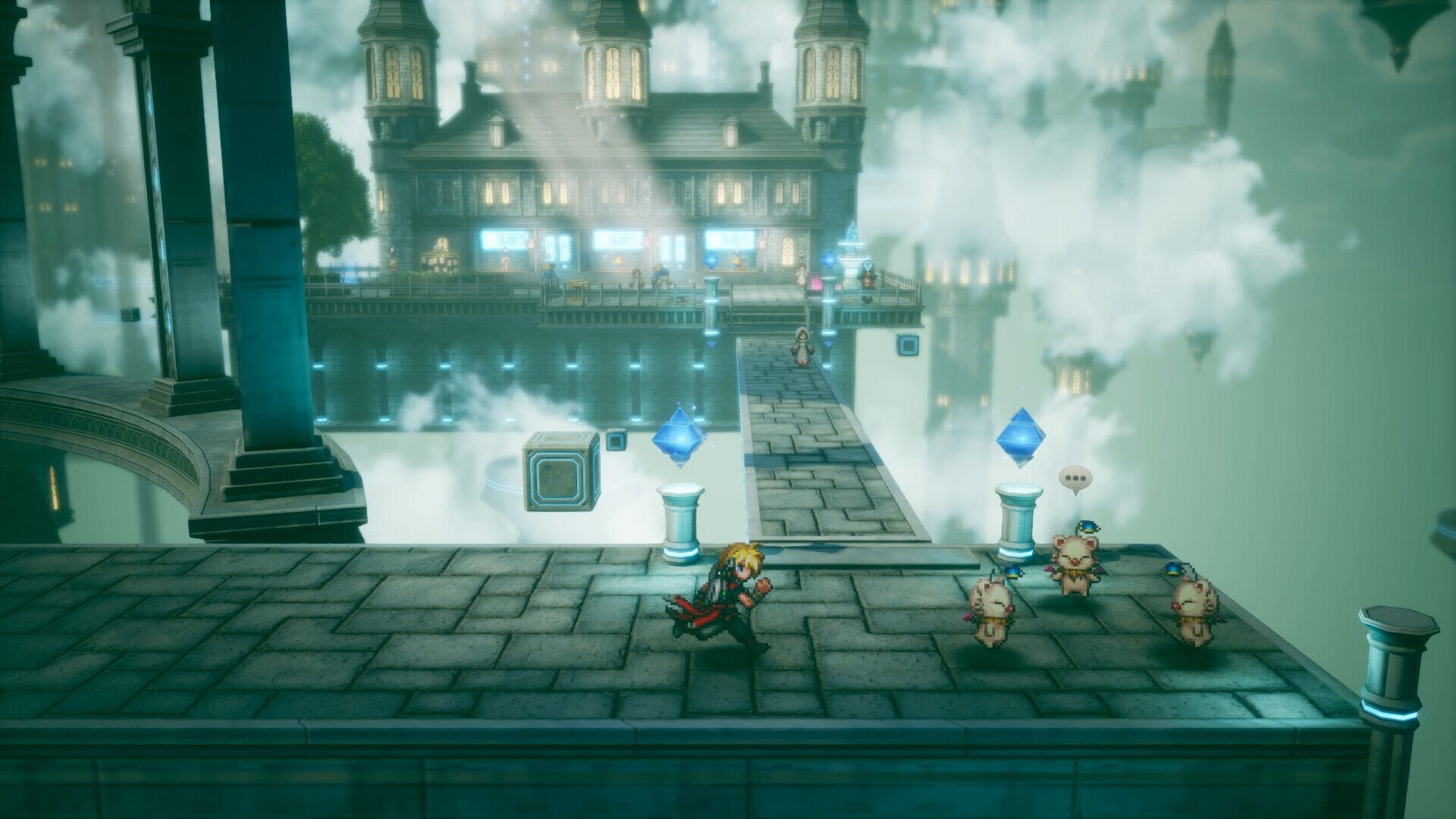
A new Final Fantasy means a new world and new characters! Today's hero is one Rain, commander of the airship squadron of the kingdom of Grandshelt. His mission? Assemble a crack team and save the world, naturally. The thoroughly conventional story brings in magic crystals, evil antagonists and well-meaning warriors. Let's be clear from the off: the plot, the structure of the adventure, the character designs and the nature of the environments never stray into originality. That classicism cuts both ways, though. On one hand, it's a shame the experience leans on recipes that, while not completely stale, are certainly well worn.
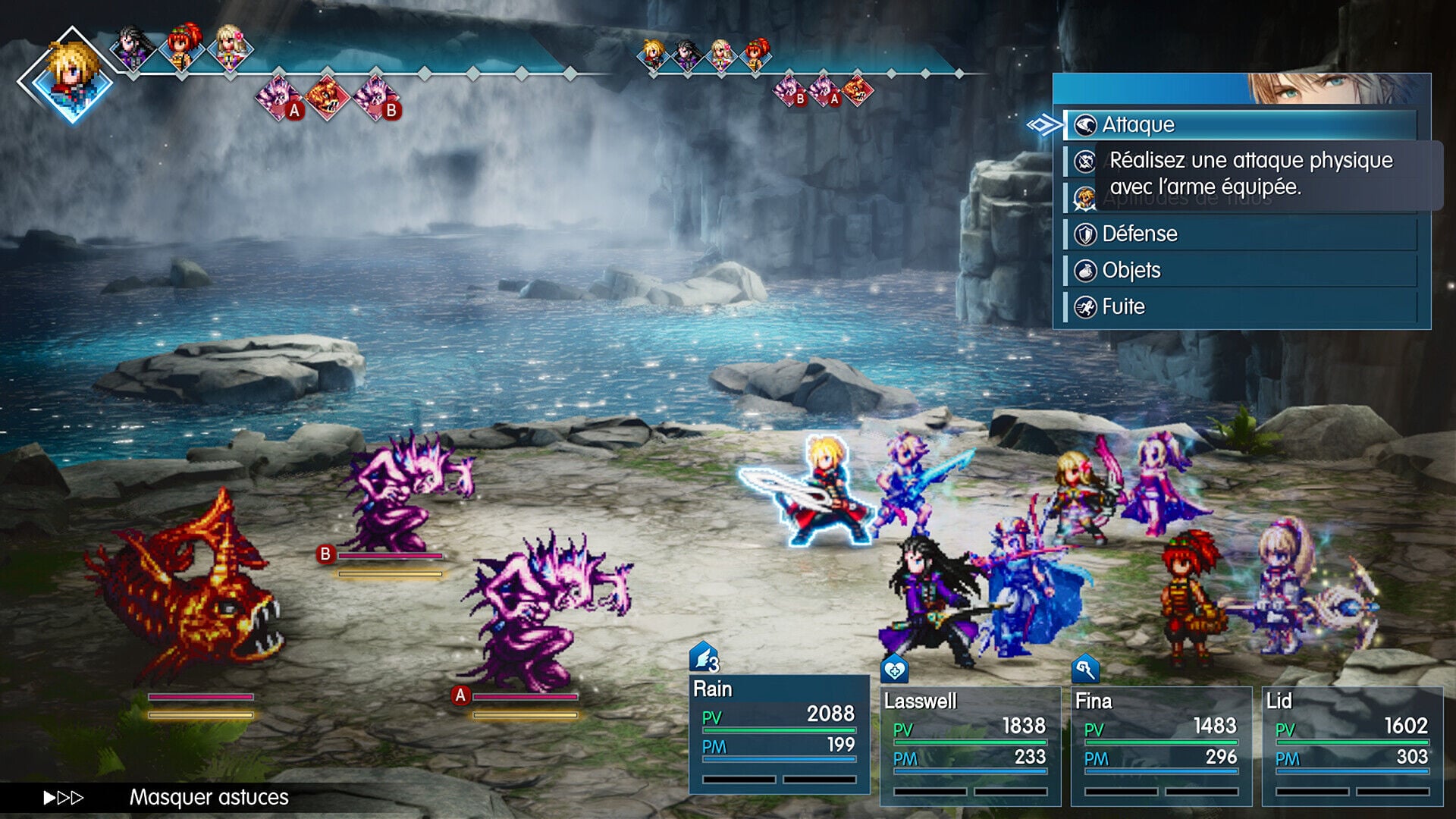
Combat, for that matter, runs on an old-school turn-based system that doesn't even adopt the principles of Active Time Battle, first seen in Final Fantasy IV back in 1991. But by sticking to the conventions of the earliest entries (exploiting weaknesses, summoning eidolons, limit breaks and so on), this Final Fantasy brings back those good old sensations of yesteryear. You regularly feel as though you're reliving one of the foundational adventures of this prolific saga. That impression is reinforced by the HD-2D graphics, which evoke the pixel art of the last century. Much like certain remakes, Resonance looks the way our memories have embellished the first Final Fantasy games. Except that in reality the technique is thoroughly modern, serving up a far more impressive spectacle than traditional 2D ever could.
Between tradition and modernity
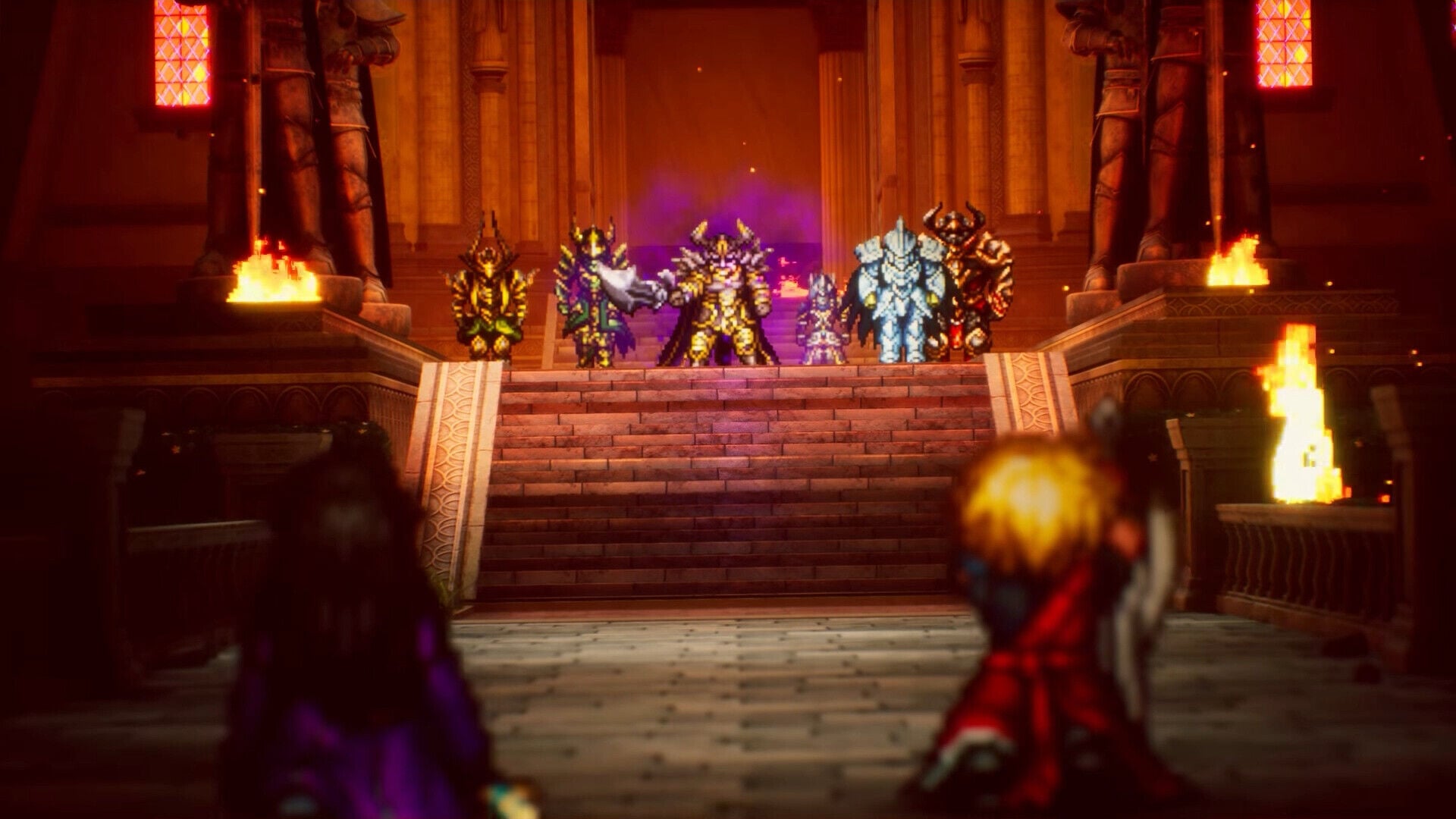
Final Fantasy Resonance delivers one of the finest practical applications of the HD-2D technique, if not the very best. The fusion of pixel-built characters and 3D-modelled scenery is particularly harmonious. Over here, the shadows of drifting clouds animate the world map; over there, the turning sails of a windmill briefly darken the surroundings. Dynamic lighting and detailed reflections go hand in hand with crisp textures and occasionally explosive special effects. Towns and dungeons also make use of depth to conceal plenty of hidden paths and secret chests. The major innovation this time, though, lies in the hugely dynamic camera work. The fixed viewing angles seen in the likes of Octopath Traveler give way to a camera that swoops about, happily pivoting on its axis and zooming in on the action.
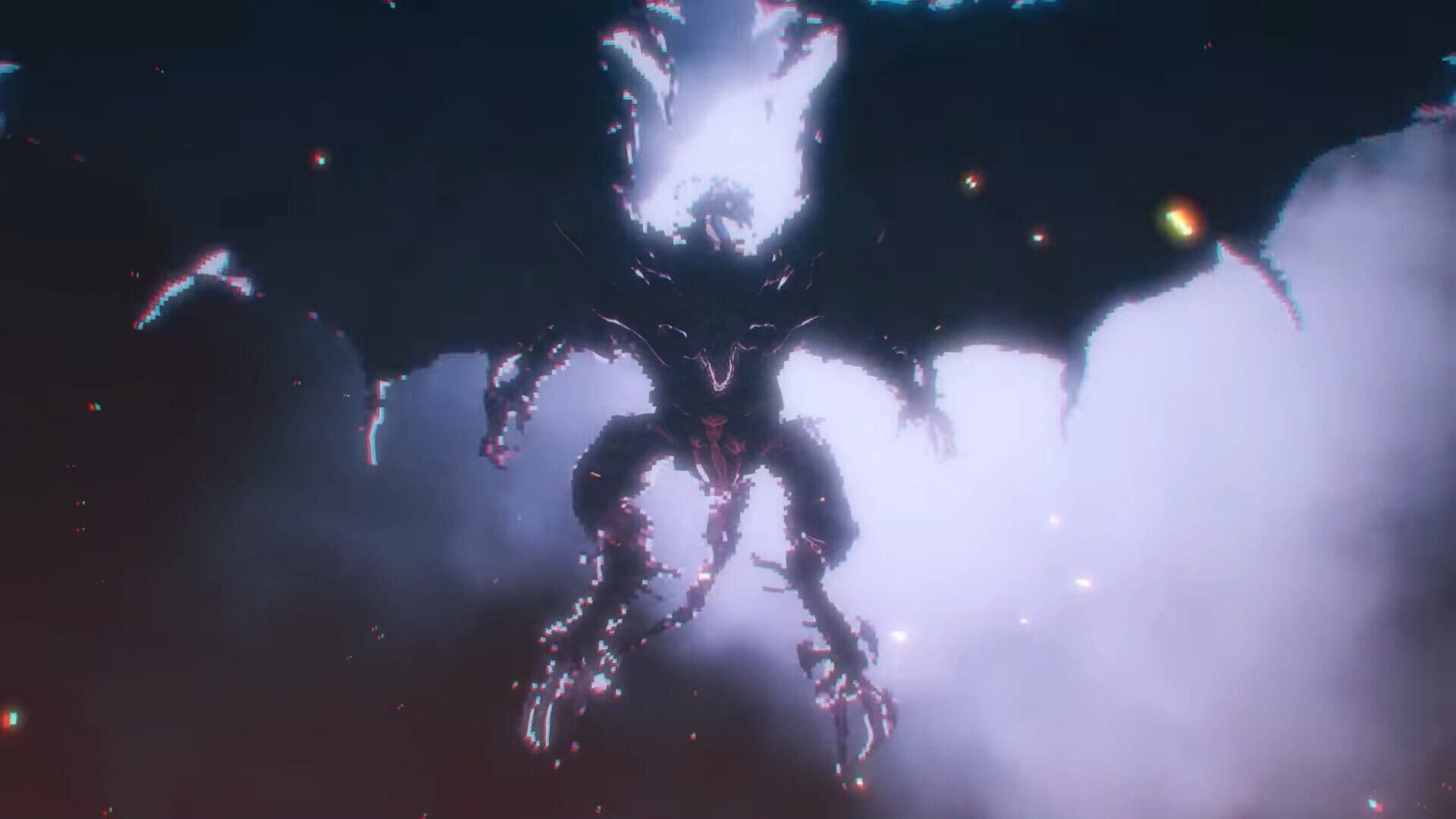
The staging of the short cutscenes that accompany certain powers has little to envy a purely 3D game. So much so that the pixels making up the characters and some of the effects occasionally fill a huge chunk of the screen. Some players may find that an eyesore, but for our part we rather love the bold choice. The only real weakness of this HD-2D lies in a handful of static set-pieces that leave plenty of room for improvement. The best example comes early on, when the heroes gather at the king's bedside. You can plainly see that the character's standard sprite, upright and fully dressed, has simply been slotted between the headboard and the mattress to suggest someone lying down. Thankfully, fumbles of this sort are rare.
Phone a friend
While the fundamentals of the gameplay are conventional, as noted above, Resonance does have a few quirks of its own. The biggest is the Vision system, which is shamelessly winking at series fans. Vision crystals scattered across the world release spirit warriors conjured from the thoughts of heroes from parallel universes. There are 26 different Visions to track down, and they're no small fry. The unavoidable Cloud is present and correct, but so are Lightning, Noctis and Clive. Even Sephiroth, unlocked after an optional boss fight, is a potential ally. Every character in the adventure can be equipped with a Vision of your choosing, letting them use the abilities of the guest star of the moment and combine them to best effect with their own.
The mastery rank system, which represents the level of affinity between a Vision and a character, gives a satisfying sense of progression. As for the enemy stagger gauge, here it gets the chance to offer more than mere immobilisation. When every opponent is staggered during the same turn, each party member gets an extra action at the end of that turn. That's your cue to trigger the resonances that give the game its name, which can best be described as devastating attacks that depend on the Visions currently equipped. This system, backed up by the series' long-standing mechanics, proves rich enough never to grow stale. Just as well, because it takes thirty to forty hours to reach the end credits, and close to double that to max out exploration and polish off every side quest.
The good
- Captures the atmosphere and feel of the early FFs
- The HD-2D visuals work beautifully most of the time
- Cutscenes are every bit as dynamic as those in a 3D game
- The turn-based combat system has plenty of depth
- The Visions deliver the fan service
The bad
- The story is extremely by-the-numbers
- The various locations are short on originality too
- The 2D/3D blend is still clumsy in places